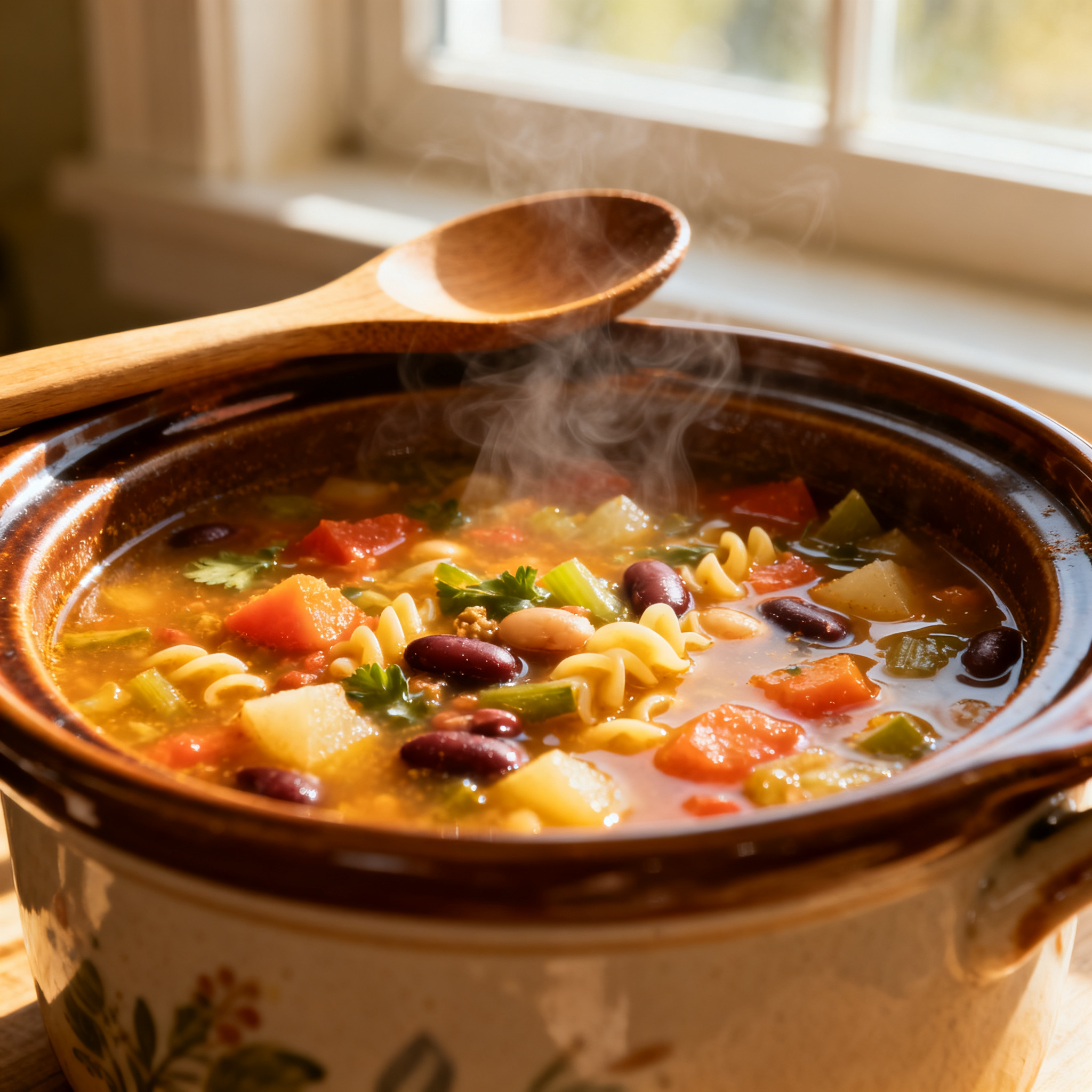
Slow Cooker Minestrone Soup (The Backwards Method for Big Flavor)
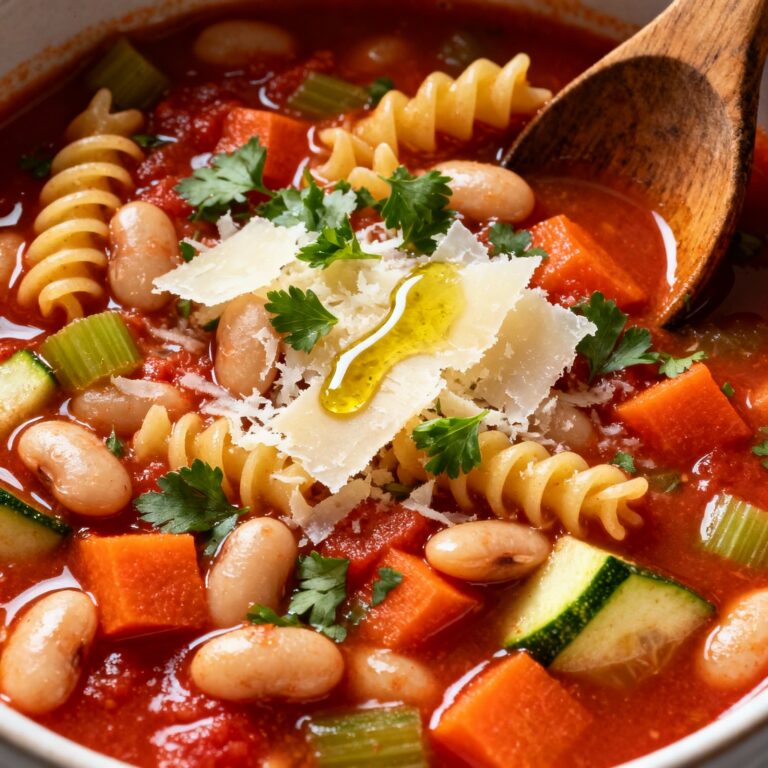
Most slow cooker minestrone soup recipes dump everything in raw, including the pasta, and by dinnertime you're left with swollen noodles and a broth that tastes like watered-down tomato juice. This version fixes both problems by bookending the cook: bloom the tomato paste first for real depth, then hold the pasta and greens back until the final stretch so nothing overcooks. The payoff is a minestrone that actually tastes like it simmered on a stove all day, minus the babysitting.
Simple, everyday ingredients and clear, step-by-step instructions — every recipe made in Dorothy’s kitchen before it reaches yours. Jump to the full recipe card below.
Slow Cooker Minestrone Soup (The Backwards Method for Big Flavor)
A deep, savory slow cooker minestrone soup with a parmesan rind for body and pasta added at the end so it never turns mushy.
- Total Time: 7 hours 50 minutes
- Yield: 6 1x
Ingredients
- 2 tablespoons olive oil, plus more for serving
- 3 tablespoons tomato paste
- 4 garlic cloves, minced
- 1 medium onion, diced
- 2 carrots, diced
- 2 celery stalks, diced
- 1 (28 oz) can diced tomatoes
- 6 cups vegetable or chicken broth
- 1 (15 oz) can cannellini beans, drained and rinsed
- 1 (15 oz) can kidney beans, drained and rinsed
- 1 parmesan rind (about 3–4 inches)
- 1 bay leaf
- 1 teaspoon dried oregano
- 1/2 teaspoon dried thyme
- 1 zucchini, diced
- 1 cup green beans, trimmed and cut into 1-inch pieces
- 3/4 cup small pasta, such as ditalini or elbow
- 2 cups chopped kale or baby spinach
- Salt and black pepper, to taste
- Pesto, for serving
- Grated parmesan, for serving
Instructions
- Heat the olive oil in a small skillet over medium heat. Add the tomato paste and garlic and cook, stirring often, for 1-2 minutes until the paste darkens slightly and smells toasty. This step deepens the flavor of the whole pot, so don’t skip it.
- Transfer the tomato paste mixture to the slow cooker. Add the onion, carrots, celery, diced tomatoes, broth, cannellini beans, kidney beans, parmesan rind, bay leaf, oregano, and thyme. Stir to combine.
- Cover and cook on low for 7-8 hours or high for 3-4 hours, until the vegetables are tender and the broth tastes deeply savory.
- In the last 25-30 minutes of cooking, switch to high (if on low) and stir in the zucchini, green beans, and pasta. Cook until the pasta is al dente and the vegetables are just tender.
- Stir in the kale or spinach during the final 5 minutes, just until wilted. Remove and discard the bay leaf and parmesan rind.
- Season with salt and pepper to taste. Ladle into bowls and top each with a spoonful of pesto, a drizzle of olive oil, and grated parmesan.
Notes
Adding the pasta and greens only in the last half hour is the single biggest fix for mushy minestrone — resist the urge to dump everything in at once. If freezing leftovers, cook and store the pasta separately, since it keeps absorbing liquid and turns soft in the freezer. A parmesan rind adds real savory depth; save rinds in the freezer specifically for soups like this one. No rind on hand? Stir in an extra 1/4 cup grated parmesan at the end instead. For a vegan version, skip the parmesan rind and use vegetable broth and nutritional yeast or a vegan pesto to finish.
- Prep Time: 20 minutes
- Cook Time: 7 hours 30 minutes
- Method: Slow Cooker
- Cuisine: Italian-American
The fix starts before the slow cooker even turns on. Tomato paste straight from the can tastes sharp and one-note; cooked in a little olive oil with the garlic for a minute or two, it caramelizes slightly and turns rounder and sweeter. That step, plus a parmesan rind simmered in with the vegetables all day, is what separates a minestrone that tastes deep and savory from one that tastes like tinned tomatoes and hot water. The rind melts down and releases glutamates the same way it would in a stockpot version — you’re borrowing a restaurant trick, not inventing extra work.
The second fix is timing the starch. Pasta absorbs liquid and keeps cooking even after you think it’s done, and in a slow cooker that means ditalini turning to paste by hour six. Add it dry with everything else at the start and you’ll get soup with no bite left in the noodles at all. Instead, stir the pasta and any quick-cooking vegetables like zucchini or green beans in during the last 25 to 30 minutes on high, and add tender greens like kale or spinach in the last five. Everything holds its texture, and the beans and root vegetables underneath still get the full slow, low cook they need to turn creamy.
The mistake I see most often is skipping the pesto at the end and calling the soup finished. A slow cooker mutes fresh, bright flavors over a long cook, so a spoonful of pesto stirred into each bowl right before serving — plus a drizzle of good olive oil and grated parmesan — does the work that fresh basil would do in a quick stovetop version. If you don’t have pesto, a handful of torn fresh basil and a squeeze of lemon juice does something similar. For substitutions: swap kidney beans for chickpeas, use any small pasta shape you have, and if you’re making this ahead, cook the pasta separately and add it to portions as you reheat, since it will keep softening in the fridge.
Frequently Asked Questions
Can you put raw pasta in slow cooker minestrone soup?
You can, but it's the main reason slow cooker minestrone turns mushy. Pasta keeps absorbing liquid over hours of cooking, so it's better to stir it in raw during just the last 25-30 minutes on high heat.
How long does slow cooker minestrone soup take to cook?
The vegetables and beans need 7-8 hours on low or 3-4 hours on high to become tender and develop flavor. Add the pasta and quick-cooking vegetables only in the final 25-30 minutes.
Can I make this minestrone soup vegetarian or vegan?
Yes. Use vegetable broth in place of chicken broth, and for a vegan version, skip the parmesan rind and swap the pesto for a vegan version or a handful of fresh basil and a squeeze of lemon at the end.
Can I freeze minestrone soup?
Yes, but cook and store the pasta separately if you plan to freeze it, since pasta turns soft and waterlogged after thawing. Freeze the soup base for up to 3 months and add freshly cooked pasta when reheating.
What beans are best for minestrone soup?
Cannellini and kidney beans are the classic combination, giving a creamy texture alongside a firmer bite. Chickpeas or great northern beans work well as substitutes if that's what you have on hand.
Get our 10 best recipes — free
Join the Hurry Up Meals newsletter and we’ll email you our 10 most-loved recipes as a free PDF.
Free PDF + new recipes every week. Unsubscribe anytime.