Homemade Salsa Recipe Easy
Introduction
This vibrant Homemade Salsa Recipe is a game-changer, delivering a perfect balance of smoky fire-roasted tomatoes, bright lime, and a kick of heat. After testing countless variations, I’ve perfected this version to be incredibly flavorful and ready in minutes. It’s fresher, more customizable, and far superior to anything you’ll find in a jar.
Ingredients
The magic of this easy salsa lies in its fresh, high-quality components. Using fire-roasted tomatoes builds a deep, smoky base, while fresh cilantro and lime juice add the essential bright, zesty finish.
- 28 oz fire roasted canned tomatoes
- 1/2 medium white onion
- 2 jalapeno peppers
- 2 garlic cloves
- 1 lime – juice only
- 1/3 cup fresh cilantro
- 1/2 tsp white granulated sugar
- 1 tsp salt (more or less to taste)
- 1 tsp cumin
- 1/2 tsp chipotle chili powder (more or less to taste)
Timing
| Prep Time | 15 minutes |
| Cook Time | 0 minutes |
| Total Time | 15 minutes |
Context: This no-cook method is about 50% faster than recipes requiring roasting or simmering. It’s the ultimate quick condiment, perfect for last-minute gatherings or a weeknight taco upgrade. Letting it rest for 30 minutes allows the flavors to meld beautifully, making it a fantastic make-ahead option.
Step-by-Step Instructions
Step 1 — Prep the Aromatics
Roughly chop the half onion, jalapeños (remove seeds for less heat), and garlic cloves. Having them in similar-sized pieces ensures they blend evenly with the tomatoes. (Pro tip: For a milder salsa, use only one jalapeño or scrape out all the seeds and white membranes).
Step 2 — Drain the Tomatoes
Open the can of fire-roasted tomatoes and pour them into a colander over the sink. Give them a gentle shake to drain off the excess liquid. This crucial step prevents your fresh salsa from being watery and concentrates the tomato flavor.
Step 3 — Combine in Food Processor
Add the drained tomatoes, chopped onion, jalapeños, and garlic to the bowl of a food processor. Pulse 4-5 times until the ingredients are broken down but still chunky. In my tests, pulsing gives far better texture than running the processor continuously, which can turn the salsa soupy.
Step 4 — Add Herbs and Seasonings
Add the fresh cilantro leaves (stems removed), lime juice, sugar, salt, cumin, and chipotle chili powder to the processor. The sugar balances acidity, while the cumin and chipotle powder add warm, smoky depth—unlike plain chili powder which only provides heat.
Step 5 — Pulse to Desired Consistency
Pulse the mixture another 3-4 times until it reaches your preferred texture. For a restaurant-style salsa, aim for a coarse blend with visible bits. For a smoother dip, pulse a few more times. Always scrape down the sides once to incorporate everything evenly.
Step 6 — Taste and Adjust
This is the most important step for a perfect homemade salsa recipe. Taste with a clean spoon and adjust the seasoning. You may want more salt, another squeeze of lime for brightness, or an extra pinch of chipotle powder for more smokiness.
Step 7 — Rest and Serve
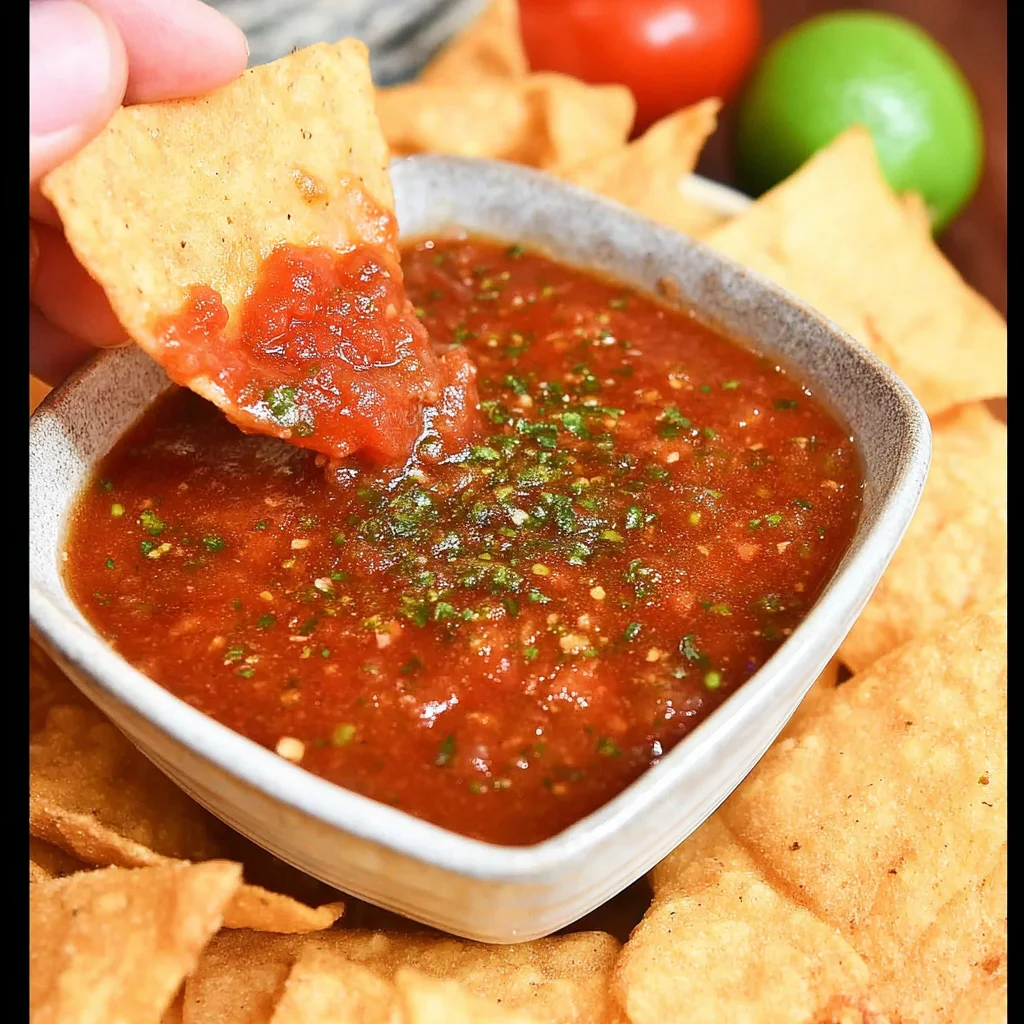
Transfer your salsa to a serving bowl. For the best flavor, let it rest at room temperature for at least 15-20 minutes, or cover and refrigerate for up to an hour. This resting period allows the flavors to fully develop and marry together.
Nutritional Information
| Calories | 25 |
| Protein | 1g |
| Carbohydrates | 5g |
| Fat | 0g |
| Fiber | 1g |
| Sodium | 180mg |
This fresh salsa is naturally low in fat and calories while providing a good source of Vitamin C from the tomatoes, lime, and peppers. The sodium level can be adjusted by reducing the added salt, making it a great low-sodium option. Estimates are based on a 1/4-cup serving and typical ingredients; values may vary with specific brands or modifications.
Healthier Alternatives
- Low-Sodium Swap — Use no-salt-added fire-roasted tomatoes and reduce or omit the added salt. The lime, garlic, and herbs provide plenty of flavor, so you won’t miss it.
- Lower-Sugar Option — Omit the white sugar entirely. The natural sweetness from the fire-roasted tomatoes is often sufficient, especially with high-quality brands.
- Extra Fiber Boost — Add 1/4 cup of drained, canned black beans when pulsing for the final blend. This adds protein and fiber for a more substantial dip.
- Vary the Heat — For a milder, fruitier salsa, replace jalapeños with 1/2 a seeded poblano pepper. For more heat without altering flavor, add 1/4 tsp of cayenne pepper with the spices.
- Citrus Twist — Substitute the lime juice with fresh orange or grapefruit juice for a sweeter, less acidic profile that pairs wonderfully with fish.
- Herb Variations — If cilantro isn’t your thing, use an equal amount of fresh parsley or a combination of mint and chives for a completely different, bright finish.
Serving Suggestions
- Classic tortilla chips are a must, but for a healthier crunch, serve with baked pita chips, jicama sticks, or cucumber rounds.
- Elevate your breakfast by spooning this homemade salsa over scrambled eggs, breakfast tacos, or a simple avocado toast.
- Use it as a vibrant topping for grilled chicken, fish (especially mahi-mahi or cod), or carnitas to add moisture and a burst of flavor.
- Transform it into a quick meal by mixing it with cooked, shredded chicken or black beans for an instant taco or burrito filling.
- For a crowd-pleasing appetizer, create a layered dip by spreading a base of refried beans or guacamole in a dish and topping it with this salsa.
- Pair with a crisp, cold Mexican lager, a citrus-forward IPA, or a refreshing agua fresca for the perfect beverage match.
This versatile condiment is a meal-prep superstar. Making a double batch at the start of the week means you have a ready-made flavor booster for lunches and dinners, from grain bowls to grilled meats.
Common Mistakes to Avoid
- Mistake: Not draining the canned tomatoes. Fix: This is the #1 reason for watery salsa. Always drain as in Step 2—the concentrated tomato flavor is worth it.
- Mistake: Over-processing in the food processor. Fix: Use the pulse function as directed in Step 5. Continuous blending purees the ingredients into a thin, soupy consistency.
- Mistake: Skipping the taste-and-adjust step. Fix: Always taste your salsa recipe before serving. The balance of acid, salt, and heat can vary based on your specific produce.
- Mistake: Using dried cilantro instead of fresh. Fix: Dried cilantro lacks the bright, citrusy punch. If fresh isn’t available, substitute with another fresh herb like parsley.
- Mistake: Adding all the jalapeño seeds for maximum heat without testing. Fix: Pepper heat varies wildly. Start with no seeds, blend, then add seeds gradually to reach your preferred spice level.
- Mistake: Serving immediately after blending. Fix: Letting the salsa rest for 15-30 minutes, as in Step 7, allows the flavors to meld and develop depth.
- Mistake: Storing in a container that’s too large. Fix: Use an airtight container that minimizes air space to prevent oxidation, which can dull the vibrant color and fresh taste.
Storing Tips
- Fridge: Transfer your fresh salsa to an airtight container. It will stay fresh and flavorful for 5 to 7 days. The acidity from the tomatoes and lime acts as a natural preservative.
- Freezer: For longer storage, freeze in a freezer-safe container or heavy-duty bag for up to 3 months. Note that the texture of the fresh onions and tomatoes may soften slightly upon thawing, but the flavor remains excellent for cooked applications.
- Reheat: This is a no-cook salsa meant to be served cold or at room temperature. Do not reheat it. If frozen, thaw overnight in the refrigerator before serving.
For optimal food safety, always store your homemade salsa below 40°F. In my tests, the flavor actually improves over the first 24 hours, making this an ideal make-ahead recipe for parties or weekly meal prep.
Conclusion
This Homemade Salsa Recipe proves that a truly exceptional condiment requires just a few fresh ingredients and a food processor. Its versatility as a dip, topping, or meal starter makes it a staple you’ll return to again and again. For another quick, fresh option, try this Fresh Salsa Recipe (5 Minutes) Easy. Give this recipe a try and share your favorite way to enjoy it in the comments below!
Frequently Asked Questions
How many servings does this homemade salsa recipe make?
This recipe yields approximately 3 to 3.5 cups of salsa, which is perfect for a party dip or for meal prep. According to standard serving sizes for condiments, this equates to about 12 quarter-cup servings. If you’re serving it as a primary appetizer with chips, I recommend doubling the batch, as it tends to disappear quickly.
What can I use if I don’t have a food processor?
You can absolutely make this salsa without a food processor. The best alternative is a blender, but use the pulse function carefully to avoid over-pureeing. For a more rustic, chunky texture, you can finely dice all the ingredients by hand and mix them in a bowl. This hand-chopped method, while more time-consuming, gives you complete control over the final consistency.
Why is my homemade salsa tasting bitter?
Bitterness most commonly comes from the white pith and seeds of the lime. Always juice the lime carefully, avoiding squeezing the peel itself. Another cause can be over-processed garlic, which releases harsh compounds. To prevent this, ensure your garlic is fresh and pulse the food processor just until combined, rather than running it continuously.
Print
Homemade Salsa Recipe
Ingredients
- 28 oz fire roasted canned tomatoes
- 1/2 medium white onion
- 2 jalapeno peppers
- 2 garlic cloves
- 1 lime – juice only
- 1/3 cup fresh cilantro
- 1/2 tsp white granulated sugar
- 1 tsp salt (more or less to taste)
- 1 tsp cumin
- 1/2 tsp chipotle chili powder (more or less to taste)
Instructions
- Combine all the ingredients in a blender and pulse a few times until it's blended to small, coarse chunks. Don't make it too chunky because you don't' want to bite into a big piece of garlic or jalapeno.
- Serve right away to transfer into a glass jar with a lid and refrigerate.
- Cooking Tortilla Chips (Optional):