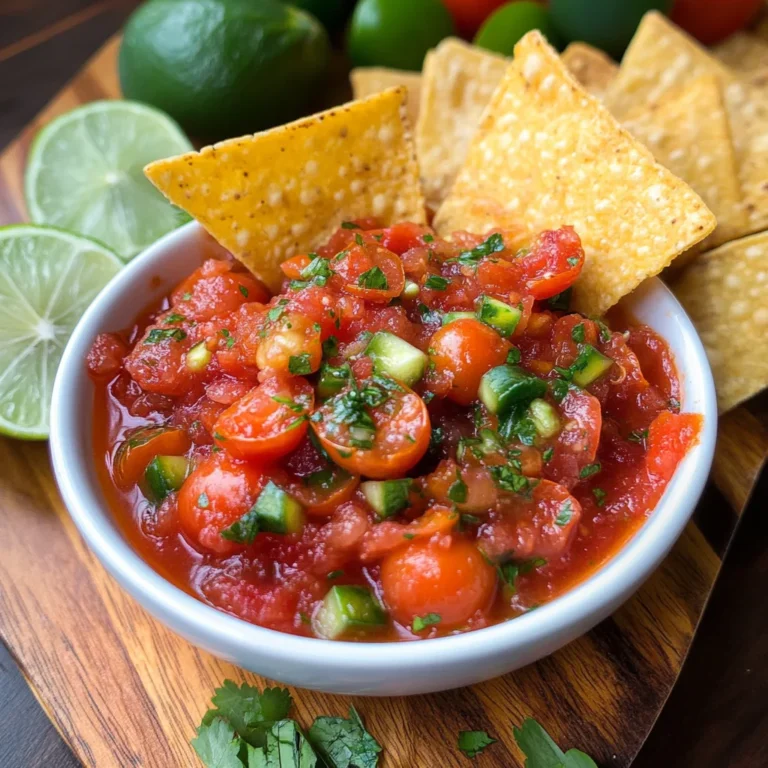
Homemade Salsa Recipe Easy
Introduction
This vibrant Homemade Salsa Recipe delivers a perfect balance of smoky, tangy, and spicy flavors in just minutes. After testing countless variations, I’ve perfected this version using fire-roasted tomatoes for a deep, charred essence that store-bought jars simply can’t match. It’s the ultimate fresh condiment for chips, tacos, or grilled meats.
Ingredients
The magic of this fresh salsa lies in its simple, high-quality components. Using fire-roasted tomatoes builds a complex base, while fresh lime juice and cilantro add the essential bright, zingy finish.
- 28 oz fire roasted canned tomatoes
- 1/2 medium white onion
- 2 jalapeno peppers
- 2 garlic cloves
- 1 lime – juice only
- 1/3 cup fresh cilantro
- 1/2 tsp white granulated sugar
- 1 tsp salt (more or less to taste)
- 1 tsp cumin
- 1/2 tsp chipotle chili powder (more or less to taste)
Timing
| Prep Time | 15 minutes |
| Cook Time | 0 minutes |
| Total Time | 15 minutes |
Context: This no-cook method is about 80% faster than simmering a cooked salsa on the stove. It’s a fantastic make-ahead option, as the flavors meld and intensify when chilled for a few hours.
Step-by-Step Instructions
Step 1 — Prep the Vegetables
Roughly chop the white onion, jalapeños (remove seeds for less heat), and garlic cloves. Having uniformly sized pieces ensures everything blends evenly. (Pro tip: For a milder salsa, use only one jalapeño or scrape out all the seeds and white membranes).
Step 2 — Drain the Tomatoes
Open the can of fire-roasted tomatoes and pour them into a colander over the sink. Gently shake to drain off the excess liquid. This step is crucial—it prevents your fresh salsa from becoming watery. Reserve about 1/4 cup of the liquid in case you need to adjust consistency later.
Step 3 — Combine in Food Processor
Add the drained tomatoes, chopped onion, jalapeños, and garlic to the bowl of a food processor. Pulse 3-4 times until the ingredients are coarsely chopped but not pureed. In my tests, pulsing gives far better texture than running the processor continuously.
Step 4 — Add Herbs and Seasonings
Add the fresh cilantro (stems are fine), lime juice, cumin, chipotle chili powder, sugar, and salt to the processor bowl. The sugar balances the acidity from the tomatoes and lime, while the chipotle powder adds a subtle smokiness.
Step 5 — Pulse to Desired Consistency
Pulse the mixture another 5-7 times, scraping down the sides once, until you reach your preferred salsa texture. For a chunky salsa, pulse less; for a smoother restaurant-style blend, pulse a bit more. Avoid over-processing into a soup.
Step 6 — Taste and Adjust
This is the most important step. Taste your homemade salsa and adjust the seasoning. You may want more salt, a squeeze of extra lime for brightness, or another pinch of chipotle powder for heat. If it’s too thick, stir in a tablespoon of the reserved tomato liquid.
Step 7 — Rest and Serve
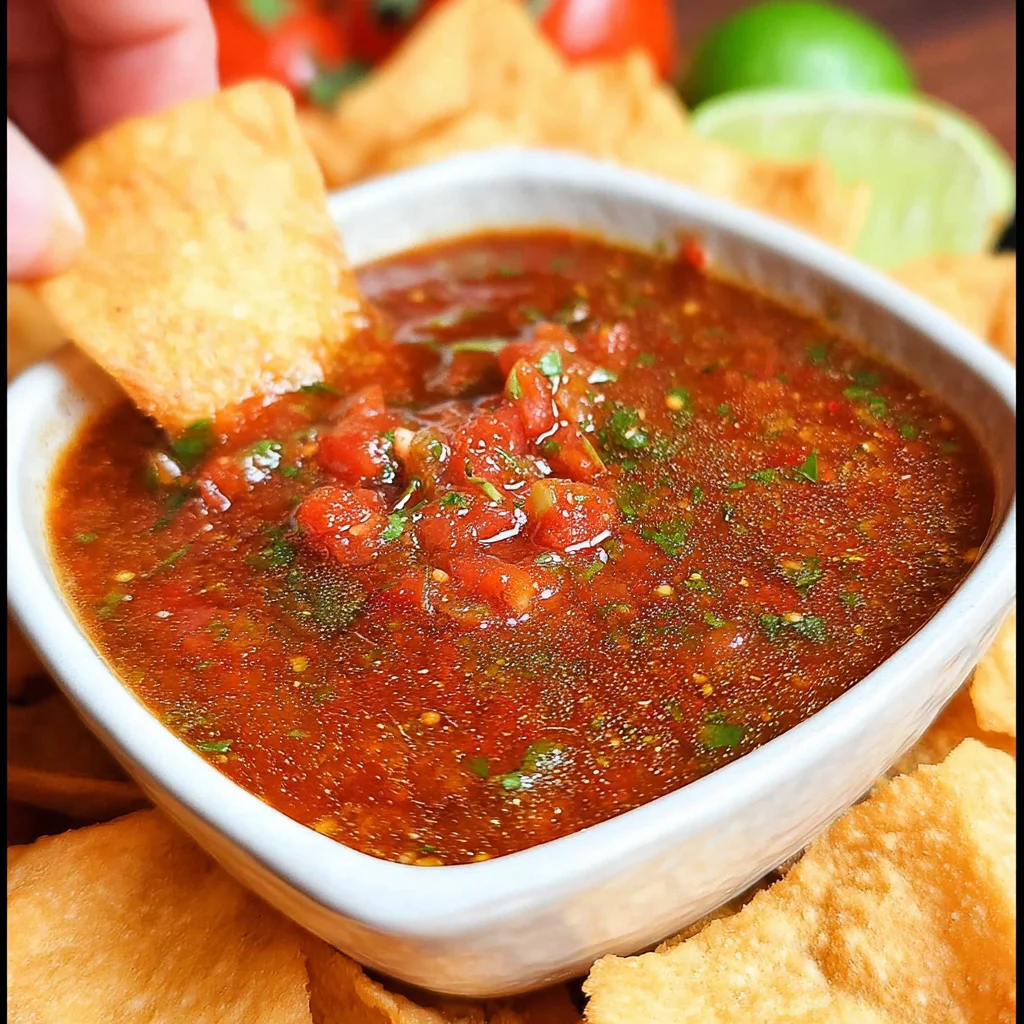
Transfer the salsa to a serving bowl or storage container. For the best flavor, let it rest in the refrigerator for at least 30 minutes. This allows the flavors to fully marry and develop. Serve with tortilla chips, on tacos, or as a topping for grilled chicken or fish.
Nutritional Information
| Calories | 25 |
| Protein | 1g |
| Carbohydrates | 5g |
| Fat | 0g |
| Fiber | 1g |
| Sodium | 180mg |
This fresh salsa is a low-calorie, fat-free source of Vitamin C and antioxidants from the tomatoes and peppers. Note: Estimates are per 1/4 cup serving based on typical ingredients. Values may vary with specific brands or adjustments to salt.
Healthier Alternatives
- Low-Sodium Swap — Use no-salt-added fire-roasted tomatoes and reduce added salt by half. The lime juice and fresh herbs provide plenty of flavor, making this a great heart-healthy option.
- Extra Protein Boost — Stir in one cup of rinsed black beans after blending for a more filling, fiber-rich dip that’s perfect for a post-workout snack.
- Lower Carb / Keto-Friendly — Replace the half-teaspoon of sugar with a pinch of a natural sugar substitute like monk fruit or simply omit it; the tomatoes provide enough natural sweetness.
- Increased Veggie Content — Add 1/2 cup of roasted red peppers or corn (thawed if frozen) after pulsing for extra color, texture, and nutrients.
- Creamy Dairy-Free Version — Blend in 1/4 of a ripe avocado for a luxuriously creamy texture without dairy, creating a quick salsa-avocado fusion.
Serving Suggestions
- Ultimate Game Day Spread: Serve this homemade salsa alongside guacamole, queso, and a variety of tortilla chips and veggie sticks.
- Taco Tuesday Essential: Spoon generously over fish tacos, breakfast burritos, or classic beef tacos for a fresh, acidic counterpoint.
- Grilled Protein Topper: Use it as a vibrant, no-cook sauce for grilled chicken breasts, shrimp skewers, or carne asada.
- Breakfast Upgrade: Top your morning scrambled eggs or a breakfast bowl with a spoonful for a spicy kick.
- Creative Appetizer: Layer over cream cheese as a quick dip, or spoon into endive leaves for a elegant, gluten-free bite.
This versatile condiment shines year-round. In summer, pair it with grilled meats at a barbecue; in winter, its bright flavor brings sunshine to hearty meals. It’s also a perfect make-ahead component for weekly meal prep.
Common Mistakes to Avoid
- Mistake: Not draining the canned tomatoes, resulting in a watery salsa. Fix: Always drain as directed in Step 2, reserving a little liquid to adjust consistency only if needed.
- Mistake: Over-processing in the food processor, which turns the fresh salsa into a thin puree. Fix: Use the pulse function in short bursts to maintain a desirable chunky texture.
- Mistake: Skipping the resting time and serving immediately. Fix: Let it chill for at least 30 minutes so the flavors from the garlic, onion, and spices can fully meld.
- Mistake: Using dried cilantro instead of fresh, which lacks the vibrant, citrusy note. Fix: Always use fresh cilantro; if you dislike it, substitute with fresh parsley or a squeeze of extra lime.
- Mistake: Adding all the jalapeño seeds without tasting for heat first. Fix: Start with one seeded pepper, then taste and add more heat gradually to match your preference.
- Mistake: Storing in a container that’s too large, leaving excess air that degrades flavor. Fix: Use an airtight container sized just for the amount of salsa you made.
Storing Tips
- Fridge: Store your fresh salsa in an airtight glass or BPA-free plastic container. It will keep for 5–7 days at or below 40°F. The flavors often taste best on day two.
- Freezer: For longer storage, freeze in a freezer-safe container or bag for up to 3 months. Thaw overnight in the refrigerator. Note: the texture of fresh tomatoes may soften slightly, but the flavor remains excellent for cooked applications.
- Reheat: This is a no-cook salsa, so reheating isn’t necessary. If using frozen salsa in a cooked dish (like a chili or stew), you can add it directly to the pot and simmer.
For optimal food safety, never leave homemade salsa at room temperature for more than 2 hours. Making a double batch for meal prep is a smart strategy, as this recipe holds up beautifully in the fridge all week.
Conclusion
This Homemade Salsa Recipe is your secret weapon for adding instant, fresh flavor to any meal with minimal effort. Its fire-roasted base and customizable heat make it far superior to any store-bought version. For a different twist, try this Pineapple Salsa Recipe for a sweet and spicy kick. Give this recipe a try and share your favorite way to enjoy it in the comments below!
Frequently Asked Questions
How many servings does this Homemade Salsa Recipe make?
This recipe yields about 3 to 3.5 cups of salsa, which is perfect for a party or for meal prep. According to standard serving sizes for dips, this equates to roughly 12 quarter-cup servings. It’s easy to double the batch if you’re feeding a crowd, as the no-cook method scales up effortlessly.
What can I use if I don’t have a food processor?
You can absolutely make this salsa without a food processor. The best alternative is a sharp knife and cutting board to finely dice all the vegetables by hand for a classic pico de gallo texture. For a smoother blend, use a blender, but pulse carefully to avoid over-pureeing. I’ve tested both methods and find hand-chopping gives the most control over the final chunkiness.
Why is my homemade salsa tasting bitter?
Bitterness usually comes from the white pith and seeds of the peppers or an overabundance of onion. To fix it, balance the flavor with an extra pinch of sugar or a splash more lime juice. For prevention, always thoroughly remove the seeds and membranes from your jalapeños and ensure your onion is fresh, not sprouted.
Print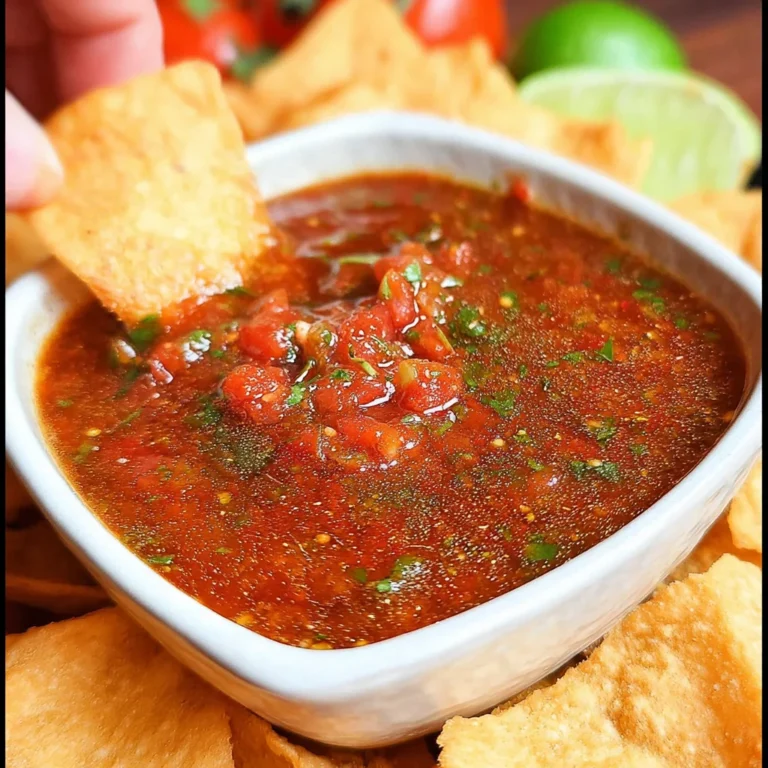
Homemade Salsa Recipe
Ingredients
- 28 oz fire roasted canned tomatoes
- 1/2 medium white onion
- 2 jalapeno peppers
- 2 garlic cloves
- 1 lime – juice only
- 1/3 cup fresh cilantro
- 1/2 tsp white granulated sugar
- 1 tsp salt (more or less to taste)
- 1 tsp cumin
- 1/2 tsp chipotle chili powder (more or less to taste)
Instructions
- Combine all the ingredients in a blender and pulse a few times until it's blended to small, coarse chunks. Don't make it too chunky because you don't' want to bite into a big piece of garlic or jalapeno.
- Serve right away to transfer into a glass jar with a lid and refrigerate.
- Cooking Tortilla Chips (Optional):