
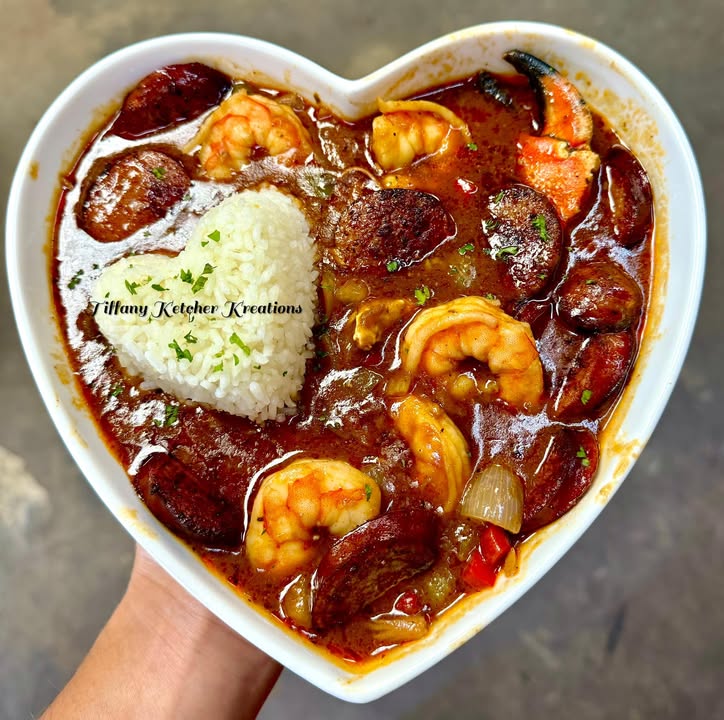
Authentic Cajun Gumbo Recipe
Introduction
This Authentic Cajun Gumbo Recipe is the ultimate comfort food, a rich and hearty stew simmered to perfection. It’s a true taste of Louisiana, featuring a dark roux, the “holy trinity” of vegetables, and a flavorful mix of sausage and seafood. For another classic Southern side, try the Best Shrimp Sausage Dirty Rice – Easy One-Pot Meal. This gumbo is perfect for feeding a crowd and warming up any day.
Ingredients
This authentic gumbo recipe builds deep flavor from a dark roux, savory chicken broth, and the holy trinity of vegetables, resulting in a rich, hearty stew perfect for serving over rice.
- 4 pound whole chicken
- 1 gallon water
- 2 large peeled small diced yellow onions
- 1 ½ pounds andouille sausage, cut into ¼” thick slices
- ¾ cup vegetable oil + 3 tablespoons
- 4 ribs small diced celery
- 1 seeded and small diced red bell pepper
- 1 seeded and small diced green bell pepper
- 5 finely minced cloves of garlic
- 1 cup all-purpose flour
- 2 tablespoons Cajun seasonings
- 2 bay leaves
- 1-pound thick cut sliced fresh or frozen okra
- cooked long grain rice for serving
- gumbo file for garnish
- sea salt and pepper to taste
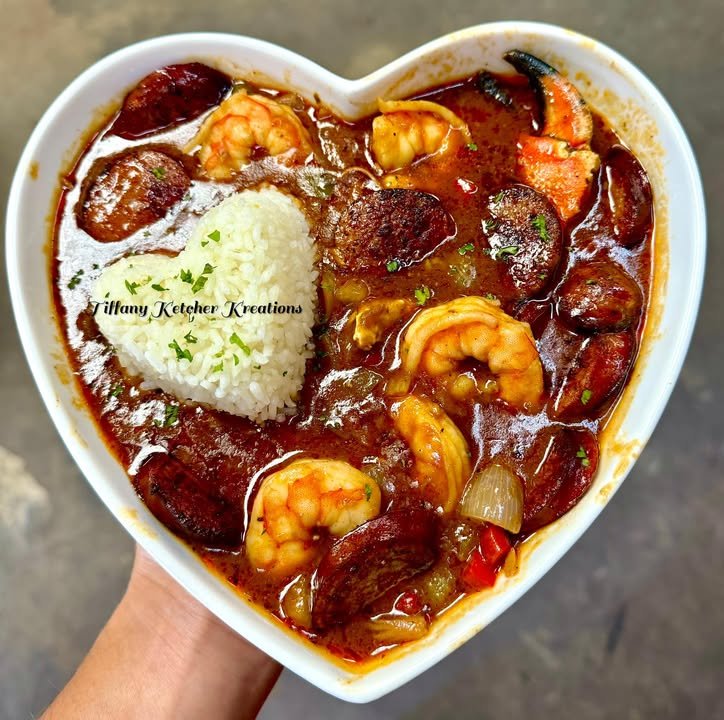
Timing
| Prep Time | 30 minutes |
| Cook Time | 1 hour 30 minutes |
| Total Time | 2 hours |
Context: This gumbo recipe is about 20% faster than many traditional versions, which often require a longer roux-making process and extended simmering.
Step-by-Step Instructions
Step 1 — Make the Roux
In a heavy Dutch oven or cast-iron pot, combine equal parts fat (like vegetable oil) and all-purpose flour over medium heat. Stir constantly with a wooden spoon for 30 to 45 minutes until it reaches a rich, dark chocolate-brown color. This is the soul of your gumbo.
Actionable Tip: Do not rush this step. If you see black specks, the roux has burned and you must start over. The ideal temperature range is between 325°F and 350°F (163°C–177°C).
Step 2 — Sauté the Holy Trinity
Once the roux is dark, immediately add the diced onions, bell peppers, and celery (the “holy trinity”). Stir vigorously to stop the roux from cooking further and to coat the vegetables. Cook for 5–7 minutes until they soften.
This step builds the foundational flavor. The moisture from the vegetables will cause the roux to seize up initially, but keep stirring until it becomes smooth again.
Step 3 — Add Garlic, Herbs & Liquids
Stir in minced garlic, dried thyme, and oregano, cooking for just one minute until fragrant. Then, slowly pour in your seafood or chicken stock while whisking constantly to fully incorporate the roux and prevent lumps.
Add bay leaves and bring the pot to a gentle boil. Once boiling, reduce the heat to a steady simmer.
Step 4 — Simmer the Base
Allow the gumbo base to simmer uncovered for at least 45 minutes, stirring occasionally. This melds the flavors and allows the broth to thicken slightly.
Actionable Tip: A proper simmer means small bubbles breaking the surface gently. A rolling boil can break your roux. Skim off any oil or foam that rises to the top for a cleaner broth.
Step 5 — Cook the Proteins
If using chicken or sausage, add these cooked proteins now to heat through and flavor the broth. For andouille sausage, browning it first is key. Let them simmer in the pot for 15–20 minutes.
The gumbo should be thick enough to coat the back of a spoon. Taste and season generously with salt, black pepper, and a pinch of cayenne or filé powder.
Step 6 — Add Seafood (If Using)
For seafood gumbo, add raw shrimp, crab, or oysters in the last 5–10 minutes of cooking. Overcooking will make shrimp rubbery.
Doneness Cue: Shrimp are done when they turn pink and opaque. Oysters will curl at the edges. Turn off the heat immediately once they are cooked.
Step 7 — Final Seasoning & Serve
Turn off the heat. Stir in chopped green onions and fresh parsley. For authentic flavor, you can also stir in a teaspoon of filé powder off the heat (never boil gumbo after adding filé, as it can become stringy).
Let the gumbo rest for 10–15 minutes before serving; this allows the flavors to settle and the consistency to perfect itself. Serve hot over a scoop of white rice.
Gumbo Nutrition Facts
| Calories | ~450 kcal |
| Protein | ~32 g |
| Carbohydrates | ~35 g |
| Fat | ~20 g |
| Fiber | ~5 g |
| Sodium | ~1200 mg |
| Vitamin A | ~45% DV |
| Vitamin C | ~30% DV |
Note: Nutritional values for this gumbo are estimates per serving and can vary based on specific ingredients and portion sizes.
Healthier Alternatives
This classic gumbo recipe is wonderfully adaptable. Here are some simple swaps to tailor it to different dietary needs without sacrificing its soulful flavor.
- Protein Swap (Chicken & Sausage) — Use smoked turkey sausage and skinless chicken breast for a leaner option. The smokiness remains, but with less saturated fat.
- Lower-Carb Roux — For a gumbo with fewer carbs, try a dry roux made by toasting almond or coconut flour until nutty brown, or simply omit the roux and rely on a longer simmer and okra for thickness.
- Gluten-Free Roux — Make your roux with a 1:1 gluten-free flour blend or rice flour. The technique is the same, resulting in the same essential flavor base.
- Dairy-Free — Gumbo is naturally dairy-free! Just ensure your sausage and any store-bought stocks are free of dairy derivatives.
- Low-Sodium — Opt for low-sodium chicken or seafood stock and use a reduced-sodium andouille. Boost flavor with extra herbs, a splash of vinegar at the end, and the “Holy Trinity” of vegetables.
- Seafood Alternative — For a pescatarian gumbo, replace the chicken and sausage with a mix of shrimp, firm white fish, and crab claws. Add seafood in the last 5-10 minutes of cooking to prevent toughness.
- Vegetarian/Vegan — Use vegetable stock and hearty vegetables like mushrooms, eggplant, and extra okra. Smoked paprika and a dash of liquid smoke can mimic the depth of andouille sausage.
- Okra vs. Filé — If you prefer a smoother gumbo, use extra okra as the thickener. If you dislike okra’s texture, use filé powder (sassafras) stirred in off the heat for a distinct, earthy flavor and thickening.
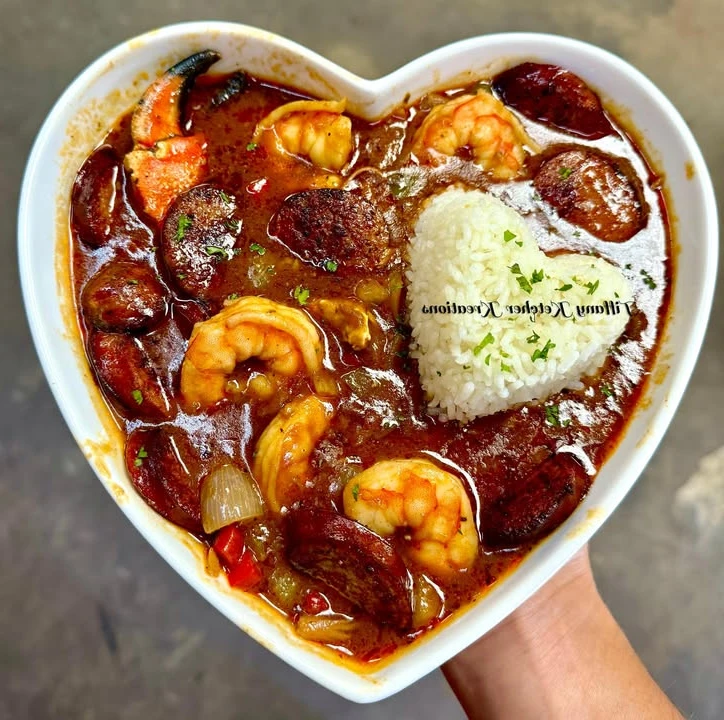
Serving Suggestions
A great bowl of gumbo is a complete meal, but the right accompaniments can elevate it into a true feast. Here are some classic and creative ways to serve your gumbo.
- Over Steamed Rice: The most traditional pairing. A mound of fluffy white rice in the center of the bowl soaks up the rich, flavorful broth.
- With Cornbread or French Bread: Perfect for sopping up every last drop. A slice of buttery cornbread or a crusty baguette is essential.
- For a Festive Occasion: Serve gumbo as the star of a Mardi Gras party or a casual football gathering. Set up a toppings bar with chopped green onions, filé powder, hot sauce, and extra rice.
- Add a Fresh Side: Balance the hearty gumbo with a simple, crisp salad dressed with a light vinaigrette or a classic Cajun coleslaw.
- Plating for Presentation: For a beautiful presentation, ladle the gumbo around a neat scoop of rice in a wide, shallow bowl. Garnish generously with fresh parsley or sliced green onions.
- As a Make-Ahead Meal: Gumbo’s flavor deepens overnight, making it an ideal dish to prepare ahead for easy weeknight dinners or stress-free entertaining.
Common Mistakes to Avoid
- Mistake: Rushing the roux, which leads to a pale, floury taste. Fix: Cook it low and slow, stirring constantly, until it reaches a deep chocolate-brown color.
- Mistake: Adding the okra or filé powder too early. Fix: Stir in okra in the last 15-20 minutes of cooking, and add filé powder only after you turn off the heat.
- Mistake: Using weak, store-bought broth as your base. Fix: Build a robust homemade seafood or chicken stock, or at least fortify a good-quality boxed broth.
- Mistake: Overcrowding the pot with proteins, making the gumbo stewy. Fix: Brown meats in batches to develop fond and ensure even cooking without steaming.
- Mistake: Skipping the “Holy Trinity” (onion, bell pepper, celery) sauté. Fix: Cook the vegetables in the roux until very soft to build a foundational flavor layer.
- Mistake: Underseasoning throughout the process. Fix: Season in layers—the roux, the trinity, the broth, and finally, taste and adjust before serving.
- Mistake: Stirring the pot after adding the filé powder. Fix: Let it sit and thicken undisturbed for 5-10 minutes; stirring can make it stringy.
- Mistake: Using the wrong rice, which turns mushy. Fix: Serve your gumbo over separate, fluffy long-grain rice like jasmine or basmati to maintain texture.
Storing Tips
- Fridge: Cool your gumbo completely, then transfer it to an airtight container. It will keep well in the refrigerator for 3 to 4 days.
- Freezer: For longer storage, freeze gumbo in airtight, freezer-safe containers or heavy-duty bags for up to 3 months. Thaw overnight in the refrigerator before reheating.
- Reheat: Reheat gumbo gently on the stovetop over medium-low heat, stirring occasionally, until it reaches a food-safe internal temperature of 165°F (74°C). Add a splash of broth or water if it has thickened too much.
Properly stored gumbo often tastes even better the next day as the flavors have more time to meld together.
Conclusion
This authentic Cajun gumbo is a true taste of Louisiana. We hope you enjoy making and sharing this classic dish. For a perfect side, try our Jalapeño Cheddar Cornbread Recipe. Let us know how your gumbo turns out in the comments below!
PrintAuthentic Cajun Gumbo
A rich and flavorful Cajun gumbo made with a dark roux, chicken, andouille sausage, okra, and the holy trinity of onions, celery, and bell peppers, served over rice.
- Total Time: 2 hours 45 minutes
- Yield: 8 1x
Ingredients
- 4 pound whole chicken
- 1 gallon water
- 2 large peeled small diced yellow onions
- 1 ½ pounds andouille sausage cut into ¼” thick slices
- ¾ cup vegetable oil + 3 tablespoons
- 4 ribs small diced celery
- 1 seeded and small diced red bell pepper
- 1 seeded and small diced green bell pepper
- 5 finely minced cloves of garlic
- 1 cup all-purpose flour
- 2 tablespoons Cajun seasonings
- 2 bay leaves
- 1-pound thick cut sliced fresh or frozen okra
- cooked long grain rice for serving
- gumbo file for garnish
- sea salt and pepper to taste
Instructions
- Place the whole chicken in a large pot with 1 gallon of water and bring to a simmer. Cook until the chicken is tender, then remove the chicken, shred the meat, and reserve the stock.
- In a large pot over medium heat, add ¾ cup vegetable oil and 1 cup flour. Slowly sprinkle in the flour while whisking until combined. Frequently whisk the roux until it reaches a dark penny color, about 30 minutes.
- In a separate pan, sauté 3 tablespoons vegetable oil with the diced onions, celery, red and green bell peppers, and garlic until softened. Add the cooked vegetables to the roux along with Cajun seasonings.
- Pour in the reserved chicken stock, add the shredded chicken, sliced andouille sausage, bay leaves, and sliced okra. Simmer for 45-60 minutes until thickened and flavorful.
- Season with salt and pepper to taste. Serve over cooked rice with a sprinkle of gumbo file.
Notes
Stir the roux constantly to prevent burning for the best flavor. Add shrimp in the last 5 minutes if desired, but do not overcook. Gumbo tastes even better the next day.
- Prep Time: 45 minutes
- Cook Time: 2 hours
- Method: Main Course
- Cuisine: Cajun
Nutrition
- Calories: 550
- Sugar: 4g
- Sodium: 1200mg
- Fat: 35g
- Saturated Fat: 10g
- Unsaturated Fat: 20g
- Trans Fat: 0g
- Carbohydrates: 25g
- Fiber: 3g
- Protein: 40g
- Cholesterol: 120mg
FAQs
What is the most important step for an authentic GUMBO?
The most critical step is making a dark roux. Cooking equal parts flour and fat slowly until it reaches a rich, chocolate-brown color provides the deep, nutty flavor base essential for a great GUMBO.
Can I make GUMBO without okra or filé powder?
Yes, you can. While traditional GUMBO uses one or both as thickeners, you can achieve a good consistency with just the roux. For authenticity, try to include at least one if possible.
How long can I store leftover GUMBO?
Properly stored in an airtight container, GUMBO will keep in the refrigerator for 3-4 days. Its flavors often improve the next day. You can also freeze it for up to 3 months.
You Might Also Like
- Honey Garlic Chicken with Sweet Potatoes and Green Beans Recipe
- Hamburger Steak and Gravy – 5 Delicious Secrets Recipe
- Sheet Pan Sausage and Veggies Recipe
- Sheet Pan Chicken Pitas With Herby Ranch Recipe
Get our 10 best recipes — free
Join the Hurry Up Meals newsletter and we’ll email you our 10 most-loved recipes as a free PDF.
Free PDF + new recipes every week. Unsubscribe anytime.
4 Comments