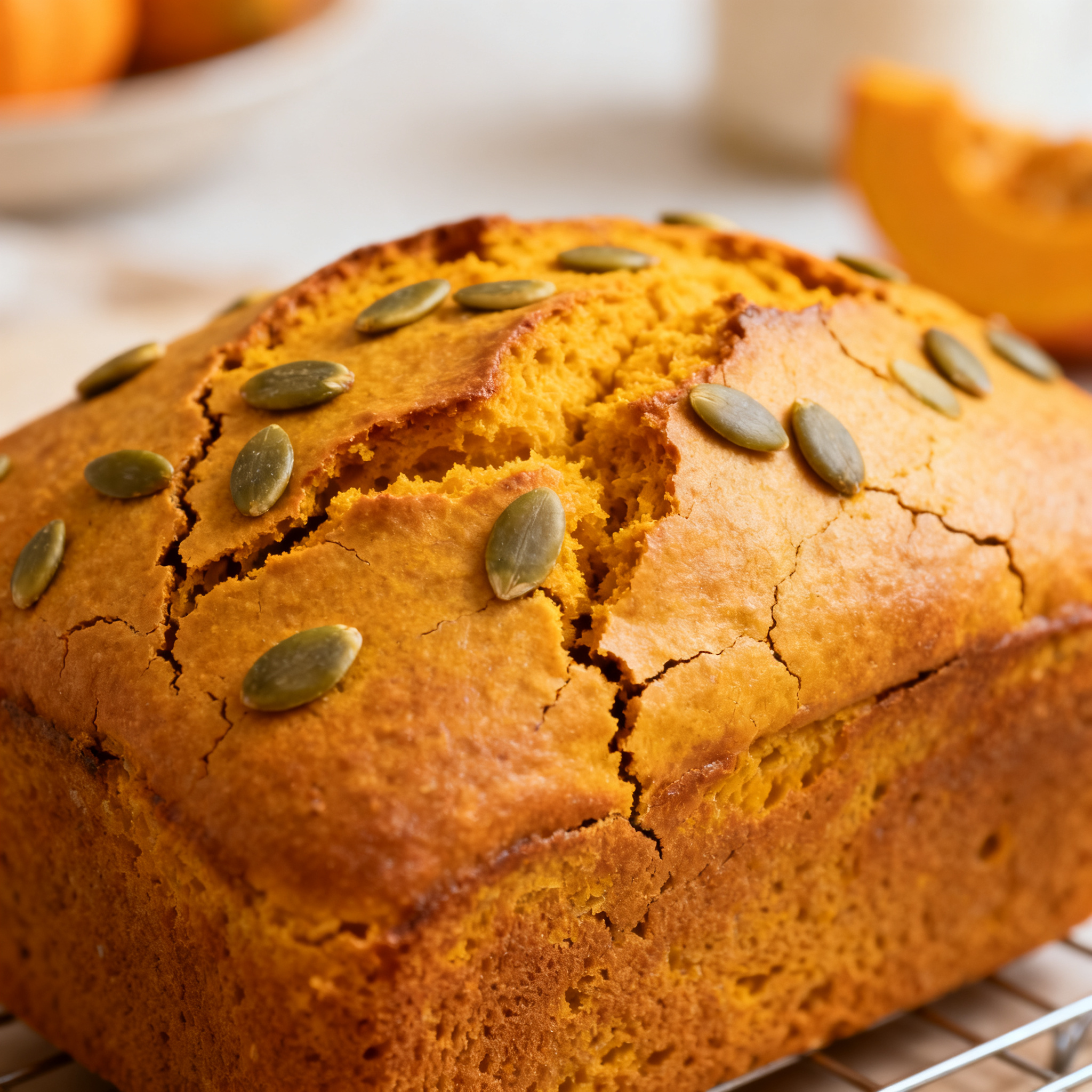
Easy Pumpkin Bread (The Blotting Trick for a Perfect Crumb)
Most pumpkin bread turns out damp and gummy in the center because canned pumpkin puree is loaded with extra water nobody accounts for. This version blots the puree dry first, the same trick you'd use on ricotta before a cheesecake, then swaps the usual vegetable oil for browned butter for a deeper, nuttier crumb. The result is a pumpkin bread that's dense in the right way — moist, spiced, and sliceable the moment it cools, not soggy in the middle.
Simple, everyday ingredients and clear, step-by-step instructions — every recipe made in Dorothy’s kitchen before it reaches yours. Jump to the full recipe card below.
Easy Pumpkin Bread (The Blotting Trick for a Perfect Crumb)
A rich, spiced pumpkin bread with a blotted-puree trick and nutty browned butter for a moist, never-gummy crumb.
- Total Time: 1 hour 15 minutes (plus cooling)
- Yield: 1 loaf (10 slices) 1x
Ingredients
- 1 (15 oz) can pumpkin puree, blotted dry (see notes)
- 1/2 cup (1 stick) unsalted butter, browned and cooled
- 1 3/4 cups all-purpose flour
- 1 teaspoon baking soda
- 1/2 teaspoon salt
- 2 teaspoons pumpkin pie spice
- 1/4 teaspoon ground black pepper
- 2 large eggs, room temperature
- 3/4 cup granulated sugar
- 1/3 cup packed brown sugar
- 1 teaspoon vanilla extract
- 1/2 cup chopped walnuts or pecans (optional)
Instructions
- Preheat the oven to 350°F (175°C) and grease a 9×5-inch loaf pan.
- Spread the pumpkin puree over a few layers of paper towels, press gently to draw out excess liquid, let sit 5 minutes, then scrape into a large bowl.
- Melt the butter in a light-colored saucepan over medium heat, swirling often, until the milk solids turn amber and it smells toasted, 4-5 minutes. Pour into a bowl and let cool to room temperature.
- Whisk the flour, baking soda, salt, pumpkin pie spice, and black pepper together in a separate bowl.
- Whisk the browned butter, eggs, granulated sugar, brown sugar, and vanilla into the blotted pumpkin puree until smooth.
- Fold the dry ingredients into the wet ingredients just until no streaks of flour remain; fold in the nuts if using. Do not overmix.
- Pour the batter into the prepared pan and smooth the top. Bake 55-65 minutes, tenting loosely with foil after 40 minutes if the top is browning too fast.
- Check at 55 minutes with a skewer — it should come out with a few moist crumbs, not wet batter. Cool in the pan 15 minutes, then turn out onto a rack to cool completely before slicing.
Notes
Blotting the puree is non-negotiable — skip it and you’re back to a gummy center no matter how long you bake. Store the loaf wrapped at room temperature for 3 days, or refrigerate up to a week; it also freezes well for up to 3 months, sliced and wrapped individually. If you don’t have pumpkin pie spice, use 1 1/4 tsp cinnamon, 1/4 tsp ginger, 1/4 tsp nutmeg, and a pinch of cloves.
- Prep Time: 15 minutes
- Cook Time: 60 minutes
- Method: Baking
- Cuisine: American
Canned pumpkin puree is the reason so much pumpkin bread comes out gummy in the middle no matter how long you bake it. It’s roughly 90% water, and when you dump a full can straight into the batter, that water has nowhere to go except into the crumb, leaving a wet, under-baked-looking band right through the center even when the loaf is fully cooked. The fix is simple and takes five minutes: spread the puree over paper towels or a clean kitchen towel, press gently, let it sit for a few minutes, then scrape it into the bowl. You’ll lose almost no pumpkin flavor — if anything, it concentrates — but you lose the excess water that was sabotaging your crumb.
The second move is browning the butter instead of reaching for vegetable oil. Oil keeps quick breads moist, but it’s flavor-neutral, which is why so many pumpkin breads taste like cinnamon sugar with nothing underneath. Cooking the butter until the milk solids turn amber and smell like toasted hazelnuts adds a savory, caramelized backbone that plays against the pumpkin’s sweetness instead of just amplifying it. Let the browned butter cool to room temperature before mixing it in, or it will start cooking the eggs.
The most common mistake once you’ve made these two changes is still overbaking, since a blotted, brown-butter batter looks a shade darker and bakes a little faster than a standard recipe. Start checking at the low end of the bake time and pull the loaf when a skewer comes out with a few moist crumbs clinging to it, not clean — carryover heat finishes the job as it rests. A thin foil tent over the top for the last 15 minutes keeps the crust from over-darkening before the center catches up.
Fresh roasted pumpkin puree works too, as long as you blot it even more aggressively — it holds more water than the canned version. For a fall-forward variation, fold in a handful of chopped crystallized ginger or swap half the brown sugar for maple sugar; both play well with the browned butter without fighting the pumpkin.
Frequently Asked Questions
Why is my pumpkin bread gummy in the middle?
Canned pumpkin puree is mostly water, and if you don't remove some of it, that liquid stays trapped in the crumb even after the loaf looks fully baked. Blotting the puree dry before mixing is the fix.
Can I use fresh pumpkin instead of canned puree for pumpkin bread?
Yes, but blot it even more aggressively than canned — roasted fresh pumpkin holds more moisture and will make the bread denser and wetter if you skip that step.
Why brown the butter for pumpkin bread instead of using oil?
Oil keeps the crumb moist but adds no flavor of its own. Browned butter adds a toasted, nutty depth that balances the pumpkin's sweetness instead of just amplifying it.
Can I make pumpkin bread ahead of time?
Yes — it actually tastes better the next day once the spices settle. Wrap it tightly and store at room temperature for up to 3 days, refrigerate for up to a week, or freeze sliced portions for up to 3 months.
Get our 10 best recipes — free
Join the Hurry Up Meals newsletter and we’ll email you our 10 most-loved recipes as a free PDF.
Free PDF + new recipes every week. Unsubscribe anytime.