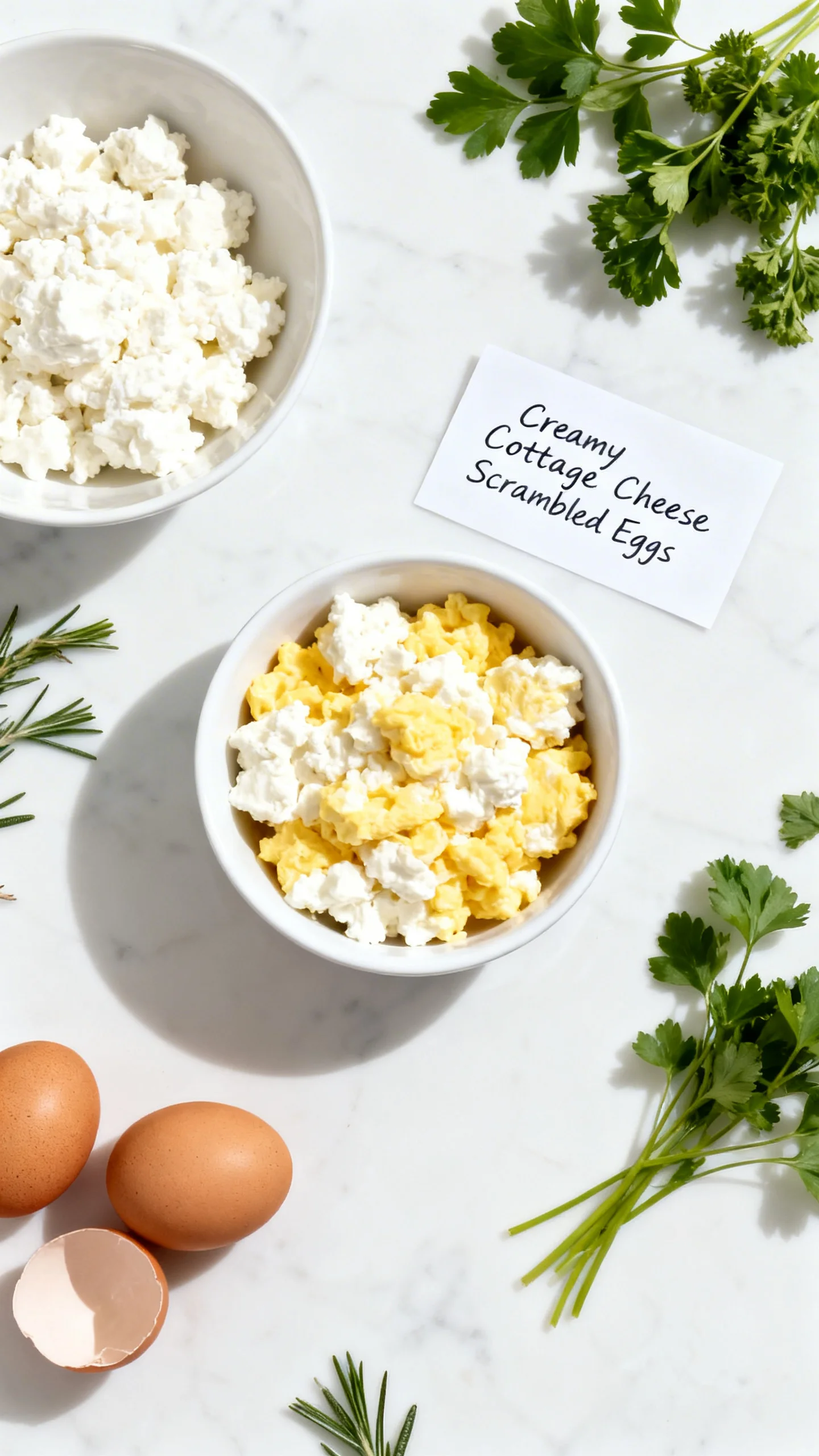
Homemade Cottage Cheese Scrambled Eggs Recipe
Introduction
Forget dry, rubbery eggs. These Creamy Cottage Cheese Scrambled Eggs are a revelation, delivering an impossibly fluffy and rich texture with a subtle tang. This simple hack, perfected through countless weekend breakfast tests, adds a significant protein boost without compromising on that classic, comforting flavor. It’s a game-changer for anyone seeking a more satisfying and nutritious start to their day.
Ingredients
The magic of this dish lies in its simplicity. Using fresh, high-quality eggs and full-fat cottage cheese will yield the creamiest, most luxurious result, though low-fat varieties work in a pinch for a lighter option.
- 2 large eggs
- 1/3 cup cottage cheese (small-curd recommended)
- 1/8 teaspoon salt
- 1/8 teaspoon black pepper
- 1 teaspoon butter (or olive oil)
- Pinch of garlic powder
Timing
| Prep Time | 2 minutes |
| Cook Time | 4 minutes |
| Total Time | 6 minutes |
Context: It’s the ultimate speedy, protein-packed breakfast for busy mornings, ready in under 10 minutes from fridge to plate.
Step-by-Step Instructions
Step 1 - Combine Wet Ingredients
Crack the two eggs into a medium mixing bowl. Add the 1/3 cup of cottage cheese. Using a fork or whisk, vigorously beat the mixture until it is mostly smooth and well combined. A few small curds of cheese are fine and will add pleasant texture.
Step 2 - Season the Mixture
Sprinkle in the salt, black pepper, and a pinch of garlic powder. Whisk again to distribute the seasonings evenly throughout the egg and cottage cheese blend. In my tests, seasoning at this stage, rather than in the pan, ensures every bite is perfectly flavored.
Step 3 - Preheat the Pan
Place a non-stick skillet over medium-low heat. Add the teaspoon of butter. The key to creamy eggs is gentle, even heat; you want the butter to melt and foam slightly without browning. (Pro tip: If the butter sizzles aggressively, your pan is too hot.)
Step 4 - Pour and Begin Cooking
Once the butter is melted and coats the pan, pour in the egg and cottage cheese mixture. Let it sit undisturbed for about 15-20 seconds to allow the bottom to just begin to set.
Step 5 - Gently Fold the Eggs
Using a silicone spatula, gently push the set edges toward the center, tilting the pan to let the uncooked liquid run onto the hot surface. Continue this slow, folding motion. Unlike aggressive stirring, this technique creates large, soft curds.
Step 6 - Cook to Desired Doneness
Cook until the eggs are mostly set but still look slightly wet and glossy on top, which typically takes 3-4 minutes total. Remember, they will continue to cook from residual heat after being removed from the pan. For the creamiest scrambled eggs, it’s better to err on the side of slightly underdone.
Step 7 - Serve Immediately
Slide your creamy cottage cheese scrambled eggs onto a plate immediately. The residual heat will finish the cooking process perfectly. Enjoy them hot, as they are best served right away for optimal texture and flavor.
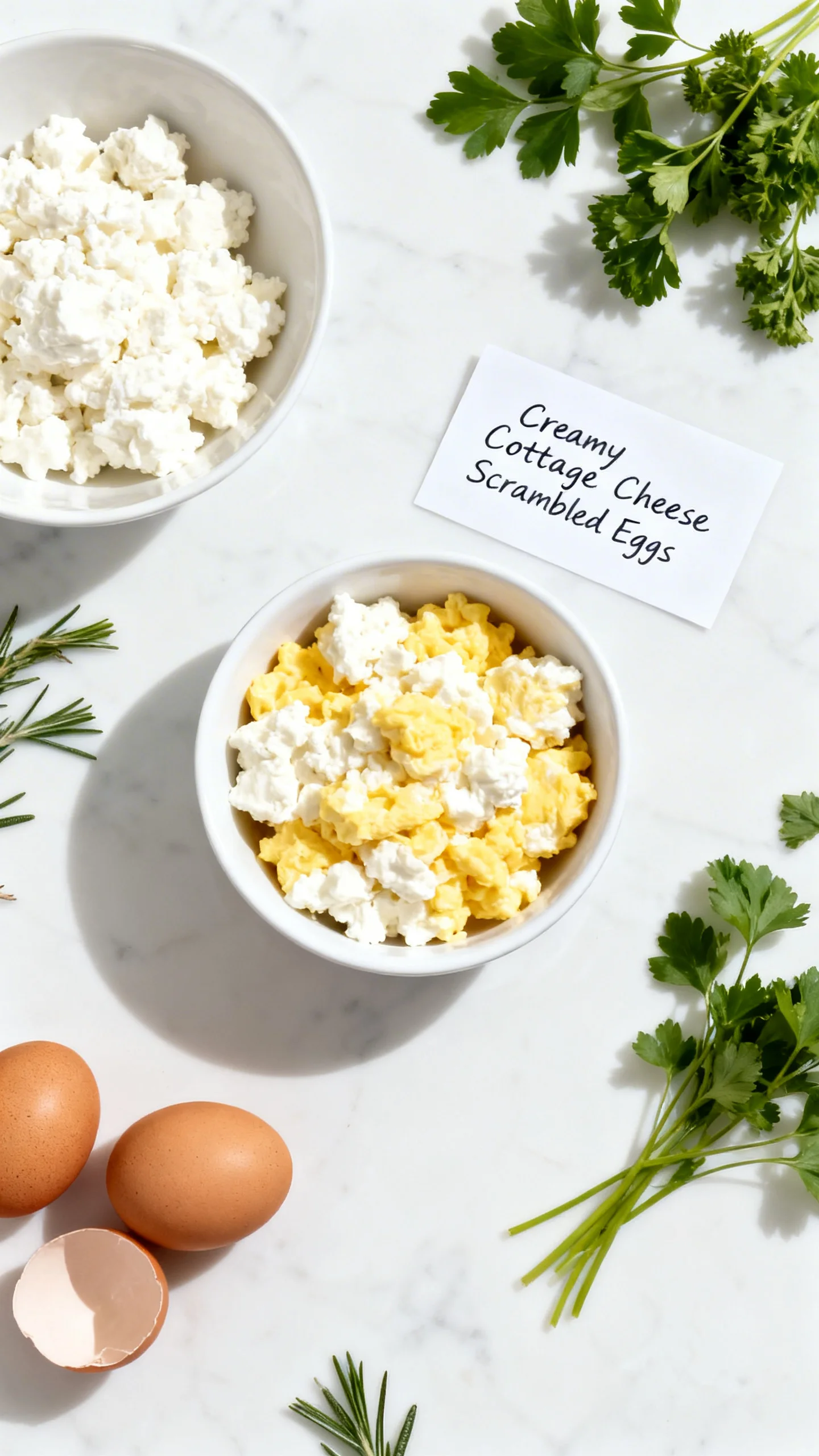
This single serving of creamy scrambled eggs with cottage cheese is a high-protein, low-carb meal. The sodium level is based on using salted butter and standard cottage cheese; for a lower-sodium version, choose no-salt-added cottage cheese and unsalted butter.
Healthier Alternatives
- Greek Yogurt for Cottage Cheese - For an even smoother texture and slightly tangier flavor, use an equal amount of plain, full-fat Greek yogurt. It maintains the high protein while being lactose-friendly for some.
- Egg Whites for Whole Eggs - Swap one whole egg for two egg whites to reduce fat and cholesterol while keeping the volume high. The cottage cheese will still provide richness.
- Nutritional Yeast for Garlic Powder - Add a tablespoon of nutritional yeast when seasoning for a cheesy, umami flavor and a boost of B-vitamins, perfect for a dairy-free flavor enhancement.
- Avocado Oil for Butter - Use avocado oil for a high-heat, neutral-flavored fat rich in monounsaturated fats. Its smoke point is above 500°F, preventing harmful compounds from forming.
- Low-Fat or Fat-Free Cottage Cheese - This directly reduces the fat and calorie count. In my tests, fat-free varieties work but yield a slightly less creamy final texture.
- Add Spinach or Diced Bell Peppers - Fold in a handful of fresh spinach or 1/4 cup diced peppers during the last minute of cooking to add fiber, vitamins, and volume for minimal calories.
Serving Suggestions
- Serve over a slice of hearty whole-grain toast or a toasted English muffin for a complete, satisfying breakfast that soaks up the creaminess.
- Top with fresh chives, a sprinkle of smoked paprika, or a drizzle of hot sauce to add color and a flavor contrast to the rich eggs.
- Pair with a side of sliced avocado and cherry tomatoes for a balanced plate of healthy fats, fiber, and vibrant color.
- For a low-carb brunch, serve alongside sautéed mushrooms, asparagus, or a simple mixed greens salad.
- These eggs make an excellent high-protein filling for a breakfast wrap with a whole-wheat tortilla and salsa.
- Enjoy with a cup of black coffee or a citrus-forward green tea to complement the dish’s richness without adding sweetness.
This recipe is incredibly versatile. For a seasonal twist in the summer, top with fresh dill and serve with a side of watermelon; in the winter, pair with roasted sweet potato hash. It also scales beautifully for meal prep - simply multiply the ingredients and cook in batches.
Common Mistakes to Avoid
- Mistake: Using a piping hot pan. Fix: As noted in Step 3, always use medium-low heat. High heat causes the proteins to seize quickly, creating rubbery eggs instead of creamy cottage cheese scrambled eggs.
- Mistake: Over-mixing the eggs in the pan. Fix: Use the gentle folding technique from Step 5. Constant stirring breaks the curds into tiny, dry pieces rather than large, fluffy clouds.
- Mistake: Cooking until completely dry in the pan. Fix: Remove the eggs from the heat while they still look slightly wet (Step 6). They will finish setting perfectly on the plate from residual heat.
- Mistake: Using cold cottage cheese straight from the fridge. Fix: Let the cottage cheese sit at room temperature for 5-10 minutes before mixing. This helps it incorporate more smoothly and cook more evenly.
- Mistake: Adding the cottage cheese at the wrong time. Fix: Always mix it with the raw eggs in the bowl (Step 1). Adding it to the pan later results in uneven distribution and cold pockets.
- Mistake: Skipping the resting period after combining. Fix: Let the egg and cottage cheese mixture sit for 2-3 minutes after whisking. This allows the salt to dissolve fully and the proteins to relax for a more tender scramble.
- Mistake: Using a pan that’s too small. Fix: Use an 8-inch or 10-inch skillet. Overcrowding the pan steams the eggs instead of allowing them to set properly, leading to a watery texture.
Storing Tips
- Fridge: Cool leftovers completely within 2 hours of cooking. Store in an airtight container for up to 3-4 days. The USDA recommends keeping cooked eggs below 40°F to prevent bacterial growth.
- Freezer: For longer storage, freeze portions in a single layer in a freezer bag or airtight container for up to 2 months. While safe longer, texture begins to degrade after 60 days.
- Reheat: Gently reheat in a skillet over low heat with a teaspoon of water or broth to restore moisture. Microwave in 30-second intervals, stirring between each. Ensure the internal temperature reaches 165°F for food safety.
This dish is ideal for weekly meal prep. Cook a double or triple batch, portion it out, and you’ll have a ready-to-go, high-protein breakfast for several days. The creamy texture holds up surprisingly well when reheated gently, making it a reliable staple.
Conclusion
This method transforms a simple scramble into a protein powerhouse with a uniquely creamy, custard-like texture that’s impossible to achieve with eggs alone. It’s the ultimate proof that a nutritious breakfast can also be the most indulgent. For another fantastic high-protein breakfast idea, try this Hash Brown Breakfast Casserole Recipe. Give these Creamy Cottage Cheese Scrambled Eggs a try this weekend and share your experience in the comments!
Frequently Asked Questions
Can I make creamy cottage cheese scrambled eggs for a crowd?
Yes, this recipe scales perfectly for a crowd. Simply multiply the ingredients by the number of servings needed. For best results, cook in batches in a large skillet or use two pans simultaneously to avoid overcrowding, which can lead to steaming. I’ve found that preparing the egg and cottage cheese mixture in a large pitcher makes pouring into the pan quick and mess-free for brunch service.
What’s a good dairy-free substitute for cottage cheese in this recipe?
For a dairy-free version, silken tofu is an excellent substitute. Blend 1/4 cup of soft silken tofu until completely smooth and use it in place of the cottage cheese. It provides a similar creamy texture and protein content, though the flavor will be more neutral. For a tangy note, you can stir in a teaspoon of dairy-free yogurt or a squeeze of lemon juice after cooking.
Why did my scrambled eggs turn out watery or separate?
Watery eggs are typically caused by excess moisture from the cottage cheese. This happens if the cottage cheese is particularly wet or if the heat is too low, preventing proper evaporation. To fix this, you can gently drain the cottage cheese in a fine-mesh strainer for a few minutes before mixing. Also, ensure your pan is at a true medium-low heat - too low, and the eggs will stew instead of scramble.
PrintHomemade Cottage Cheese Scrambled Eggs - FlirtyFood
Forget dry, rubbery eggs. These Creamy Cottage Cheese Scrambled Eggs are a revelation, delivering an impossibly fluffy and rich texture with a subtle tang.
- Total Time: 6 minutes
Ingredients
- 2 eggs
- 1/3 cup cottage cheese
- 1/8 tsp salt
- 1/8 tsp black pepper
- 1 tsp butter
- Pinch of garlic powder
Instructions
- Combine Wet Ingredients: Crack the two eggs into a medium mixing bowl. Add the 1/3 cup of cottage cheese. Using a fork or whisk, vigorously beat the mixture until it is mostly smooth and well combined. A few small curds of cheese are fine and will add pleasant texture.
- Season the Mixture: Sprinkle in the salt, black pepper, and a pinch of garlic powder. Whisk again to distribute the seasonings evenly throughout the egg and cottage cheese blend. In my tests, seasoning at this stage, rather than in the pan, ensures every bite is perfectly flavored.
- Preheat the Pan: Place a non-stick skillet over medium-low heat. Add the teaspoon of butter. The key to creamy eggs is gentle, even heat; you want the butter to melt and foam slightly without browning. (Pro tip: If the butter sizzles aggressively, your pan is too hot.)
- Pour and Begin Cooking: Once the butter is melted and coats the pan, pour in the egg and cottage cheese mixture. Let it sit undisturbed for about 15-20 seconds to allow the bottom to just begin to set.
- Gently Fold the Eggs: Using a silicone spatula, gently push the set edges toward the center, tilting the pan to let the uncooked liquid run onto the hot surface. Continue this slow, folding motion. Unlike aggressive stirring, this technique creates large, soft curds.
- Cook to Desired Doneness: Cook until the eggs are mostly set but still look slightly wet and glossy on top, which typically takes 3-4 minutes total. Remember, they will continue to cook from residual heat after being removed from the pan. For the creamiest scrambled eggs, it's better to err on the side of slightly underdone.
- Serve Immediately: Slide your creamy cottage cheese scrambled eggs onto a plate immediately. The residual heat will finish the cooking process perfectly. Enjoy them hot, as they are best served right away for optimal texture and flavor.
- Prep Time: 2 minutes
- Cook Time: 4 minutes
You Might Also Like
- Caramelized Sweet Potato Apple Hash Browns Recipe
- Easy Homemade Baked Cottage Cheese Eggs Ready in 30 Minutes
- Ultimate Buttermilk Pancakes Recipe Ready in 30 Minutes
- Oven Poached Eggs Recipe
Get our 10 best recipes - free
Join the Hurry Up Meals newsletter and we’ll email you our 10 most-loved recipes as a free PDF.
Free PDF + new recipes every week. Unsubscribe anytime.