Apple Cider Glazed Pork Tenderloin (Double-Reduction Method)
Most apple cider glazed pork tenderloin recipes pour raw cider straight into the pan and hope for the best, ending up with a thin, watery puddle instead of a glossy glaze. This version reduces the cider into a thick syrup before it ever touches the meat, then builds a second pan sauce with the fond, cider vinegar, and butter—so every slice is lacquered, not soggy.
Simple, everyday ingredients and clear, step-by-step instructions — every recipe made in Dorothy’s kitchen before it reaches yours. Jump to the full recipe card below.
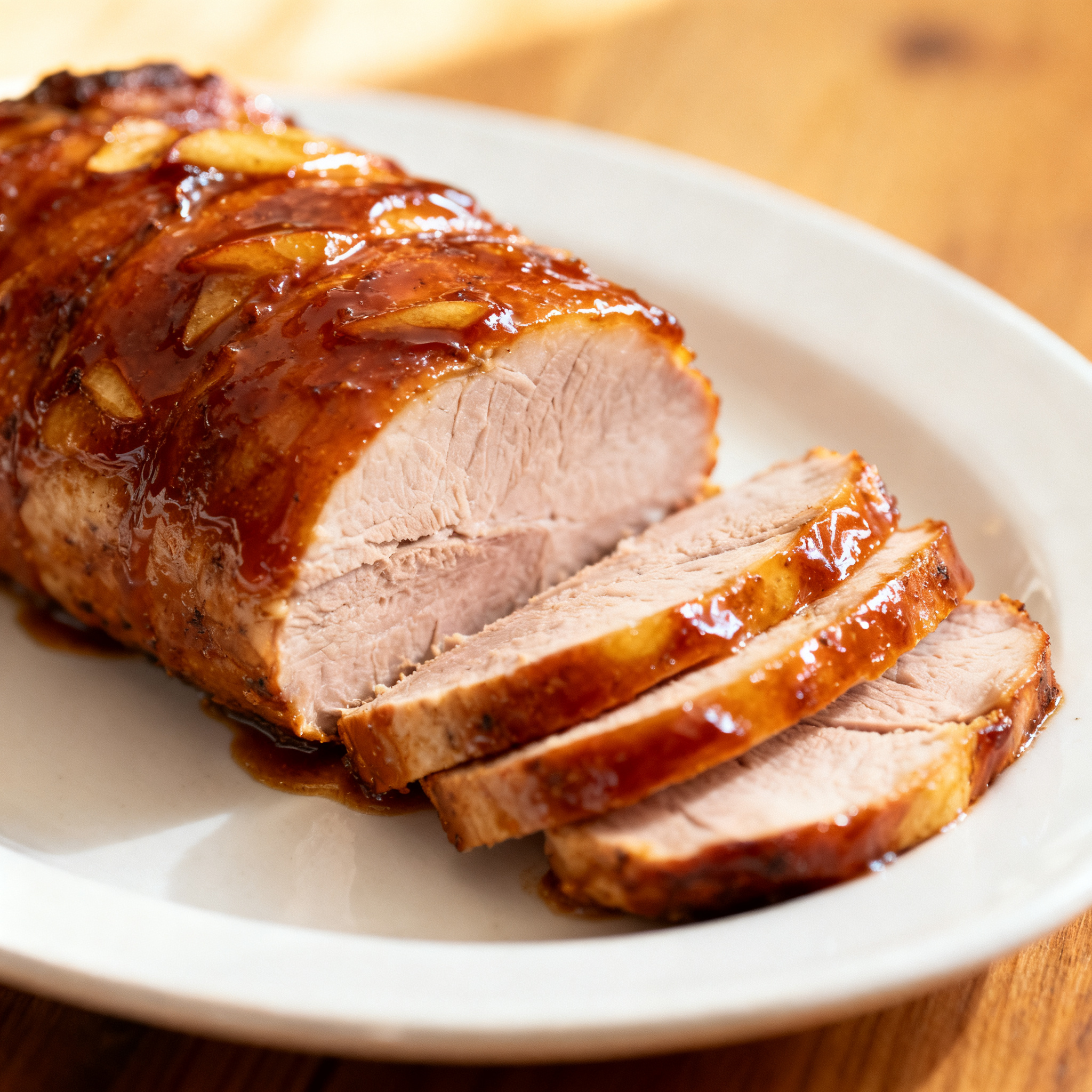
Apple Cider Glazed Pork Tenderloin (Double-Reduction Method)
Seared pork tenderloin glazed with a double-reduced apple cider syrup and finished with a cider-vinegar pan sauce.
- Total Time: 35 minutes
- Yield: 4 1x
Ingredients
- 1 pork tenderloin (about 1 to 1.25 lbs), trimmed
- 2 cups apple cider (not apple juice)
- 2 tbsp apple cider vinegar, divided
- 1 tbsp dijon mustard
- 2 tbsp neutral oil
- 3 tbsp unsalted butter, cold and cubed
- 3 cloves garlic, smashed
- 4 sprigs fresh thyme or sage
- Salt and black pepper
- Flaky salt, for serving
Instructions
- In a small saucepan, simmer the apple cider over medium heat until reduced to about 1/3 cup and syrupy, 15-20 minutes. Watch closely in the last few minutes; pull it the moment it coats a spoon. Off heat, whisk in 1 tbsp of the cider vinegar. Set aside.
- Pat the pork tenderloin dry, season generously with salt and pepper, and rub all over with dijon mustard.
- Heat oil in a heavy skillet over medium-high heat. Sear the pork on all sides until deeply browned, about 8-10 minutes total. Add garlic and thyme to the pan in the last 2 minutes.
- Reduce heat to medium. Brush the pork all over with the cider syrup and continue cooking, turning and basting, until a thermometer inserted in the thickest part reads 137-140°F, about 5-8 more minutes.
- Transfer pork to a cutting board, tent loosely with foil, and rest 10 minutes; it will climb to about 145°F.
- While it rests, return the skillet to medium heat. Add remaining 1 tbsp cider vinegar and any remaining syrup, scraping up the browned bits. Remove from heat and whisk in cold butter a piece at a time until glossy.
- Slice the pork, spoon the pan sauce over the top, and finish with flaky salt.
Notes
Use fresh-pressed or unfiltered apple cider, not apple juice—juice lacks the tannin and acidity to reduce into a proper glaze. A digital instant-read thermometer is essential here; pull the pork earlier than instinct tells you. For a deeper glaze, substitute half the cider with a dry hard cider. Leftovers reheat gently in a low oven with a splash of stock to loosen the sauce.
- Prep Time: 10 minutes
- Cook Time: 25 minutes
- Method: Pan-searing
- Cuisine: American
The problem with almost every apple cider pork tenderloin recipe is timing: you sear the pork, add raw cider to the pan, and expect it to reduce into a glaze in the same few minutes it takes the pork to finish cooking. It doesn’t work. Cider is mostly water and juice, and reducing it enough to actually coat the meat takes 15-20 minutes of simmering—time your tenderloin doesn’t have before it overcooks. My fix is a double reduction: simmer the cider down to a thick, mahogany syrup on its own, well before the pork goes anywhere near a pan. That syrup becomes the glaze. What’s left in the skillet after searing—the browned bits, the rendered fat—becomes a second, faster pan sauce built with a splash of apple cider vinegar and a knob of cold butter whisked in off the heat.
The other place people go wrong is temperature. Pork tenderloin is lean, and lean muscle turns to sawdust past 150°F. Pull it at 137-140°F internal and let it rest under foil; carryover heat will carry it to a safe 145°F while keeping the center blush pink and genuinely juicy. If you’ve only ever had gray, chalky pork tenderloin, this is almost always why—not the recipe, the thermometer. A splash of apple cider vinegar in the reduction is non-negotiable too: straight cider glaze is one-note sweet, and the vinegar cuts it enough that the dish reads savory-forward instead of like a dessert sauce.
Watch the syrup closely once it thickens—cider goes from syrupy to scorched in under a minute because the natural sugars caramelize fast in a thin layer. Pull it the moment it coats the back of a spoon; it will thicken further as it cools. If you want more depth, brown the butter before whisking it into the pan sauce, or swap in a dry hard cider for half the liquid for a more complex, less candy-sweet glaze. Fresh sage or thyme stirred in at the end plays well against the sweetness, and a smear of dijon on the pork before searing gives the glaze something to grip.
Frequently Asked Questions
Why is my apple cider glaze thin instead of syrupy?
You're likely adding raw cider to the pan and trying to reduce it while the pork cooks. There isn't enough time. Reduce the cider separately to a thick syrup first, then use it as a glaze during the last few minutes of searing.
What temperature should apple cider glazed pork tenderloin be cooked to?
Pull the pork at 137-140°F internal and let it rest; carryover heat will bring it to a safe 145°F while keeping it juicy. Cooking past 150°F is the most common reason pork tenderloin turns dry.
Can I use apple juice instead of apple cider?
Not recommended. Apple juice is filtered and sweeter with less acidity, so it reduces into a flat, overly sweet syrup. Unfiltered apple cider has the tannin and tartness needed for a balanced glaze.
What sides go well with apple cider glazed pork tenderloin?
Roasted root vegetables, mashed potatoes, sautéed apples, or a simple arugula salad all balance the sweetness of the glaze.
Get our 10 best recipes — free
Join the Hurry Up Meals newsletter and we’ll email you our 10 most-loved recipes as a free PDF.
Free PDF + new recipes every week. Unsubscribe anytime.