Bok Choy Chicken Recipe
Introduction
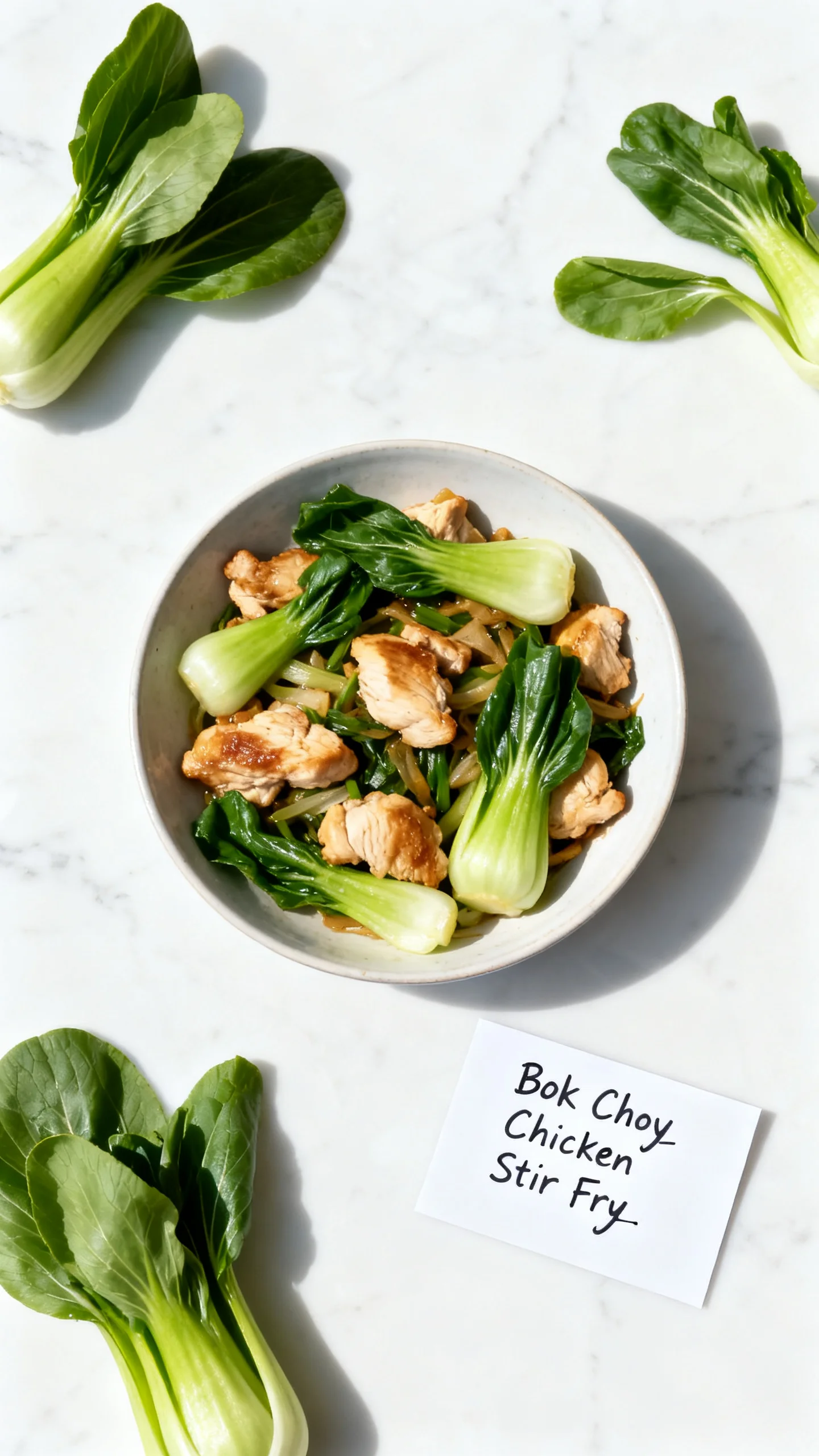
This vibrant Bok Choy Chicken Stir Fry is a weeknight hero, delivering crisp-tender greens and juicy chicken in a savory, glossy sauce. After testing countless variations, I’ve perfected this version to be both lightning-fast and packed with authentic flavor. It’s a balanced, one-pan meal that proves healthy eating can be incredibly delicious and satisfying.
Ingredients
Fresh, crisp bok choy and thinly sliced chicken are the stars here. Using a hot wok or skillet is key for that signature smoky “wok hei” flavor and to keep the vegetables bright and crunchy.
- 6 oz boneless and skinless chicken breast (cut into thin pieces)
- 2 tablespoons oil (such as peanut or vegetable)
- 8 oz bok choy (sliced into pieces)
- 1 inch ginger (peeled and sliced into pieces)
- ½ tablespoon soy sauce
- ½ tablespoon cornstarch
- ½ tablespoon oyster sauce (or vegetarian stir-fry sauce)
- 2 tablespoons water
- ¼ teaspoon sesame oil
- 3 dashes white pepper
- 1 teaspoon Shaoxing wine (or Chinese rice wine, or dry sherry)
- ½ teaspoon sugar
Timing
| Prep Time | 10 minutes |
| Cook Time | 8 minutes |
| Total Time | 18 minutes |
Context: This streamlined stir fry is ready in under 20 minutes. It’s the perfect timeline for a busy weeknight when you need a wholesome meal on the table in a flash.
Step-by-Step Instructions
Step 1 - Prepare the Sauce and Chicken
In a small bowl, whisk together the soy sauce, oyster sauce, water, sesame oil, white pepper, Shaoxing wine, and sugar until the sugar dissolves. In a separate bowl, toss the thinly sliced chicken breast with the cornstarch until evenly coated. (Pro tip: This light coating, known as velveting, helps seal in the chicken’s juices during the quick stir-fry.)
Step 2 - Heat the Wok and Cook Aromatics
Place a wok or large skillet over high heat and add the oil. Once the oil is shimmering hot - this is crucial for proper stir-frying - add the sliced ginger. Stir-fry for about 30 seconds until very fragrant but not browned.
Step 3 - Stir-Fry the Chicken
Add the cornstarch-coated chicken to the hot wok in a single layer. Let it sear undisturbed for 1 minute to develop color, then stir-fry for another 2-3 minutes until the pieces are opaque and cooked through. Remove the chicken to a clean plate.
Step 4 - Cook the Bok Choy
Add the sliced bok choy to the wok. Stir-fry for 2-3 minutes. You’ll want to cook the thicker white stems first for about a minute before adding the leafy greens. Unlike boiling, this high-heat method quickly wilts the leaves while keeping the stems crisp-tender.
Step 5 - Combine and Simmer
Return the cooked chicken to the wok with the bok choy. Give the prepared sauce a quick stir and pour it over everything. Toss to coat and let the mixture simmer for 1-2 minutes until the sauce thickens into a glossy coating.
Step 6 - Final Adjustments and Serve
Do a final taste test. If you prefer a saltier dish, add a splash more soy sauce. Serve your Bok Choy Chicken Stir Fry immediately over steamed rice. In my tests, this dish is best enjoyed right away while the vegetables retain their vibrant color and texture.
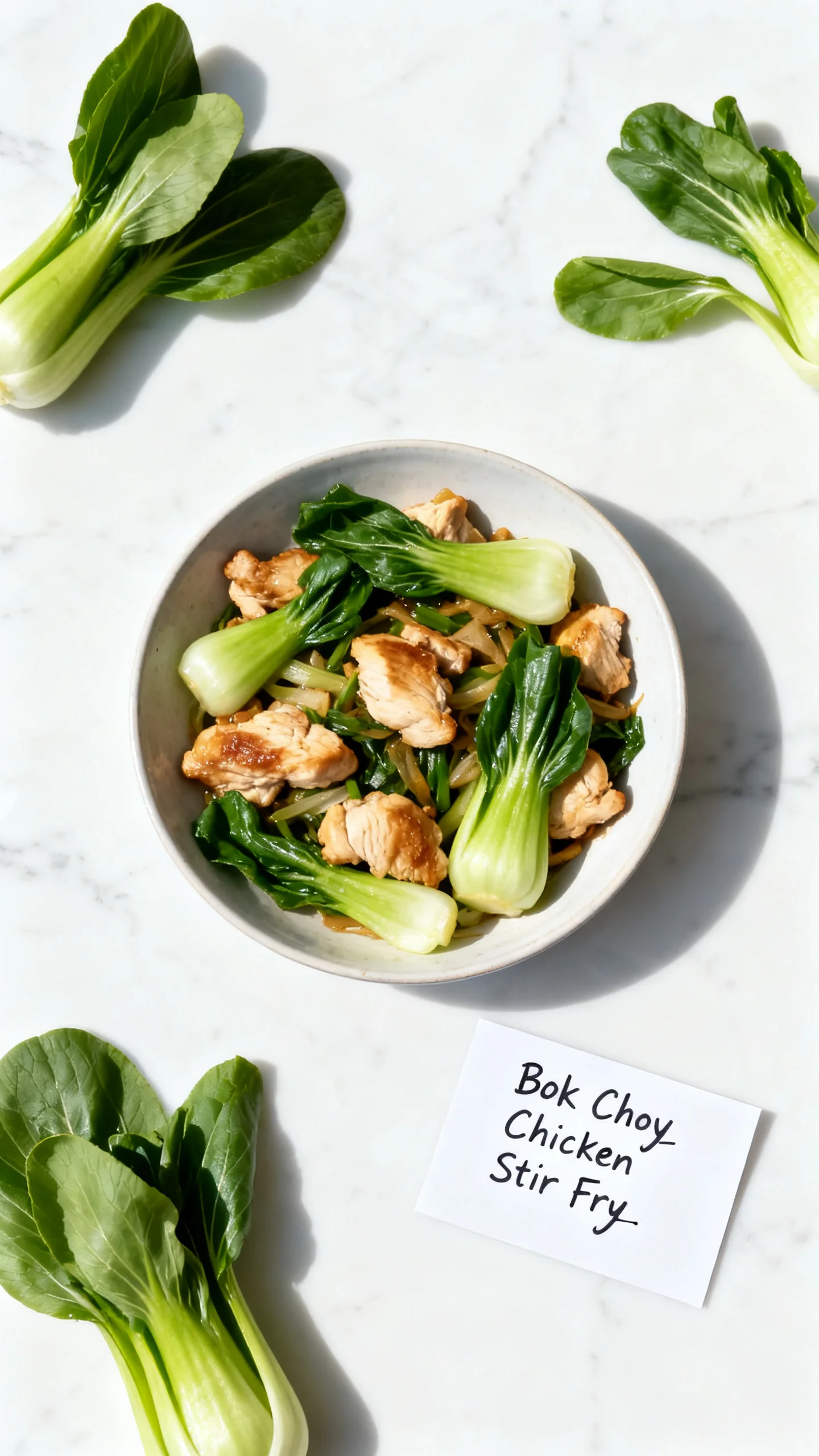
This chicken and bok choy stir fry is a high-protein, low-carb meal. It’s also a good source of Vitamin A and Vitamin C from the fresh greens.
Healthier Alternatives
- Swap chicken for tofu or tempeh - For a plant-based protein, use extra-firm tofu (pressed and cubed). It absorbs the savory sauce beautifully.
- Use coconut aminos instead of soy sauce - This creates a gluten-free, lower-sodium version with a slightly sweeter, umami flavor.
- Try arrowroot powder instead of cornstarch - A great paleo-friendly thickener that creates an equally glossy sauce.
- Add extra vegetables like bell peppers or mushrooms - Boosts fiber and volume without significantly increasing calories.
- Use low-sodium oyster sauce or hoisin.
- Opt for chicken thighs instead of breast - Provides more iron and stays juicier during the quick high-heat cook.
Serving Suggestions
- Serve over cauliflower rice for a low-carb, grain-free meal that soaks up the delicious sauce.
- Pair with a simple side of steamed edamame or a quick cucumber salad for a more complete dinner.
- For a heartier meal, spoon the stir fry over fluffy jasmine rice or soba noodles.
- Garnish with toasted sesame seeds, sliced green onions, or a sprinkle of crushed red pepper for extra color and heat.
- This dish pairs wonderfully with a light, crisp beverage like jasmine tea or a dry Riesling.
- It’s perfect for casual weeknight dinners, but elegant enough for a simple weekend gathering.
This versatile stir fry is excellent for meal prep. Simply double the recipe and pack it with rice for ready-to-go lunches that stay fresh for days.
Common Mistakes to Avoid
- Mistake: Adding the sauce too early, which can make the chicken stew instead of sear. Fix: Always sear the protein first and add the sauce at the very end, as directed in Step 5.
- Mistake: Overcrowding the wok or skillet. Fix: Cook in batches if needed. Overcrowding lowers the pan’s temperature dramatically, causing the ingredients to steam and become soggy.
- Mistake: Not getting the wok hot enough before adding oil. Fix: Heat your pan over high heat for a full 1-2 minutes until a drop of water sizzles and evaporates instantly.
- Mistake: Cutting the bok choy stems and leaves the same size. Fix: Slice the thicker white stems smaller than the leafy greens so they cook evenly and remain crisp-tender.
- Mistake: Skipping the cornstarch coating on the chicken. Fix: This light velveting (Step 1) is crucial - it creates a protective layer that seals in juices during the intense stir-fry heat.
- Mistake: Stirring the chicken constantly after adding it to the pan. Fix: Let it sear undisturbed for that first minute to develop flavorful browning, then stir-fry.
- Mistake: Using bottled “stir-fry sauce” that’s high in sugar and additives. Fix: Stick with the simple, balanced sauce from this recipe for clean, authentic flavor.
Storing Tips
- Fridge: Cool completely and store in an airtight container for up to 4 days. The bok choy will soften but the flavors meld beautifully.
- Freezer: Freeze in a sealed container or heavy-duty bag for up to 3 months. Note: The texture of the bok choy will become softer upon thawing, but the dish is still great for quick meals.
- Reheat: For best results, reheat in a skillet over medium heat with a splash of water or broth to refresh the sauce. Microwave reheating can make the vegetables mushy. Always ensure the internal temperature reaches 165°F for food safety.
For meal prep, store the stir fry separately from cooked rice. In my tests, this keeps the texture optimal for up to 5 days when refrigerated promptly below 40°F.
Conclusion
This Bok Choy Chicken Stir Fry is the ultimate proof that a nutritious, restaurant-quality meal can be on your table in under 20 minutes. Its perfect balance of savory sauce, crisp vegetables, and tender chicken makes it a reliable favorite. For another quick Asian-inspired dinner, try this Easy Homemade Beef Lo Mein Recipe Ready in 30 Minutes. Give this recipe a try and share your results in the comments!
Frequently Asked Questions
How many servings does this Bok Choy Chicken Stir Fry make?
This recipe yields 2 generous main course servings when served with rice. You can easily double all ingredients to serve 4. According to standard recipe scaling, doubling works perfectly without adjusting cook times, though you may need to cook in two batches to avoid overcrowding the pan.
What can I use if I don’t have Shaoxing wine?
Dry sherry is the best direct substitute. If you don’t have that, use a teaspoon of chicken broth or water with a tiny splash of rice vinegar for acidity. I’ve tested both options; the broth/water maintains the sauce’s consistency while the vinegar mimics the wine’s subtle tang. Avoid sweet cooking wines, as they will alter the sauce’s savory balance.
Why is my stir-fry sauce too thin and watery?
Why is my stir-fry sauce too thin and watery?
This usually happens if the cornstarch wasn’t properly activated by heat. Ensure your sauce simmers for the full 1-2 minutes in Step 5; the bubbling is what thickens it. If it’s still thin, create a quick slurry by mixing an extra ½ teaspoon of cornstarch with a tablespoon of cold water and stir it in. Unlike other thickeners, cornstarch requires a brief boil to reach its full thickening power.
PrintBok Choy Chicken
Ingredients
- 6 oz boneless and skinless chicken breast (cut into thin pieces)
- 2 tablespoons oil
- 8 oz bok choy (sliced into pieces)
- 1 inch ginger (peeled and sliced into pieces)
- ½ tablespoon soy sauce
- ½ tablespoon cornstarch
- ½ tablespoon oyster sauce
- 2 tablespoons water
- ¼ teaspoon sesame oil
- 3 dashes white pepper
- 1 teaspoon Shaoxing wine ( or Chinese rice wine)
- ½ teaspoon sugar
Instructions
- Marinate the chicken with the ingredients in Marinade for 10 minutes.
- Combine all the ingredients for the Sauce in a small bowl and stir to blend well.
- Heat ½ tablespoon oil in a wok until hot. Add the chicken and quickly stir-fry until the surface of the chicken turns opaque or white. Dish out and set aside.Pro Tip: This step seals in the juices in the chicken, so the texture stays tender and velvety smooth.
- Heat the remaining oil in the wok until hot. Add the ginger and stir-fry until aromatic. Add the chicken back into the wok, then add the bok choy and stir to combine well.
- Transfer the sauce into the wok and continue to stir-fry until the bok choy is cooked. Pro Tip: The bok choy is ready when the leaves are wilted and the stems are bright green but still slightly crisp. Do not overcook.
- Dish out and serve immediately with steamed white rice.
You Might Also Like
- Italian Beef Ragu Recipe
- Spaghetti Squash with Chicken, Tomatoes, Spinach, and Feta Recipe
- Marry Me Chicken Pasta Recipe
- Easy Ham and Cheese Puff Pastry Pinwheels Recipe
Get our 10 best recipes - free
Join the Hurry Up Meals newsletter and we’ll email you our 10 most-loved recipes as a free PDF.
Free PDF + new recipes every week. Unsubscribe anytime.