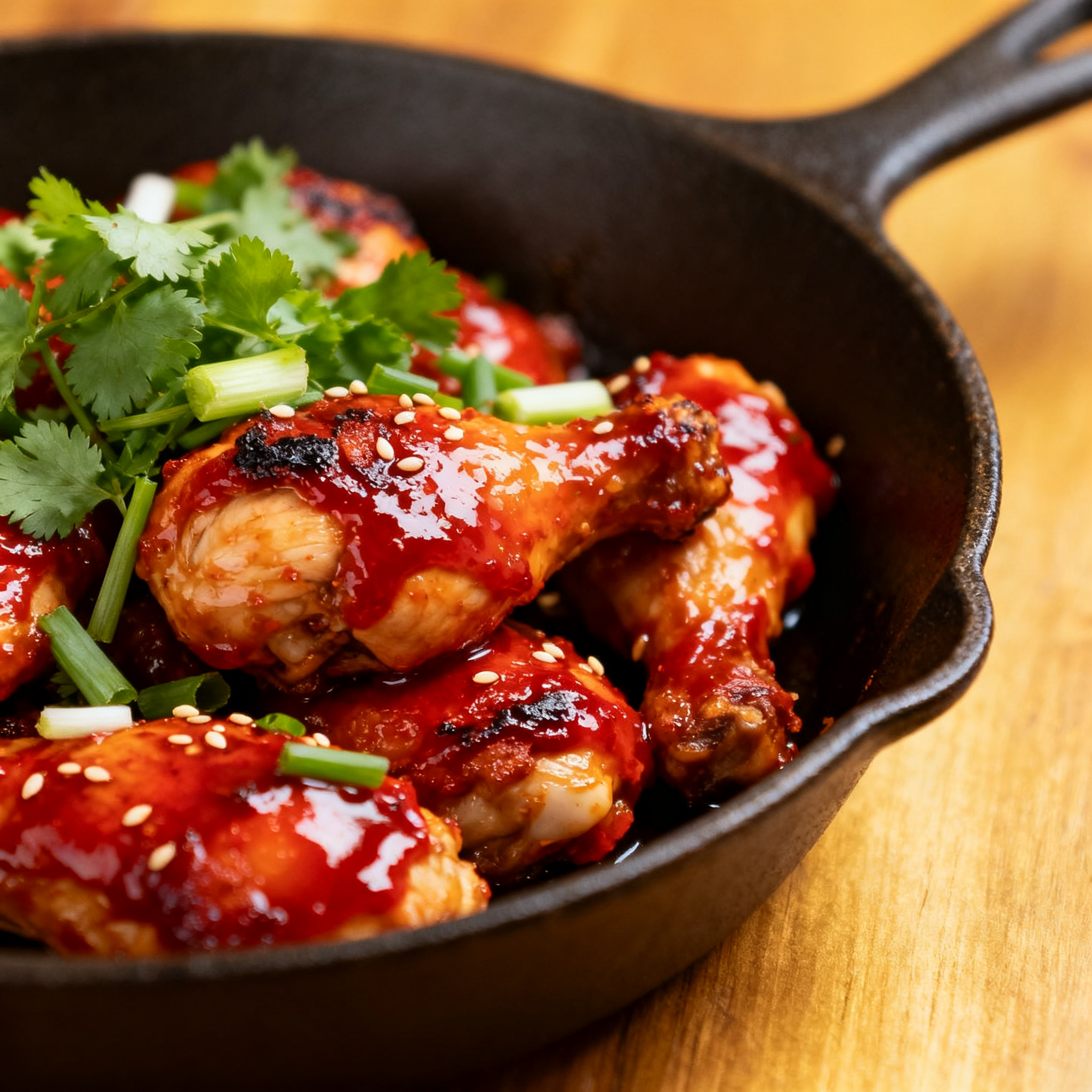
Korean Gochujang Glazed Chicken Skillet
This gochujang chicken skillet skips the pour-and-simmer method most recipes rely on, blooming the paste in rendered chicken fat and swapping refined sugar for grated pear so the glaze turns deep and fruity instead of one-note sweet. A cold-butter swirl at the end gives it the glossy, clingy lacquer you'd expect from a Korean-American gastropub, not a weeknight dump-and-stir dinner.
Simple, everyday ingredients and clear, step-by-step instructions — every recipe made in Dorothy’s kitchen before it reaches yours. Jump to the full recipe card below.
Korean Gochujang Glazed Chicken Skillet
Crispy-skinned chicken thighs glazed in a bloomed gochujang-pear sauce, finished with a butter swirl for a glossy, restaurant-style lacquer.
- Total Time: 40 minutes
- Yield: 4 1x
Ingredients
- 6 boneless, skin-on chicken thighs (about 1.75 lbs / 800g)
- 1 teaspoon kosher salt
- 1/2 teaspoon black pepper
- 3 tablespoons gochujang (Korean chili paste)
- 1/3 cup grated Asian pear or Honeycrisp apple, with juice
- 2 tablespoons soy sauce
- 1 tablespoon rice vinegar
- 1 tablespoon toasted sesame oil
- 4 garlic cloves, grated
- 1 teaspoon grated fresh ginger
- 1 tablespoon light brown sugar (optional)
- 1/3 cup chicken stock or water
- 2 tablespoons cold unsalted butter, cubed
- 2 scallions, thinly sliced
- 1 tablespoon toasted sesame seeds
Instructions
- Pat the chicken thighs dry and season both sides with salt and pepper.
- In a bowl, whisk together the grated pear, soy sauce, rice vinegar, sesame oil, garlic, ginger, and brown sugar; set aside. Keep the gochujang separate for now.
- Place the chicken skin-side down in a cold, dry skillet, then set the heat to medium. Let the fat render slowly for 8-10 minutes until the skin is deeply golden and crisp. Flip and sear the other side for 3-4 minutes, then transfer the chicken to a plate.
- Pour off all but about 1 tablespoon of the rendered fat. Add the gochujang directly to the hot fat and stir constantly for 30-45 seconds, just until it darkens slightly and smells toasted, not burnt.
- Pour in the pear mixture and chicken stock, scraping up the browned bits from the bottom of the pan. Bring to a simmer.
- Nestle the chicken back in, skin-side up, along with any juices. Simmer uncovered for 8-10 minutes, spooning the sauce over the chicken every couple of minutes, until it reduces to a syrupy glaze and the chicken reaches 165°F (74°C).
- Turn off the heat and drop in the cold butter cubes, swirling the pan until the sauce turns glossy and emulsified.
- Scatter with scallions and sesame seeds. Serve immediately over steamed rice.
Notes
Grate the pear on the largest holes of a box grater and use it juice and all — its enzymes tenderize the chicken and its natural sugars caramelize more gently than white sugar, so the glaze reads sweet-hot instead of just sweet. No Asian pear? A Honeycrisp or Fuji apple works almost as well. If you only have bone-in thighs, sear skin-side down 12-14 minutes to render properly and add 5 minutes to the final simmer. For more heat, stir 1/2 teaspoon gochugaru into the glaze with the gochujang. Leftovers keep 3 days refrigerated and reheat well in a skillet with a splash of water to loosen the glaze.
- Prep Time: 15 minutes
- Cook Time: 25 minutes
- Method: Skillet
- Cuisine: Korean
Almost every gochujang chicken skillet recipe does the same thing: whisk gochujang with soy sauce and honey in a bowl, pour it over raw or seared chicken, and simmer until it thickens. The result is fine, but it’s flat — the paste never gets a chance to actually cook, so you taste sugar and salt before you taste the fermented depth gochujang is supposed to bring. My method blooms the gochujang alone, directly in the fat the chicken just rendered, the same way you’d bloom curry paste or tomato paste. Thirty to forty-five seconds in hot fat wakes up the fermented funk and deepens the red color before any liquid touches it.
The mistake almost everyone makes with gochujang is adding it too early or over too-high heat, and it scorches — gochujang is sugar-heavy and burns fast, and once it catches, the whole glaze tastes bitter and acrid instead of rich. Keep the heat at medium, add the paste only after you’ve poured off the excess fat, stir it constantly, and have your liquid ready to deglaze the second it darkens. That’s the whole trick: bloom, then rescue with liquid before it can burn.
Grated pear instead of straight sugar is the other reason this version doesn’t taste like every other gochujang chicken skillet. Korean marinades have used pear for generations — its enzymes gently tenderize the meat, and its natural sugars caramelize slower and rounder than refined sugar, so the glaze reads sweet-hot and fruity instead of cloying. It also thins the sauce just enough that it reduces to a proper glaze rather than turning gluey.
No Asian pear? A Honeycrisp or Fuji apple, grated with its juice, gets you 90% of the way there. Bone-in thighs work too — just render the skin longer, about 12-14 minutes, and add 5 minutes to the final simmer. Don’t skip the cold-butter swirl at the end; it emulsifies the glaze into something glossy that actually sticks to the chicken instead of running off onto the rice, which is the difference between a good gochujang chicken skillet and a great one.
Frequently Asked Questions
What is gochujang and can I substitute it?
Gochujang is a fermented Korean chili paste made from red chili, glutinous rice, and fermented soybeans — it's sweeter, thicker, and more savory-complex than plain hot sauce. If you can't find it, mix 2 tablespoons red miso with 1 tablespoon sriracha as a rough stand-in, though the flavor won't be identical.
Can I make this gochujang chicken skillet with chicken breast?
Yes, but boneless, skinless breast won't give you the rendered fat that makes the glaze glossy — sear it in 1 tablespoon of neutral oil instead, and pull it from the pan at 160°F since breast overcooks fast in a reducing glaze.
How do I make it less spicy?
Cut the gochujang to 2 tablespoons and add an extra tablespoon of grated pear or a teaspoon of honey. The glaze will still have warmth from the ginger and garlic without the burn.
What should I serve with gochujang chicken skillet?
Steamed short-grain rice is non-negotiable for soaking up the glaze; a quick cucumber salad or kimchi on the side cuts the richness.
Get our 10 best recipes — free
Join the Hurry Up Meals newsletter and we’ll email you our 10 most-loved recipes as a free PDF.
Free PDF + new recipes every week. Unsubscribe anytime.