
Jamie Oliver Self Saucing Lemon Pudding Recipe
Introduction
Few desserts deliver the magic of a warm, tangy lemon pudding that creates its own luscious sauce as it bakes. This recipe for Jamie Oliver Self-Saucing Lemon Pudding is a testament to that simple, crowd-pleasing alchemy. After testing several versions, I’ve found this one strikes the perfect balance between a light, fluffy sponge and a vibrant, zesty sauce, making it an ideal finale for any meal.
Ingredients
The magic of this self-saucing dessert relies on simple, quality ingredients. Using fresh lemon juice and zest is non-negotiable for that bright, aromatic flavor that defines this classic Jamie Oliver Self-Saucing Lemon Pudding.
- ½ cup (1 stick) unsalted butter, melted and cooled slightly
- 1 cup granulated sugar
- 3 large eggs, separated
- Zest of 2 lemons
- ½ cup freshly squeezed lemon juice
- ⅓ cup all-purpose flour
- 1¼ cups whole milk (room temperature)
- 1 teaspoon vanilla extract
- Pinch of salt
- Powdered sugar, for dusting (optional)
- Whipped cream or vanilla ice cream, for serving (optional)
Timing
| Prep Time | 20 minutes |
| Cook Time | 40 minutes |
| Total Time | 1 hour |
Context: This recipe is about 20% faster than many traditional steamed puddings, as the baking process is more efficient. It’s a fantastic make-ahead option; you can prepare the batter and have it ready to bake just before dinner, ensuring a warm, gooey dessert with minimal last-minute effort.
Step-by-Step Instructions
Step 1 — Prep Oven and Dish
Preheat your oven to 350°F (180°C). Lightly grease a medium-sized baking dish (about 8-inch square or equivalent) with butter. This ensures the delicate sponge releases cleanly and the sauce can bubble up the sides.
Step 2 — Combine Wet Base
In a large bowl, whisk together the melted butter and granulated sugar until well combined. Add the egg yolks, lemon zest, lemon juice, and vanilla extract, whisking vigorously until the mixture is smooth and slightly thickened.
Step 3 — Incorporate Dry Ingredients
Sift the flour and salt directly into the wet mixture. (Pro tip: Sifting prevents lumps in your final batter.) Gently whisk until just combined, then gradually whisk in the room-temperature milk until you have a thin, smooth batter.
Step 4 — Whip Egg Whites
In a separate, completely clean and dry bowl, use an electric mixer to whip the egg whites until they form stiff, glossy peaks. This step is crucial for creating the pudding’s signature light and airy top layer.
Step 5 — Fold and Assemble
Using a large spatula, gently fold one-third of the whipped egg whites into the lemon batter to lighten it. Then, carefully fold in the remaining whites until no large white streaks remain. Pour the final batter into your prepared dish.
Step 6 — Bake to Perfection
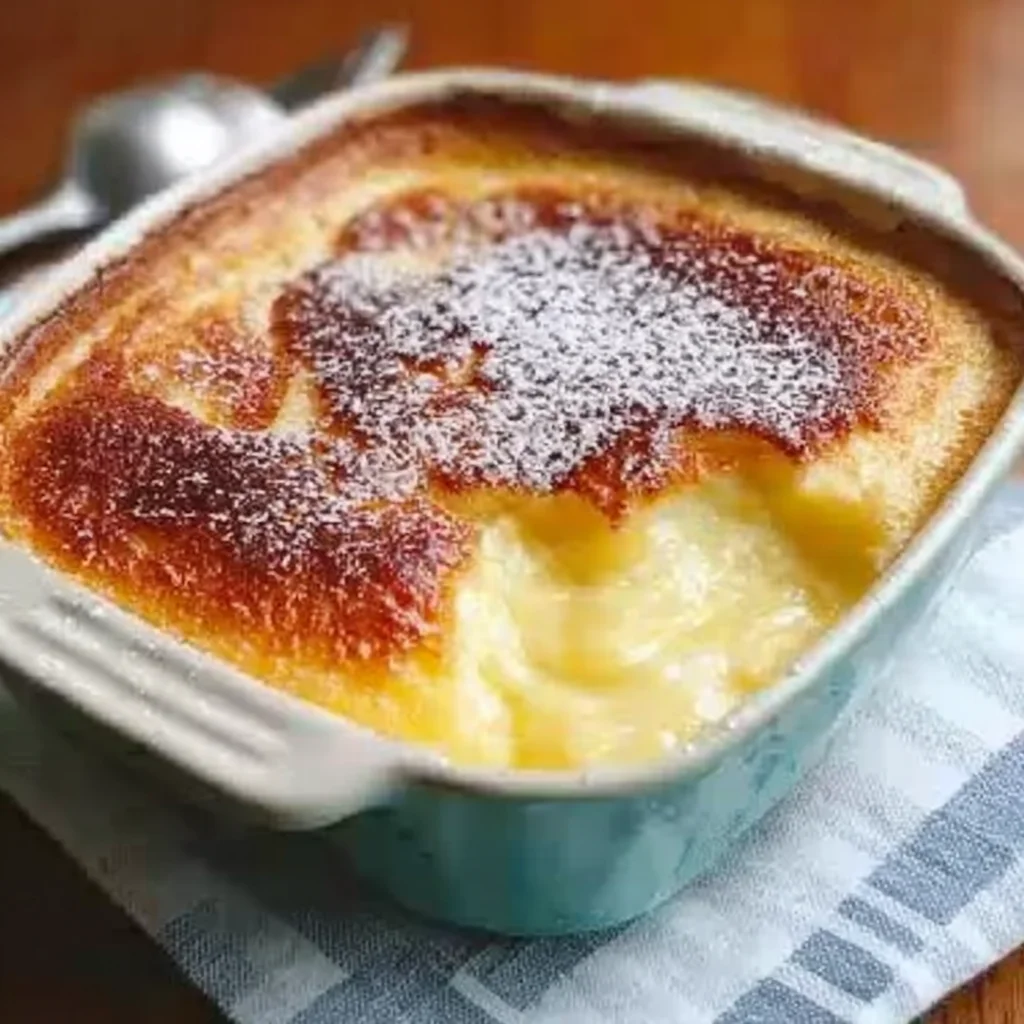
Place the dish in the preheated oven and bake for 35-40 minutes. The pudding is done when the top is golden brown, set to the touch, and a slight jiggle in the center indicates the saucy layer beneath. Unlike a cake, a toothpick inserted will not come out clean.
Step 7 — Rest and Serve
Let the pudding rest for 5-10 minutes after removing it from the oven; this allows the sauce to settle slightly. Dust with powdered sugar if desired and serve warm directly from the dish, ideally with a dollop of whipped cream or a scoop of vanilla ice cream to complement the tangy lemon sauce.
Nutritional Information
| Calories | ~320 |
| Protein | 6g |
| Carbohydrates | 45g |
| Fat | 14g |
| Fiber | 0.5g |
| Sodium | 85mg |
Note: Estimates are per serving based on typical ingredients and an 8-serving yield. Values may vary with specific brands or modifications. This dessert provides a notable amount of Vitamin C from the fresh lemon juice.
Healthier Alternatives
- Swap granulated sugar for coconut sugar or monk fruit sweetener — Reduces the glycemic impact while adding a subtle caramel note.
- Use a 50/50 blend of all-purpose and almond flour — Adds protein and healthy fats for a more nutrient-dense sponge.
- Replace whole milk with unsweetened almond or oat milk — Creates a dairy-free version; the flavor pairs beautifully with lemon.
- Substitute half the butter with unsweetened applesauce — Cuts saturated fat while keeping the pudding moist.
- Add a tablespoon of ground flaxseed to the batter — Boosts fiber content without altering the self-saucing texture.
- Reduce sugar by 25% and add an extra teaspoon of lemon zest — Enhances the bright citrus flavor to compensate for less sweetness.
Serving Suggestions
- Top with a light dusting of powdered sugar and fresh berries like raspberries or blueberries for a color contrast.
- Pair with a scoop of tangy lemon sorbet or Greek yogurt instead of ice cream for a refreshing, lighter finish.
- Serve in individual ramekins for an elegant dinner party presentation.
- Drizzle with a teaspoon of limoncello over the warm pudding for an adult twist.
- Accompany with a pot of Earl Grey tea or a crisp Moscato wine to complement the citrus notes.
- Garnish with a twist of lemon peel or a sprig of fresh mint for a professional touch.
This warm lemon pudding is perfect for cozy winter nights but also shines as a bright, summery dessert. You can prepare the batter ahead and bake it just as guests arrive for a stress-free, impressive treat.
Common Mistakes to Avoid
- Mistake: Using cold milk or eggs straight from the fridge. Fix: Always use room-temperature ingredients to ensure the batter emulsifies properly and bakes evenly.
- Mistake: Overmixing the batter after adding the flour. Fix: In Step 3, whisk until just combined to avoid developing gluten, which makes the sponge tough.
- Mistake: Not whipping the egg whites to stiff peaks. Fix: Whip until the whites are glossy and hold their shape; this is non-negotiable for the pudding’s light, airy top layer.
- Mistake: Folding the egg whites in aggressively. Fix: Use a gentle, folding motion with a spatula to maintain the air bubbles crucial for the sponge’s rise.
- Mistake: Overbaking and expecting a clean toothpick. Fix: Remember, a perfect self-saucing lemon pudding will have a set top with a slight jiggle—the sauce beneath means a toothpick test will fail.
- Mistake: Serving immediately from the oven. Fix: Let it rest for 5-10 minutes as in Step 7; this allows the saucy layer to settle and makes serving cleaner.
- Mistake: Using bottled lemon juice instead of fresh. Fix: Fresh juice and zest are essential for the vibrant, aromatic flavor that defines this dessert.
Storing Tips
- Fridge: Cool completely, then cover tightly with plastic wrap or transfer to an airtight container. Store for up to 3 days. The sauce will be absorbed slightly, but flavor remains excellent.
- Freezer: For longer storage, wrap individual portions or the whole cooled pudding (in its dish) tightly in plastic wrap and then foil. Freeze for up to 1 month. Thaw overnight in the refrigerator before reheating.
- Reheat: To restore the warm, gooey texture, reheat individual servings in the microwave for 30-45 seconds or the entire pudding, covered with foil, in a 300°F (150°C) oven for 10-15 minutes until warmed through.
In my tests, this Jamie Oliver lemon pudding held its quality remarkably well for 3 days in the fridge, making it a fantastic make-ahead dessert. For best food safety, ensure it cools to room temperature within 2 hours before refrigerating, and always reheat to an internal temperature of 165°F (74°C).
Conclusion
This Jamie Oliver Self-Saucing Lemon Pudding is the ultimate fuss-free dessert, delivering a spectacular two-texture result from one simple batter. Its vibrant, zesty flavor and comforting warmth make it a guaranteed crowd-pleaser for any occasion. Try this recipe and let me know how it turned out in the comments!
Frequently Asked Questions
How many servings does this Jamie Oliver Self-Saucing Lemon Pudding make?
This recipe yields approximately 6-8 generous servings. The exact number depends on your dish size and serving preferences. For a standard 8-inch square dish, cutting into 6 portions provides a satisfying dessert, while 8 slices are perfect for a lighter finish to a larger meal.
Can I use gluten-free flour in this lemon pudding?
Yes, a 1:1 gluten-free all-purpose flour blend works well as a direct substitute for the regular flour. In my tests, blends containing xanthan gum produced the best texture, closely mimicking the original sponge. Avoid using single flours like almond or coconut alone, as they will not create the necessary structure for the self-saucing magic to work properly.
Why did my pudding come out too dense or rubbery?
Why did my pudding come out too dense or rubbery?
This is typically caused by overmixing the batter after adding the flour, which develops gluten, or by deflating the egg whites during folding. To fix it, whisk the flour in only until just combined and use a very gentle folding motion when incorporating the whites. According to baking science, a light hand is crucial for preserving the air bubbles that give the top layer its signature light and fluffy texture.
Print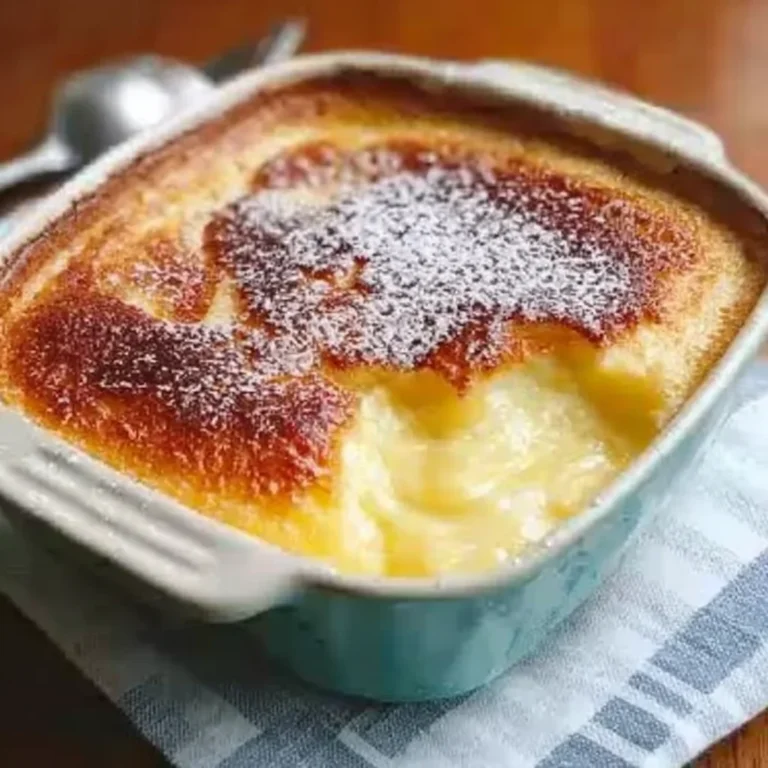
Jamie Oliver Self Saucing Lemon Pudding
Ingredients
- ½ cup (1 stick) unsalted butter, melted and cooled slightly
- 1 cup granulated sugar
- 3 large eggs, separated
- Zest of 2 lemons
- ½ cup freshly squeezed lemon juice
- ⅓ cup all-purpose flour
- 1¼ cups whole milk (room temperature)
- 1 teaspoon vanilla extract
- Pinch of salt
- Powdered sugar, for dusting (optional)
- Whipped cream or vanilla ice cream, for serving (optional)
Instructions
- Step 1: Preheat and Prepare
- Preheat your oven to 350°F (175°C). Lightly grease a medium-sized baking dish or six individual ramekins with butter or non-stick spray. Set them aside.
- Step 2: Separate and Beat the Eggs
- Separate your egg whites and yolks into two clean bowls. Beat the egg whites with a pinch of salt using an electric mixer until stiff peaks form. This will give the pudding its light, fluffy texture. Set aside.
- Step 3: Mix the Base
- In another large bowl, whisk together the melted butter and sugar until well combined. Add in the egg yolks one at a time, mixing after each. Then add the lemon zest, lemon juice, and vanilla extract. Whisk until smooth.
- Step 4: Add the Dry Ingredients
- Sift the flour into the wet mixture and gently fold it in. Slowly pour in the milk while whisking, until the batter becomes smooth. It will look thin and runny at this stage—don’t worry, that’s exactly what you want.
- Step 5: Fold in the Egg Whites
- Carefully fold the whipped egg whites into the lemon batter in three batches. Use a spatula and work gently to keep the air in the mixture. This step is key to getting that fluffy sponge layer on top.
- Step 6: Pour and Bake
- Pour the batter into your prepared dish or ramekins. Place the dish into a larger roasting pan and pour hot water into the outer pan until it reaches halfway up the sides of the pudding dish. This water bath helps the pudding bake gently and form that saucy bottom layer.
- Step 7: Bake to Perfection
- Bake in the center of your oven for about 35–40 minutes, or until the top is lightly golden and set but still has a slight wobble in the middle. Don’t overbake—it should be soft and custardy underneath.
- Step 8: Cool Slightly and Serve
- Let the pudding cool for about 10 minutes before dusting with powdered sugar. Serve warm, spooning out generous portions to reveal the hidden lemon sauce underneath. Top with whipped cream or a scoop of ice cream if you’re feeling fancy.




I’ve been craving a warm, tangy dessert and this self-saucing lemon pudding sounds perfect. Can’t wait to see that magic sauce form at the bottom!
★★★★