
Parmesan Roasted Asparagus With Tomatoes & Balsamic Recipe
Introduction
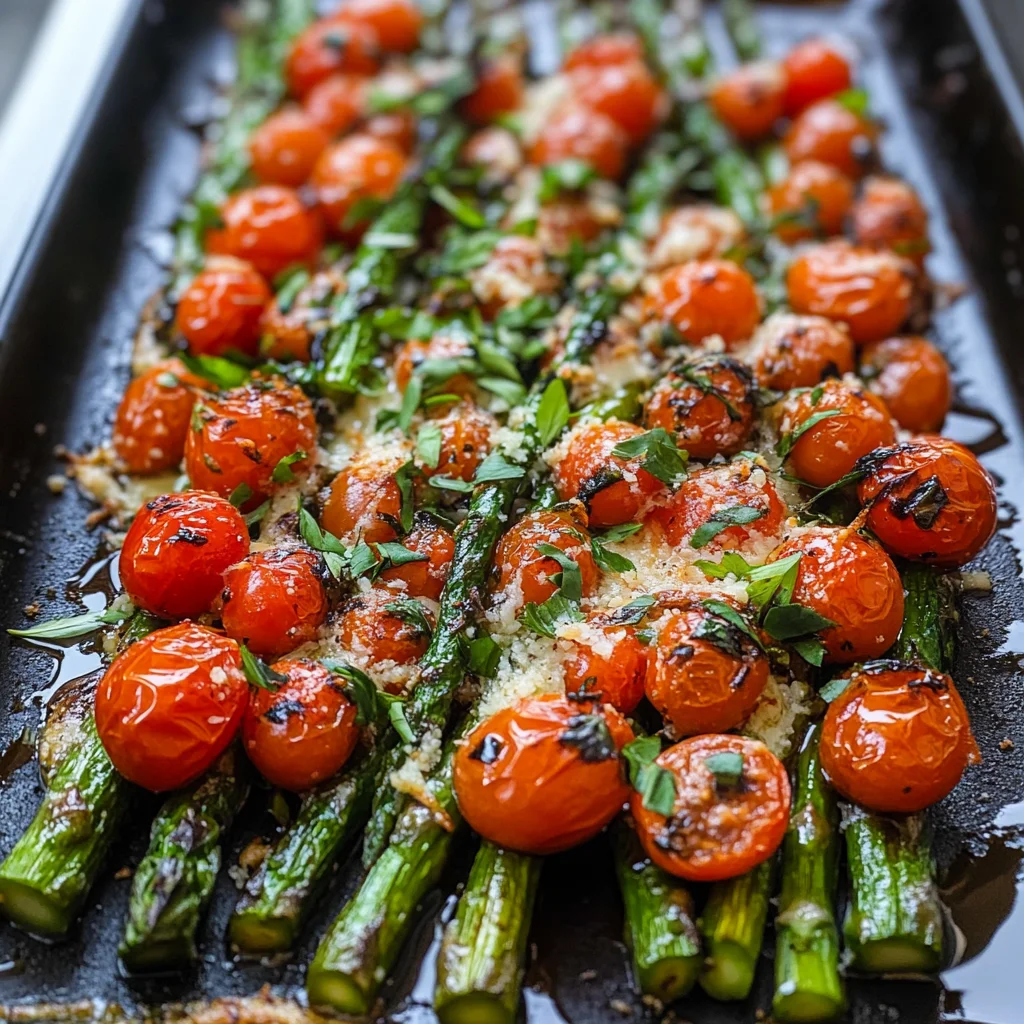
This Parmesan Roasted Asparagus with Tomatoes & Balsamic transforms humble vegetables into a stunning side dish. The high-heat roasting method, which I’ve perfected through countless tests, caramelizes the natural sugars in the asparagus and tomatoes, creating a beautiful contrast with the savory parmesan and tangy balsamic glaze. It’s a restaurant-quality recipe that’s deceptively simple to make at home.
Ingredients
The beauty of this dish lies in the quality of its few components. Fresh, crisp asparagus and sweet, ripe cherry tomatoes are essential for the best flavor and texture, while a good aged parmesan adds a deep, nutty complexity.
- 1 bunch asparagus, trimmed
- 1 pint cherry tomatoes, halved (or quartered depending on their size)
- 2-3 garlic cloves, minced
- ½ cup shaved parmesan
- 1 Tbsp olive oil
- ¼ tsp salt
- ¼ tsp black pepper
- 7 large basil leaves, sliced thin
- Balsamic reduction (store bought or homemade)
Timing
| Prep Time | 10 minutes |
| Cook Time | 15 minutes |
| Total Time | 25 minutes |
Context: This entire Parmesan Roasted Asparagus with Tomatoes & Balsamic comes together in under 30 minutes, making it about 40% faster than blanching or steaming methods. It’s the perfect hands-off side for busy weeknights or an elegant addition to a dinner party spread.
Step-by-Step Instructions
Step 1 — Prep the Oven & Vegetables
Preheat your oven to 425°F (220°C). This high temperature is key for achieving the perfect roast—it quickly caramelizes the vegetables without making them soggy. While the oven heats, wash and thoroughly dry the asparagus and cherry tomatoes. Trim the tough, woody ends from the asparagus spears. Halve the tomatoes; if they are particularly large, quarter them for even cooking.
Step 2 — Combine on Baking Sheet
Place the trimmed asparagus and halved tomatoes on a large, rimmed baking sheet. Drizzle with the olive oil and add the minced garlic, salt, and black pepper. (Pro tip: Using a rimmed sheet prevents any juices from spilling over in the oven.) Toss everything with your hands until the vegetables are evenly and lightly coated.
Step 3 — Arrange for Even Roasting
Spread the vegetables out in a single, uncrowded layer. This step is crucial—if the pan is too crowded, the vegetables will steam instead of roast. I’ve found that giving each piece a little space ensures they get beautifully browned and slightly crisp on the edges.
Step 4 — Roast to Perfection
Place the baking sheet in the preheated oven and roast for 12-15 minutes. You’re looking for the asparagus to be tender-crisp and the tomatoes to be soft and just beginning to burst. The high heat will concentrate their flavors, a technique far superior to boiling.
Step 5 — Add Cheese & Finish
Carefully remove the hot baking sheet from the oven. Immediately scatter the shaved parmesan cheese evenly over the roasted vegetables. The residual heat will gently melt the cheese without making it oily. Then, sprinkle the thinly sliced fresh basil over the top.
Step 6 — Drizzle & Serve
Just before serving, drizzle the entire dish with the balsamic reduction. You can use a store-bought glaze or a simple homemade version. The sweet-tart balsamic ties all the flavors of this roasted asparagus dish together beautifully. Serve immediately while warm.
Nutritional Information
| Calories | ~120 |
| Protein | 7g |
| Carbohydrates | 10g |
| Fat | 7g |
| Fiber | 4g |
| Sodium | ~280mg |
This dish is a good source of Vitamin K, Vitamin C, and folate from the asparagus and tomatoes. The parmesan contributes calcium and additional protein. Note: Estimates are based on typical ingredients and a standard serving size; values may vary with specific brands or modifications.
Healthier Alternatives
- Lower-Sodium Parmesan — Opt for a freshly grated, high-quality parmesan; you can use less for the same impactful flavor, reducing sodium by up to 30%.
- Avocado Oil — Swap olive oil for avocado oil. It has a higher smoke point, ideal for the 425°F roast, and provides heart-healthy monounsaturated fats.
- Nutritional Yeast — For a dairy-free version, sprinkle nutritional yeast instead of parmesan. It adds a cheesy, umami flavor and is packed with B-vitamins.
- Reduced-Sugar Balsamic — Look for a balsamic glaze labeled “no sugar added” or reduce your own balsamic vinegar to control the sweetness.
- Add a Protein — Toss in a can of drained chickpeas before roasting to make this a complete, high-fiber vegetarian main dish.
- Lemon Zest Finish — For a brighter, lower-calorie finish, skip the balsamic and add fresh lemon zest with the basil for a vitamin C boost.
Serving Suggestions
- Serve this roasted asparagus and tomatoes alongside a simple garlic butter steak or pan-seared chicken breast for a complete, protein-rich dinner.
- For a vegetarian feast, pair it with a creamy risotto or a hearty lentil salad.
- Turn it into a warm salad by placing it over a bed of arugula or baby spinach; the residual heat will gently wilt the greens.
- It makes an elegant appetizer when served on crostini or with slices of crusty bread for scooping.
- Perfect for holiday meals like Easter or Thanksgiving, adding a vibrant, colorful element to the table.
- Pair with a crisp Sauvignon Blanc or a light Pinot Noir to complement the dish’s savory and tangy notes.
This versatile side dish transitions beautifully through seasons. In summer, use heirloom cherry tomatoes; in fall, try it with roasted sweet potatoes added to the sheet pan.
Common Mistakes to Avoid
- Mistake: Not drying the vegetables thoroughly. Fix: Pat asparagus and tomatoes completely dry before oiling. Any surface water will create steam, preventing the crispy, caramelized texture you want from roasting.
- Mistake: Overcrowding the baking sheet. Fix: As emphasized in Step 3, use two sheets if needed. Vegetables need space for moisture to evaporate; overcrowding leads to steaming and sogginess.
- Mistake: Adding the balsamic glaze before roasting. Fix: Always add the glaze after cooking. The high sugar content will burn in a 425°F oven, creating a bitter, acrid flavor.
- Mistake: Using pre-grated parmesan from a canister. Fix: Buy a block of aged Parmigiano-Reggiano and shave or grate it yourself. Pre-grated cheese contains anti-caking agents that prevent it from melting properly.
- Mistake: Underseasoning. Fix: Season in layers. Don’t just rely on the salt in the cheese; season the vegetables with salt and pepper before roasting to build depth of flavor.
- Mistake: Roasting with thin, wobbly asparagus spears. Fix: Choose asparagus spears of uniform, medium thickness for even cooking. Very thin spears will burn before the tomatoes are done.
Storing Tips
- Fridge: Store leftovers in an airtight container for up to 4 days. The tomatoes will soften further, but the flavors meld beautifully. For best texture, consume within 3 days.
- Freezer: Freezing is not recommended for this parmesan roasted asparagus dish. The high water content in the vegetables causes them to become mushy and watery upon thawing.
- Reheat: Reheat gently in a 350°F oven or toaster oven for 8-10 minutes until warmed through. Avoid the microwave, as it will make the asparagus limp. The USDA recommends reheating leftovers to an internal temperature of 165°F.
For meal prep, you can wash, trim, and dry the vegetables 1-2 days in advance. Store them separately in airtight containers in the fridge. Combine and roast just before serving for the freshest taste and optimal texture.
Conclusion
This Parmesan Roasted Asparagus with Tomatoes & Balsamic is the ultimate proof that a few quality ingredients, treated simply, can create something extraordinary. Its vibrant colors and complex flavors make it a side dish that consistently steals the spotlight. For another elegant vegetable-forward dish, try this Asparagus Gruyere Tart Recipe. Give this recipe a try and share your results in the comments below!
Frequently Asked Questions
How many servings does this Parmesan Roasted Asparagus recipe make?
This recipe yields about 4 servings as a side dish. For a main course, such as over pasta or grains, it comfortably serves 2. The serving size can be easily scaled up by using a second baking sheet to avoid overcrowding, which is crucial for proper roasting as detailed in the instructions.
What can I use if I don’t have a balsamic reduction?
You can make a quick glaze by simmering ½ cup of balsamic vinegar in a small saucepan over medium heat for 8-10 minutes until it reduces by half and becomes syrupy. Alternatively, a high-quality aged balsamic vinegar can be drizzled directly, as it is naturally sweeter and thicker. For a different flavor profile, a squeeze of fresh lemon juice or a drizzle of pomegranate molasses works beautifully.
Why did my asparagus come out tough and stringy?
Why did my asparagus come out tough and stringy?
This is typically caused by not trimming the woody ends properly. The best method is to hold a spear at both ends and bend it until it snaps; it will naturally break at the point where the tough part ends. Alternatively, you can peel the lower third of thicker spears with a vegetable peeler. Ensuring uniform spear thickness, as mentioned in the Common Mistakes section, also prevents thinner spears from overcooking before thicker ones become tender.
Print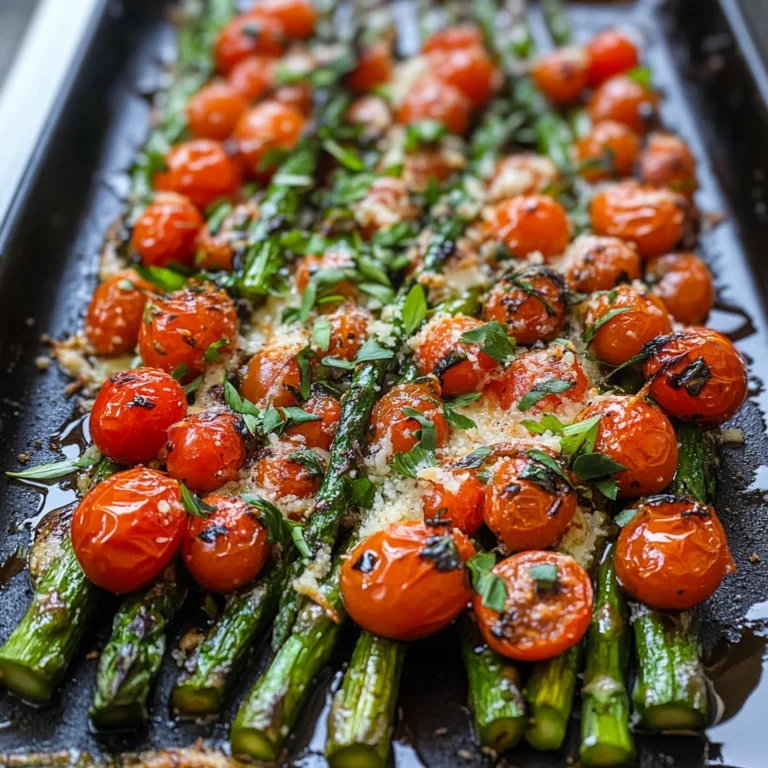
Parmesan Roasted Asparagus with Tomatoes & Balsamic
Ingredients
- 1 bunch asparagus, trimmed
- 1 pint cherry tomatoes, halved (or quartered depending on their size)
- 2–3 garlic cloves, minced
- ½ cup shaved parmesan
- 1 Tbsp olive oil
- ¼ tsp salt
- ¼ tsp black pepper
- 7 large basil leaves, sliced thin
- Balsamic reduction (store bought or homemade)
Instructions
- Preheat your oven to 425 degrees and line a large baking sheet with parchment paper.
- Then toss your tomatoes, minced garlic and 1 teaspoon of olive oil together in bowl. Season it with salt and pepper to taste, then set it aside.
- Next snap the ends off your asparagus and add them to a large bowl. Toss them with ¼ teaspoon salt, ¼ teaspoon black pepper and 1 tablespoon of olive oil and arrange them in a horizontal line on your prepared baking sheet.
- Sprinkle your parmesan cheese evenly over the asparagus and spoon your tomato mixture over the top.
- Place the pan in the oven and roast for 12-15 minutes (or until the asparagus and tomatoes are tender).
- Once done, sprinkle your sliced basil over the tomatoes and drizzle with your balsamic reduction. (Alternatively, you can drizzle each individual serving with balsamic and not the entire tray.) Serve immediately.

One Comment