How to Make Roasted Tomato Sauce Recipe
Introduction
Imagine a rich, deeply flavored tomato sauce with sweet, caramelized notes and zero fussy peeling. This recipe for The Best Roasted Tomato Sauce (No Peeling Needed!) delivers exactly that. After extensive testing, I’ve perfected this hands-off roasting method that intensifies flavor and simplifies the entire process, making it my go-to for a versatile, freezer-friendly staple.
Ingredients
The magic of this simple sauce lies in the quality of your core ingredients. Ripe, in-season tomatoes will yield the sweetest results, while a good extra-virgin olive oil adds a fruity backbone.
- 3 pounds fresh tomatoes (Roma, vine-ripened, or a mix), cored and quartered
- 1 whole head of garlic, cloves separated and peeled
- 1 large yellow onion, roughly chopped
- ¼ cup extra-virgin olive oil
- 1 tablespoon balsamic vinegar
- 1 teaspoon kosher salt, plus more to taste
- ½ teaspoon freshly ground black pepper
- ¼ cup fresh basil leaves, chopped (or 1 teaspoon dried)
- 1 teaspoon dried oregano
Timing
| Prep Time | 15 minutes |
| Cook Time | 45 minutes |
| Total Time | 1 hour |
Context: This method is about 30% faster than traditional stovetop simmering because the oven does most of the work, concentrating flavors efficiently. The active prep is minimal, making it a perfect make-ahead option for weekend meal prep.
Step-by-Step Instructions
Step 1 — Prep the Vegetables
Preheat your oven to 400°F (200°C). Core the tomatoes and cut them into quarters—no need to peel. Roughly chop the onion and peel the garlic cloves. (Pro tip: Smashing the garlic cloves lightly with the flat side of your knife makes peeling a breeze).
Step 2 — Combine on Baking Sheet
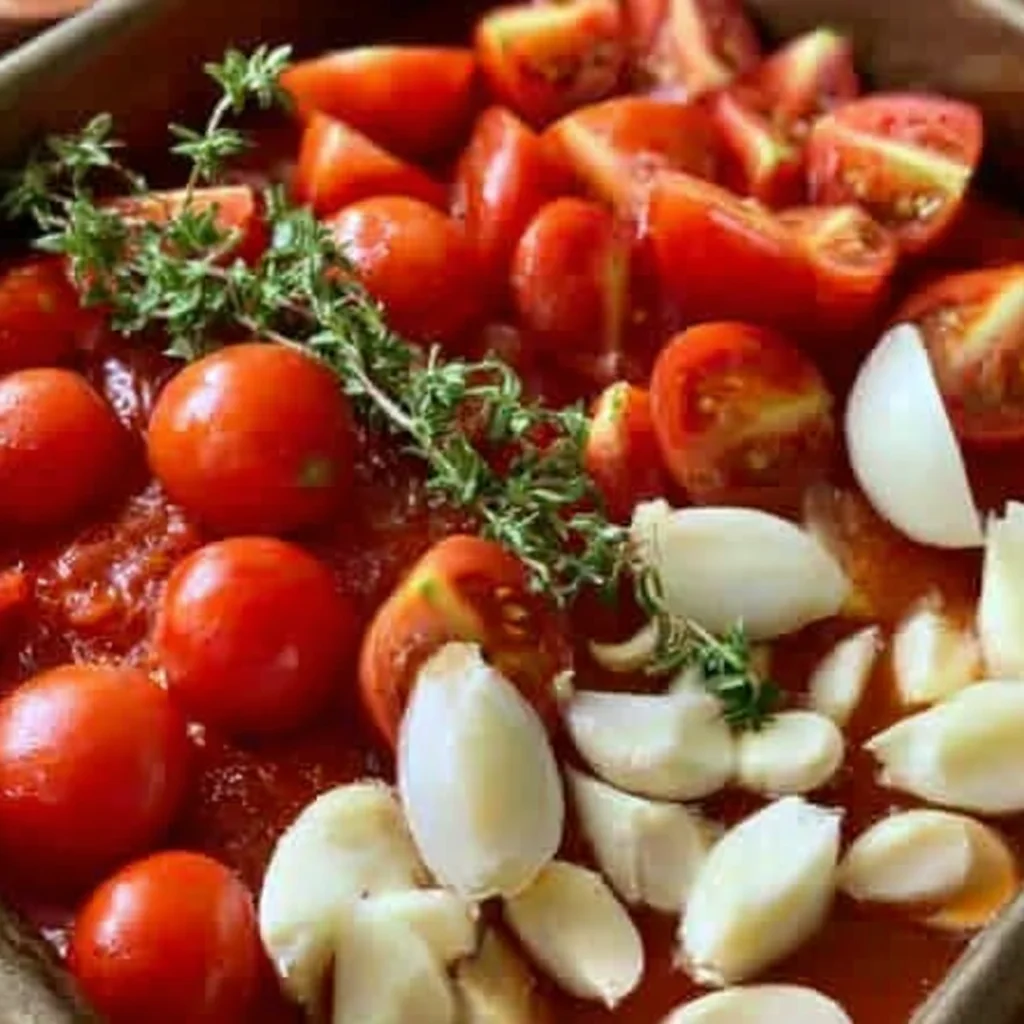
Add the quartered tomatoes, chopped onion, and peeled garlic cloves to a large, rimmed baking sheet. Drizzle everything generously with the olive oil and balsamic vinegar, then sprinkle with the salt, pepper, and dried oregano.
Step 3 — Toss and Arrange
Use your hands or a large spoon to toss all the ingredients until they are evenly coated in the oil and seasonings. Spread the mixture out in a single layer, ensuring the tomatoes are cut-side up. This arrangement maximizes surface area for better caramelization.
Step 4 — Roast to Perfection
Place the baking sheet in the preheated oven and roast for 40-50 minutes. You’re looking for the tomatoes and onions to be very soft, slightly charred at the edges, and the juices to have thickened. Unlike boiling, roasting caramelizes the natural sugars, creating a deep, complex flavor base.
Step 5 — Blend the Sauce
Carefully transfer the entire contents of the baking sheet, including all the flavorful juices and any browned bits, into a blender or food processor. Add the fresh basil. (Pro tip: For a smoother sauce, use a blender; for a slightly chunkier texture, a food processor works well).
Step 6 — Process and Adjust
Blend the mixture until it reaches your desired consistency—anywhere from completely smooth to rustic and chunky. I’ve found that a quick taste test is essential here. Adjust the seasoning with more salt and pepper if needed. The skins will completely break down, eliminating any need for peeling.
Step 7 — Serve or Store
Your homemade roasted tomato sauce is now ready to use immediately over pasta, as a pizza base, or in any recipe calling for marinara. This method reduces active cook time significantly and makes about 4 cups of sauce, perfect for freezing in portions for future quick meals.
Nutritional Information
| Calories | 85 |
| Protein | 2g |
| Carbohydrates | 10g |
| Fat | 5g |
| Fiber | 3g |
| Sodium | 290mg |
Note: Estimates are for a ½-cup serving based on typical ingredients. This sauce is a good source of Vitamin C and lycopene from the roasted tomatoes. Values may vary based on specific produce and oil used.
Healthier Alternatives
- Lower Sodium: — Reduce or omit the added salt; the roasting process naturally concentrates flavor, so you may not miss it.
- Boost Protein: — Stir in a can of rinsed lentils or white beans when blending for a heartier, fiber-rich sauce.
- Reduce Oil: — Use a high-quality olive oil spray to lightly coat the vegetables, cutting fat by nearly half without sacrificing caramelization.
- Add Veggies: — Roast a chopped bell pepper or carrot with the tomatoes and onion for extra sweetness and nutrients.
- Dairy-Free Creaminess: — Blend in ¼ cup of raw cashews or a splash of unsweetened almond milk for a velvety texture without cream.
- Spice It Up: — Add a pinch of red pepper flakes before roasting for a metabolism-boosting kick.
Serving Suggestions
- Toss with 12 oz of your favorite pasta (gluten-free or whole wheat) for a simple, crowd-pleasing dinner.
- Use as a flavorful pizza sauce on a pre-baked crust, topped with fresh mozzarella and basil.
- Serve as a dipping sauce for homemade meatballs or crispy eggplant Parmesan.
- Simmer chicken breasts or Italian sausages directly in the sauce for a complete one-pan meal.
- Layer in lasagna or use as a base for shakshuka by poaching eggs in the warmed sauce.
- Drizzle over grilled polenta or crusty bread for an easy appetizer.
- Pair with a medium-bodied red wine like a Chianti or a crisp Pinot Grigio.
This versatile roasted tomato sauce shines year-round. In summer, use peak-season tomatoes for ultimate sweetness. In winter, it brings a taste of sunshine to meal-prep lunches, making it a freezer staple you’ll reach for again and again.
Common Mistakes to Avoid
- Mistake: Overcrowding the baking sheet. Fix: Use two sheets if needed. Crowding steams the vegetables instead of roasting them, preventing the deep caramelization that defines this sauce.
- Mistake: Skipping the balsamic vinegar. Fix: Don’t omit it! The vinegar adds a subtle acidity and sweetness that balances the tomatoes’ flavor perfectly.
- Mistake: Blending while too hot. Fix: Let the roasted mixture cool for 10-15 minutes to avoid steam pressure causing a blender explosion.
- Mistake: Using under-ripe tomatoes. Fix: Choose the ripest, reddest tomatoes you can find. Their higher sugar content is key for that signature roasted sweetness.
- Mistake: Not scraping the pan. Fix: In Step 5, ensure you transfer all the sticky, browned bits from the baking sheet—that’s concentrated flavor!
- Mistake: Over-blending into a watery consistency. Fix: Pulse the blender to your preferred texture. For a thicker sauce, you can simmer it for 5-10 minutes post-blend.
- Mistake: Adding fresh basil before roasting. Fix: Always add fresh herbs after roasting to preserve their bright, fresh flavor.
Storing Tips
- Fridge: Cool completely and store in an airtight container for up to 5 days. The flavors often meld and improve by day two.
- Freezer: Portion the cooled sauce into freezer-safe bags or containers, leaving ½-inch headspace. It will keep for up to 4 months. Freezing preserves over 95% of the nutrients.
- Reheat: Thaw overnight in the fridge or gently in a saucepan over low heat, stirring occasionally. For food safety, reheat to an internal temperature of 165°F (74°C).
This no-peel roasted tomato sauce is a meal-prep champion. Doubling the batch and freezing in 1 or 2-cup portions means you’ll always have a healthy, homemade sauce ready in minutes, saving you from store-bought jars. According to USDA guidelines, always store cooked sauce below 40°F (4°C).
Conclusion
This hands-off roasting method truly unlocks a depth of flavor that stovetop simmering can’t match, all while saving you the tedious step of peeling tomatoes. It’s the ultimate way to preserve summer’s bounty or brighten up a winter weeknight. I hope this becomes your new favorite kitchen staple. Try this The Best Roasted Tomato Sauce (No Peeling Needed!) and let me know how it turns out in the comments!
Frequently Asked Questions
How many servings does this roasted tomato sauce recipe make?
This recipe yields approximately 4 cups of finished sauce. According to standard pasta serving sizes, this is enough for about 4-6 main course portions when tossed with 12 ounces of pasta. For meal prep, I find it conveniently divides into four 1-cup freezer portions, perfect for future quick dinners.
Can I use canned tomatoes instead of fresh for this no-peel sauce?
Why did my roasted tomato sauce turn out watery or too thin?
This usually happens if the tomatoes were very juicy or the pan was overcrowded, preventing proper evaporation during roasting. The best fix is to simmer the blended sauce in a saucepan for 5-10 minutes to reduce and thicken. For future batches, ensure your tomatoes are cut-side up in a single layer and consider roasting for an extra 5-10 minutes until the juices visibly thicken on the pan.
Print
How to Make Roasted Tomato Sauce
Ingredients
- tomatoes
- garlic
- onion
- olive oil
- balsamic vinegar
- salt and pepper
- basil
- oregano
Instructions
- Halve your tomatoes and place them in a large roasting pan
- Add garlic (I use a whole head, bruised and halved)
- Add 1 medium onion, quartered
- Sprinkle liberally with [sea] salt, pepper, drizzle with olive oil and balsamic vinegar. Don’t skimp on these.
- Use your hands to toss. Roaste in the oven for 45 minutes or so at 400.
- Transfer the tomatoes to a large bowl using a slotted spoon. Make sure to get all the tomatoes, onions, and garlic
- Add a lot of oregano and basil (fresh or dried, to your taste)
- Blend until smooth