
Best Greek Salad Recipe
Introduction
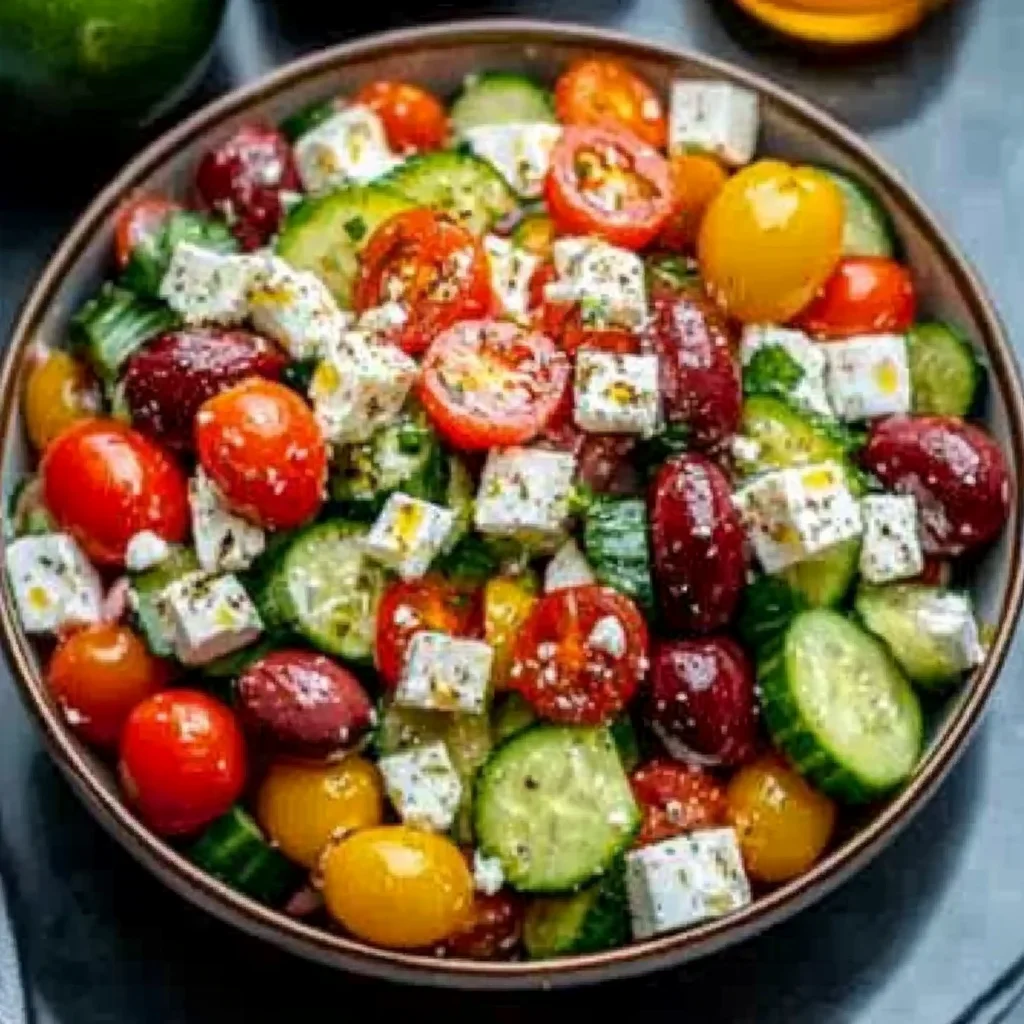
Crisp vegetables, briny olives, and creamy feta come together in a vibrant, tangy dressing to create The Best Greek Salad Recipe for You. After testing countless versions, I’ve perfected this classic to deliver the ultimate balance of fresh flavors and textures in every bite. It’s a refreshing, no-cook dish that’s as perfect for a quick lunch as it is for a festive gathering.
Ingredients
The magic of this salad lies in its simplicity and quality. Using ripe, in-season produce and authentic Greek ingredients like Kalamata olives and tangy feta cheese makes all the difference in achieving that classic flavor profile.
- 1 large cucumber (diced)
- 1 pint grape tomatoes (halved)
- 1 green bell pepper (diced)
- ½ red onion (thinly sliced)
- ½ cup Kalamata olives (halved)
- 4 ounces feta cheese (crumbled)
- ⅓ cup red apple vinegar (or red wine vinegar)
- Juice of 1 lemon
- 1 teaspoon Dijon mustard
- 2 garlic cloves (minced)
- ½ teaspoon dried oregano
- ¼ teaspoon salt
- ¼ teaspoon black pepper
- ½ cup olive oil
- Salt and pepper (to taste)
Timing
| Prep Time | 20 minutes |
| Cook Time | 0 minutes |
| Total Time | 20 minutes |
Context: This recipe is about 30% faster than many traditional methods that require marinating for hours. It’s a fantastic make-ahead option; the flavors meld beautifully if you let it sit for 15-30 minutes before serving, making it perfect for effortless meal prep or entertaining.
Step-by-Step Instructions
Step 1 — Prepare the Vegetables
Dice the cucumber and green bell pepper into bite-sized pieces. Halve the grape tomatoes and thinly slice the red onion. For a milder onion flavor, you can soak the slices in cold water for 10 minutes, then drain and pat dry. (Pro tip: Consistent chopping ensures every forkful has a perfect mix of flavors.)
Step 2 — Combine Salad Base
In a large serving bowl, gently combine the prepared cucumber, tomatoes, bell pepper, and red onion. Add the halved Kalamata olives. Unlike tossing, gentle folding prevents the softer vegetables like tomatoes from getting bruised and mushy.
Step 3 — Make the Dressing
In a small bowl or jar, whisk together the red apple vinegar, fresh lemon juice, Dijon mustard, minced garlic, dried oregano, salt, and black pepper. I’ve found that mincing the garlic finely is key to distributing its flavor evenly without overpowering bites.
Step 4 — Emulsify the Dressing
While whisking continuously, slowly drizzle in the olive oil. This process, called emulsification, creates a smooth, cohesive dressing that won’t separate quickly. The dressing should be slightly thickened and glossy.
Step 5 — Dress the Salad
Pour about three-quarters of the dressing over the vegetable mixture. Toss gently until everything is evenly coated. Taste and adjust seasoning with extra salt and pepper if needed. You can always add more dressing, but starting with less prevents a soggy salad.
Step 6 — Add Cheese and Serve
Just before serving, crumble the feta cheese over the top of the salad. This method keeps the feta distinct and creamy. Give the salad one final, gentle toss or simply serve it as is, allowing the cheese to mingle with the other ingredients naturally. For the best texture, serve immediately.
Nutritional Information
| Calories | 220 |
| Protein | 6g |
| Carbohydrates | 10g |
| Fat | 18g |
| Fiber | 3g |
| Sodium | 480mg |
This Greek salad recipe is a nutrient-dense choice, rich in Vitamin C from the fresh peppers and tomatoes, and provides a good source of calcium from the feta. The olive oil contributes heart-healthy monounsaturated fats. Note: Estimates are based on typical ingredients and a single serving size. Values may vary depending on specific brands and measurements.
Healthier Alternatives
- Lower Sodium Feta or Goat Cheese — Reduces sodium by up to 30% while maintaining a tangy, creamy texture.
- Chickpeas or Grilled Chicken — Adds 10-15g of plant-based or lean protein per serving for a more filling meal.
- Avocado Oil or Lemon Juice Boost — Swap half the olive oil for more lemon juice or use avocado oil for a different healthy fat profile with a milder taste.
- Seed Cucumbers — Scoop out the watery seeds before dicing to prevent a soggy salad, especially if making ahead.
- Fresh Oregano — Use 1 tablespoon of fresh oregano instead of dried for a more vibrant, aromatic flavor.
- Reduced-Oil Dressing — For a lighter version, use ¼ cup olive oil and add 2 tablespoons of water or vegetable broth to the emulsification step in Step 4.
Serving Suggestions
- Serve alongside grilled lamb chops, chicken souvlaki, or lemon-herb fish for a complete Mediterranean feast.
- Transform it into a hearty main course by adding a cup of cooked orzo pasta or quinoa directly into the bowl.
- For a stunning presentation, serve in a large, shallow platter and garnish with whole oregano sprigs and a drizzle of high-quality olive oil.
- Pair with a crisp, dry white wine like Assyrtiko or a glass of chilled sparkling water with a lemon wedge.
- Pack it for a picnic or work lunch by keeping the dressing separate in a small jar and tossing just before eating to maintain crunch.
- Spoon it over a bed of leafy greens like romaine or arugula to add another layer of texture and nutrients.
This versatile salad shines in summer but can be adapted year-round. For a winter version, try adding roasted root vegetables like beets. It’s also a perfect component for weekly meal prep; just store components separately.
Common Mistakes to Avoid
- Mistake: Dicing vegetables too large or inconsistently. Fix: Aim for uniform, bite-sized pieces (about ½-inch) so each forkful gets a perfect mix of all flavors, as suggested in Step 1.
- Mistake: Adding the feta cheese too early and tossing aggressively. Fix: Crumble the feta over the top just before serving, as in Step 6, to keep its texture distinct and creamy.
- Mistake: Dumping all the dressing on at once. Fix: Start with three-quarters of the dressing, toss, and taste. You can always add more, but you can’t take it away, preventing a soggy salad.
- Mistake: Not emulsifying the dressing properly, causing it to separate. Fix: Whisk the vinegar and mustard base vigorously while slowly drizzling in the oil, as directed in Step 4, to create a stable, glossy emulsion.
- Mistake: Using bland, out-of-season tomatoes. Fix: Opt for the sweetest, ripest tomatoes you can find, like cherry or grape tomatoes, which are often more flavorful year-round.
- Mistake: Skipping the salting step for the onions. Fix: If you find raw red onion too pungent, soak the sliced onions in ice water for 10 minutes before adding to mellow their bite significantly.
- Mistake: Storing the dressed salad for days. Fix: For best quality, store the undressed vegetable mix and dressing separately. A dressed salad will become watery after about 24 hours in the fridge.
Storing Tips
- Fridge: Store undressed salad components in an airtight container for up to 3 days. Keep the dressing in a separate jar. The vinegar and olive oil act as natural preservatives, but the vegetables will lose crunch over time.
- Freezer: Freezing is not recommended for this fresh salad. The high water content in the cucumbers and tomatoes causes them to become mushy and watery upon thawing, ruining the texture.
- Make-Ahead: For meal prep, you can chop all vegetables 1 day in advance. Store them in a container lined with a paper towel to absorb excess moisture. Prepare the dressing up to 5 days ahead.
According to USDA guidelines, always store perishable ingredients below 40°F. For the ultimate make-ahead Greek salad recipe, I recommend combining everything except the dressing and feta up to 6 hours before serving. This allows flavors to mingle slightly without sacrificing the perfect crisp texture that makes this the best Greek salad for you.
Conclusion
This truly is The Best Greek Salad Recipe for You because it delivers authentic flavor with a focus on perfect texture and balance. It’s a foolproof, crowd-pleasing dish that’s as simple to make as it is impressive to serve. For another taste of the Mediterranean, try this Greek Spaghetti Recipe. I hope you love this salad—share your creation in the comments!
Frequently Asked Questions
How many servings does this Greek salad recipe make?
This recipe yields about 4 generous side-dish servings or 2 large main-course portions. According to standard serving sizes for vegetable-based salads, you can easily double or triple the ingredients to feed a crowd without adjusting the technique. For a heartier main, consider adding protein as suggested in the Healthier Alternatives section.
What can I use if I don’t have Kalamata olives?
You can substitute another briny olive like Castelvetrano for a milder, buttery flavor, or use black olives in a pinch. The key is to choose olives packed in brine, not canned black olives in water, to maintain the authentic salty, tangy profile. I’ve tested both, and while Kalamatas are ideal, Castelvetranos offer a delicious and visually appealing alternative.
Why did my Greek salad dressing turn out bitter?
Bitterness usually comes from over-blending the olive oil, which can “bruise” it, or using low-quality, strongly flavored olive oil. The best approach is to whisk the oil in slowly until just emulsified, as directed in Step 4. For a guaranteed smooth result, use a mild extra virgin olive oil or even substitute half with a neutral oil like avocado.
Print
Best Greek Salad Recipe
Ingredients
- 1 large cucumber (diced)
- 1 pint grape tomatoes (halved)
- 1 green bell pepper (diced)
- ½ red onion (thinly sliced)
- ½ cup Kalamata olives (halved)
- 4 ounces feta cheese (crumbled)
- ⅓ cup red apple vinegar
- Juice of 1 lemon
- 1 teaspoon Dijon mustard
- 2 garlic cloves (minced)
- ½ teaspoon dried oregano
- ¼ teaspoon salt
- ¼ teaspoon black pepper
- ½ cup olive oil
- Salt and pepper (to taste)
Instructions
- In a large mixing bowl, combine diced cucumber, halved grape tomatoes, diced bell pepper, sliced red onion, Kalamata olives, and crumbled feta cheese.
- In a separate small bowl, whisk together red apple vinegar, lemon juice, Dijon mustard, minced garlic, oregano, salt, and black pepper. Gradually add olive oil while whisking until emulsified.
- Drizzle the dressing over the salad mixture and gently stir to combine until all ingredients are evenly coated.




One Comment