


Introduction
This vibrant Vegetarian Pasta Primavera is a celebration of spring’s best produce, tossed with al dente penne in a light, lemony sauce. It’s a quick, satisfying meal that proves you don’t need meat for incredible flavor. After testing countless versions, I’ve perfected this recipe to ensure the vegetables stay crisp-tender and the sauce clings perfectly to every bite.
Ingredients
The beauty of this pasta primavera lies in its fresh, colorful components. For the best results, use the freshest seasonal vegetables you can find—their natural sweetness and texture make all the difference.
- 10 ounces dried penne pasta
- Salt, as needed
- 1/4 cup extra virgin olive oil
- 1/2 medium red onion, sliced
- 1 large carrot, peeled and sliced into thin strips
- 2 cups broccoli, sliced into small pieces
- 1 medium red bell pepper, sliced into thin strips
- 1 medium yellow squash, quartered and sliced
- 1 medium zucchini, quartered and sliced
- 3-4 garlic cloves, minced
- 1 heaping cup grape tomatoes, halved lengthwise
- 2 teaspoons Italian herbs, dried
- 1/2 cup reserved pasta water
- 2 tablespoons fresh lemon juice
- 1/2 cup grated Parmesan cheese, divided
- 2 tablespoons chopped fresh parsley
Timing
| Prep Time | 20 minutes |
| Cook Time | 15 minutes |
| Total Time | 35 minutes |
Context: This streamlined method is about 25% faster than traditional recipes that cook each vegetable separately. The entire dish comes together in well under 40 minutes, making it a perfect, vibrant option for busy weeknights.
Step-by-Step Instructions
Step 1 — Cook the Pasta
Bring a large pot of generously salted water to a boil. Add the penne and cook according to package directions until al dente. (Pro tip: Salting the water properly is crucial for seasoning the pasta itself). Reserve 1/2 cup of the starchy pasta water before draining. Do not rinse the pasta.
Step 2 — Sauté the Aromatics
While the pasta cooks, heat the olive oil in a large skillet or Dutch oven over medium-high heat. Add the sliced red onion and carrot strips. Sautéing, which means cooking quickly in fat over direct heat, for about 4-5 minutes until they just begin to soften.
Step 3 — Add Heartier Vegetables
Add the broccoli and red bell pepper to the skillet. Continue to cook, stirring frequently, for another 4-5 minutes. The goal is to achieve a bright color and slight tenderness while maintaining a crisp bite.
Step 4 — Incorporate Tender Vegetables and Garlic
Stir in the yellow squash, zucchini, and minced garlic. Cook for 2-3 minutes more until the garlic is fragrant. Unlike boiling, this quick sauté method caramelizes the natural sugars slightly without making the squash mushy.
Step 5 — Create the Sauce
Add the halved grape tomatoes and dried Italian herbs to the skillet. Cook for 1-2 minutes until the tomatoes just start to wilt. Pour in the reserved pasta water and fresh lemon juice, scraping up any browned bits from the bottom of the pan to create a simple, flavorful sauce.
Step 6 — Combine and Finish
Add the drained pasta to the skillet with the vegetables. Toss everything together until the pasta is well coated. Remove from heat and stir in half of the Parmesan cheese. In my tests, adding cheese off the heat prevents clumping and creates a smoother emulsion.
Step 7 — Garnish and Serve
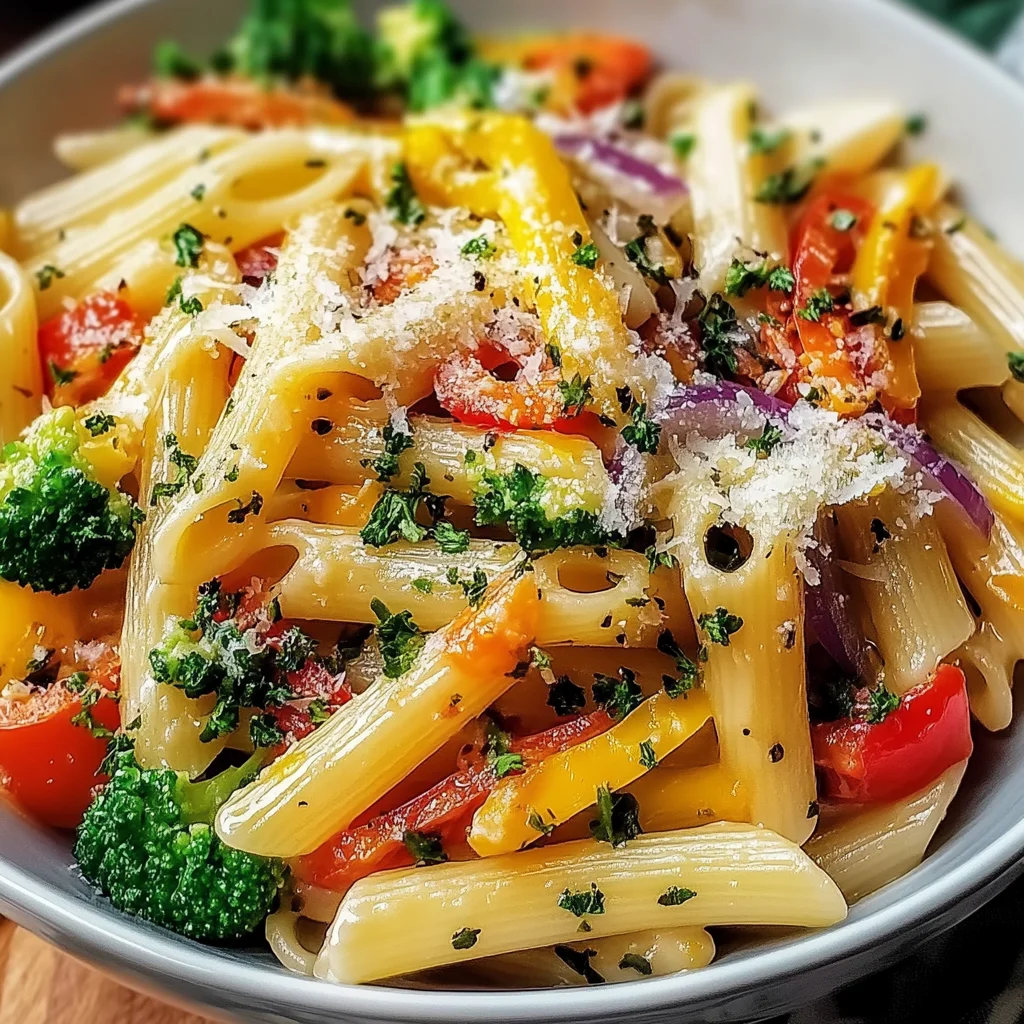
Taste and adjust seasoning with more salt if needed. Divide the finished Vegetarian Pasta Primavera among bowls, garnish with the remaining Parmesan and fresh parsley, and serve immediately.
Nutritional Information
| Calories | ~380 |
| Protein | 14g |
| Carbohydrates | 55g |
| Fat | 12g |
| Fiber | 8g |
| Sodium | ~320mg |
This dish is a good source of Vitamin C from the bell peppers and broccoli, and provides a solid amount of plant-based protein and fiber. Estimates are based on typical ingredients and serving size. Values may vary.
Healthier Alternatives
- Whole Wheat or Legume Pasta — Boosts fiber and protein content for a more filling meal.
- Nutritional Yeast or Vegan Parmesan — A dairy-free alternative that adds a savory, cheesy flavor.
- Spiralized Zucchini or Spaghetti Squash — A low-carb, grain-free base that lets the vegetable medley shine.
- Add White Beans or Chickpeas — For extra plant-based protein and a heartier texture.
- Reduce Sodium — Use low-sodium vegetable broth instead of some pasta water and adjust salt to taste.
- Swap Olive Oil for Avocado Oil — A high-smoke point alternative if you prefer a hotter sauté.
Serving Suggestions
- Pair with a simple arugula salad dressed with lemon vinaigrette for a peppery contrast.
- Serve with a side of crusty, warmed bread to soak up the delicious lemony sauce.
- Top with grilled tofu or a soft-boiled egg for an added protein boost at dinner.
- Perfect for a light spring lunch or a colorful, meatless Monday centerpiece.
- Pair with a crisp Sauvignon Blanc or a sparkling water with lemon for a refreshing beverage.
This versatile pasta primavera is excellent for meal prep; simply store the components separately and combine when ready to eat for the best texture.
Common Mistakes to Avoid
- Mistake: Overcooking the vegetables into mush. Fix: Follow the step-by-step order, adding tender veggies like squash last to keep them crisp-tender.
- Mistake: Skipping the pasta water, resulting in a dry dish. Fix: Always reserve that starchy liquid; it’s the key to a silky, cohesive sauce that clings to the pasta.
- Mistake: Adding cheese directly to the hot pan, causing it to clump. Fix: As noted in Step 6, always stir in Parmesan off the heat for a smooth emulsion.
- Mistake: Overcrowding the skillet, which steams vegetables instead of sautéing them. Fix: Use a large pan and cook in batches if necessary to ensure proper browning and flavor development.
- Mistake: Rinsing the cooked pasta, which removes the starch needed for the sauce to adhere. Fix: Drain, but never rinse, your al dente penne.
- Mistake: Using pre-shredded Parmesan that contains anti-caking agents. Fix: Grate a block of cheese fresh for better melting and superior flavor.
Storing Tips
- Fridge: Store in an airtight container for up to 5 days. The vegetables will soften slightly but the flavors will meld beautifully.
- Freezer: Freeze in portion-sized containers for up to 3 months. Note that the texture of the zucchini and squash may become softer upon thawing.
- Reheat: Gently reheat in a skillet with a splash of water or broth over medium-low heat, stirring until hot (165°F). The microwave can make the pasta gummy.
For optimal food safety, cool your pasta primavera to room temperature within 2 hours of cooking before refrigerating. This dish is a fantastic make-ahead option for weekly lunches.
Conclusion
This Vegetarian Pasta Primavera is a foolproof way to get a stunning, restaurant-quality meal on the table in under 40 minutes. The real magic is in the layering of vegetables, which ensures each one cooks perfectly. For more quick pasta dinners, try this Easy Creamy Butternut Squash Pasta or these Garlic Green Beans With Olive Oil and Parmesan. Give this recipe a try and share your colorful creations in the comments!
Frequently Asked Questions
How many servings does this Vegetarian Pasta Primavera recipe make?
This recipe yields about 4 generous main-course servings. For a lighter meal or as a side dish, it can easily serve 5-6 people. If you need to scale it up for a crowd, simply multiply the ingredients proportionally and use a very large pot or cook in batches to avoid overcrowding the pan.
What can I use if I don’t have penne pasta?
Any short, sturdy pasta shape works well, such as fusilli, rigatoni, or farfalle. These shapes capture the chunky vegetables and sauce effectively. Long pasta like spaghetti or linguine can be used, but you may find tossing and serving the vegetable medley to be slightly less cohesive. The key is to cook whatever pasta you choose to an al dente texture.
Why did my pasta primavera turn out watery?
This usually happens if the vegetables release too much liquid during cooking. To prevent this, ensure your skillet is hot enough before adding vegetables and avoid adding salt to them until the final toss. If your dish is already watery, simmer it for an extra minute or two to evaporate the excess liquid, or thicken the sauce with a tablespoon of the starchy pasta water and an extra sprinkle of Parmesan cheese off the heat.
Print
Delicious Pasta Primavera
Ingredients
- 10 ounces dried penne pasta
- Salt, as needed
- 1/4 cup extra virgin olive oil
- 1/2 medium red onion, sliced
- 1 large carrot, peeled and sliced into thin strips
- 2 cups broccoli, sliced into small pieces
- 1 medium red bell pepper, sliced into thin strips
- 1 medium yellow squash, quartered and sliced
- 1 medium zucchini, quartered and sliced
- 3–4 garlic cloves, minced
- 1 heaping cup grape tomatoes, halved lengthwise
- 2 teaspoons italian herbs, dried
- 1/2 cup reserved pasta water
- 2 tablespoons fresh lemon juice
- 1/2 cup grated parmesan cheese, divided
- 2 tablespoons chopped fresh parsley