


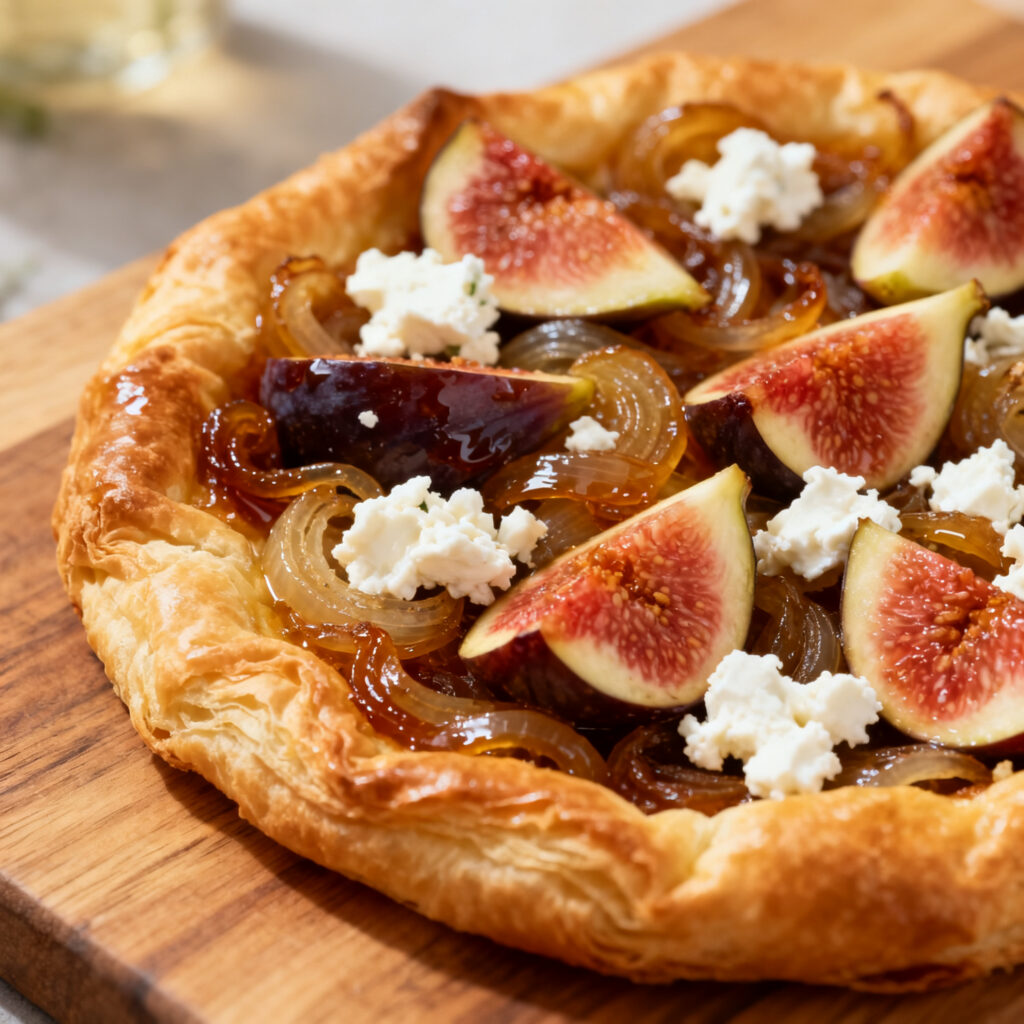
This puff pastry tart runs on one dumb-smart move that most recipes skip entirely: a thin layer of Dijon spread edge to edge before anything wet touches the dough. That single step is the difference between a tart with a shattering, golden base and one that's gummy and pale in the middle. Caramelized onions, fresh fig, and goat cheese pile on top, the border puffs into a self-forming frame with zero pie weights, and the whole thing looks like it came from a patisserie window.
Simple, everyday ingredients and clear, step-by-step instructions — every recipe made in Dorothy’s kitchen before it reaches yours. Jump to the full recipe card below.
PrintThe Puff Pastry Tart That Looks Fancier Than It Actually Is
A rustic puff pastry tart with caramelized onions, fresh fig, and goat cheese, built on a mustard barrier and a self-puffing scored border for a bakery-crisp base every time.
- Total Time: 45 minutes (plus 30 minutes for caramelizing onions)
- Yield: 4 1x
Ingredients
- 1 sheet frozen puff pastry, thawed but cold
- 2 tablespoons Dijon mustard
- 2 large yellow onions, thinly sliced
- 1 tablespoon olive oil
- 1 tablespoon butter
- 1 teaspoon sugar
- Pinch of salt
- 4 oz goat cheese, crumbled
- 3–4 fresh figs, quartered
- 1 egg, beaten (for egg wash)
- 1 tablespoon fresh thyme leaves
- 1 tablespoon honey, for drizzling
- Flaky salt and cracked black pepper, to finish
Instructions
- Heat olive oil and butter in a skillet over medium-low heat. Add onions, sugar, and a pinch of salt, and cook slowly, stirring occasionally, for 25-30 minutes until deep golden and jammy. Cook off any excess liquid at the end so the onions are dry, not wet. Let cool.
- Preheat oven to 400°F (200°C) with a sheet pan inside to preheat as well. Line a second sheet pan with parchment.
- Roll the puff pastry out slightly on a floured surface to smooth the seams, then transfer to the parchment-lined pan. Using a paring knife, score a border about ¾ inch from the edge, cutting only partway through the dough — do not cut all the way through.
- Prick the interior (inside the scored line) all over with a fork. Brush the entire interior with Dijon mustard in a thin, even layer, staying inside the border.
- Scatter the cooled caramelized onions over the mustard layer, staying inside the border. Dot with crumbled goat cheese and tuck in the fig quarters, cut-side up.
- Brush the border with beaten egg wash. Chill the assembled tart in the fridge for 15 minutes.
- Slide the tart, still on its parchment, onto the preheated sheet pan and bake for 22-25 minutes, until the border is deep golden and well-puffed and the base is crisp.
- Remove from the oven, scatter with fresh thyme, drizzle with honey, and finish with flaky salt and cracked pepper. Slice and serve warm or at room temperature.
Notes
The Dijon barrier and scored border are the whole trick — once you’ve got them down, swap the topping freely: whipped feta and blistered tomatoes, brie and pear, or blue cheese and caramelized apple all work on the same base. Keep toppings dry and don’t overload the center, or the border won’t puff evenly. Assembled, unbaked tart can sit covered in the fridge up to 4 hours before baking.
- Prep Time: 20 minutes
- Cook Time: 25 minutes
- Method: Baking
- Cuisine: French-inspired
Here’s the thing nobody tells you about puff pastry tarts: the dough isn’t the hard part. Store-bought puff pastry does 90% of the work on its own. The part that actually ruins most home versions is moisture management. Caramelized onions, roasted vegetables, sliced fruit — they all weep liquid as they bake, and that liquid pools in the center of the tart and steams the layers instead of letting them fry and puff in their own butter. The fix is almost insultingly simple: brush the docked interior with a thin, even layer of Dijon mustard before you add a single topping. Mustard is mostly vinegar and emulsified fat, so it seals the surface of the dough like a light varnish, blocks moisture from soaking straight down, and adds a sharp background note that cuts through the richness of the cheese without ever tasting like mustard.
The second move is about the border, and it’s what makes this puff pastry tart look like it took real skill. Instead of building a separate rim or blind-baking with weights, you score a line about ¾ inch in from the edge with the tip of a paring knife — just through the top few layers, not all the way through — then dock only the interior with a fork. The scored border has nowhere to expand but up, so it puffs into a tall, laminated wall on its own while the docked center stays flat and crisp under the toppings. No pie weights, no parchment-and-beans routine, no fussing.
Watch for two failure points. First, don’t skip chilling the shaped dough for 15 minutes before it goes in the oven — warm butter in the layers means a sluggish, uneven puff, especially around that scored border. Second, resist the urge to crowd the top with toppings; a heavy, wet layer weighs the pastry down and defeats the whole point of scoring the edge. Keep the caramelized onions dry (cook off any residual liquid in the pan before spreading) and use fresh fig rather than watery canned fruit. No goat cheese on hand, whipped feta or a soft brie work just as well, and if figs are out of season, thinly sliced pear or a handful of cherry tomatoes make a solid swap. This is less a recipe to follow exactly and more a method to keep — the mustard barrier and scored-border trick work under almost any topping combination you throw at them.
Frequently Asked Questions
Why is my puff pastry tart soggy in the middle?
Moisture from wet toppings like caramelized onions or fruit soaks straight into the dough. Brushing a thin layer of Dijon mustard over the pastry before adding toppings seals the surface and stops this, which is the key trick in this puff pastry tart.
Do I need pie weights for a puff pastry tart?
No. Scoring a border about ¾ inch from the edge (without cutting all the way through) lets that strip puff up into its own crisp frame, while the docked center stays flat under the toppings — no weights or blind baking required.
Can I make this puff pastry tart ahead of time?
Yes. Assemble the tart up to the egg wash step and refrigerate, covered, for up to 4 hours before baking. Add the egg wash just before it goes in the oven for the best color.
What can I substitute for goat cheese or figs?
Whipped feta or soft brie both work well in place of goat cheese, and thinly sliced pear or halved cherry tomatoes are good stand-ins for figs when they're out of season.
Get our 10 best recipes — free
Join the Hurry Up Meals newsletter and we’ll email you our 10 most-loved recipes as a free PDF.
Free PDF + new recipes every week. Unsubscribe anytime.