


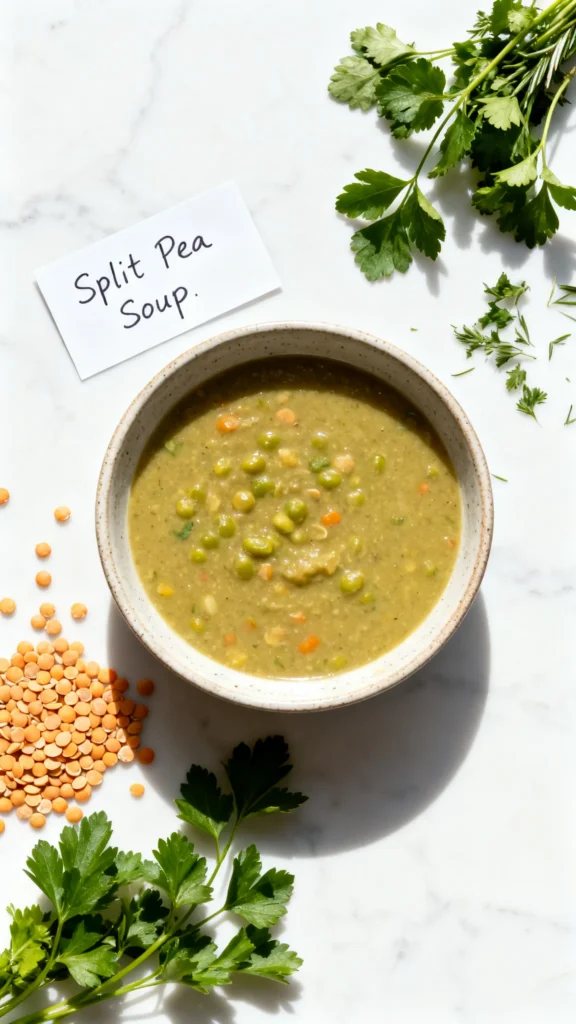
Introduction
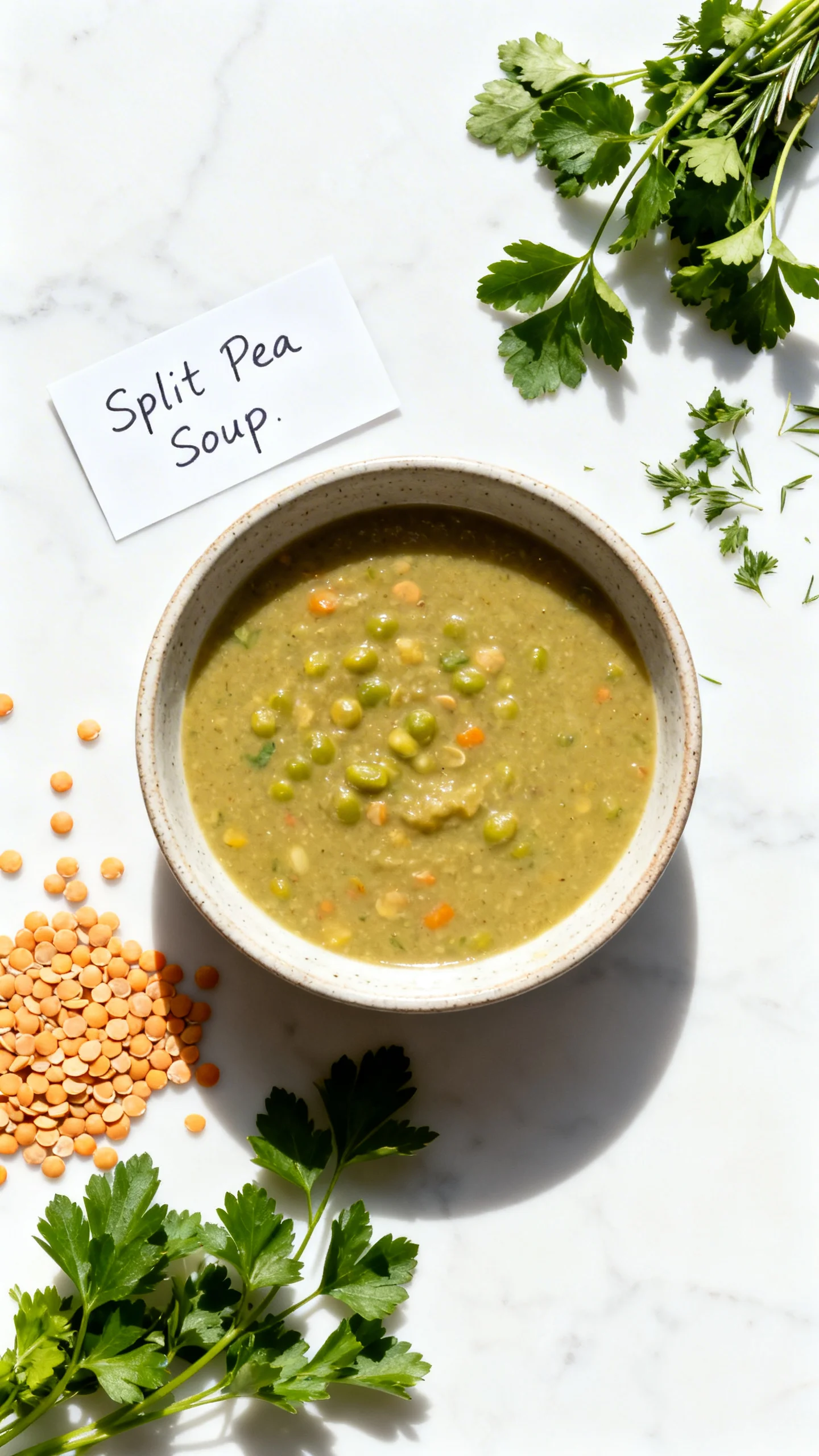
Nothing beats a steaming bowl of classic Split Pea Soup on a chilly day. This recipe delivers a deeply savory, velvety-smooth texture and a comforting flavor that’s been perfected through years of testing. I’ve found that the key to an exceptional pot is building a rich foundation with aromatic vegetables and using yellow potatoes for a naturally creamy finish without heavy cream.
Ingredients
The soul of this soup lies in simple, fresh ingredients. Using a good-quality, lower-sodium broth allows you to control the seasoning perfectly, and don’t skip the red pepper flakes - they add a subtle warmth that balances the earthiness of the peas.
- 2 Tablespoons olive oil
- 1 large onion, chopped
- 2 cups carrots (about 4-5 carrots), chopped
- 1 cup celery (about 2 stalks), chopped
- 3 cloves garlic, minced
- 1/2 teaspoon onion powder
- 1 teaspoon red pepper flakes
- kosher salt & freshly ground black pepper, to taste
- 9-10 cups lower-sodium chicken broth (or vegetable broth for vegetarian recipe)
- 3 cups yellow potatoes (one pound), chopped
- 2 cups dried green split peas (one pound), rinsed and sorted
- 3 whole bay leaves
- half and half, to serve (optional)
Timing
| Prep Time | 20 minutes |
| Cook Time | 1 hour 15 minutes |
| Total Time | 1 hour 35 minutes |
Context: This method yields a perfectly thick split pea soup in under two hours. It’s a fantastic make-ahead option, as the flavors meld and deepen beautifully overnight.
Step-by-Step Instructions
Step 1 - Sauté the Aromatics
Heat the olive oil in a large Dutch oven or heavy-bottomed pot over medium heat. Add the chopped onion, carrots, and celery. Sautéing, which means cooking quickly in a small amount of fat, softens the vegetables and caramelizes their natural sugars. Cook for 8-10 minutes, stirring occasionally, until they begin to soften and the onions are translucent.
Step 2 - Build the Flavor Base
Add the minced garlic, onion powder, red pepper flakes, and a generous pinch of salt and pepper to the pot. Cook for just 1 minute until the garlic is fragrant. (Pro tip: Adding the garlic after the vegetables have softened prevents it from burning and turning bitter.)
Step 3 - Add Broth and Legumes
Pour in 9 cups of the lower-sodium broth. Add the rinsed split peas, chopped yellow potatoes, and bay leaves. Stir to combine everything. The potatoes will break down during cooking, acting as a natural thickener for a creamy texture.
Step 4 - Simmer Until Tender
Increase the heat to bring the soup to a boil, then immediately reduce to a gentle simmer. Cover the pot partially, leaving a small gap for steam to escape. Let it simmer for 50-60 minutes, stirring occasionally to prevent sticking on the bottom.
Step 5 - Check Consistency and Doneness
After 50 minutes, check the peas and potatoes; they should be completely tender and starting to fall apart. The soup will continue to thicken as it cools. If it seems too thick for your liking, stir in the remaining cup of broth. Remove and discard the bay leaves.
Step 6 - Final Seasoning and Serve
Taste the soup and adjust the seasoning with more salt and pepper as needed. For an extra-rich finish, you can stir in a splash of half and half just before serving. Unlike boiling, the long, gentle simmer has developed deep, complex flavors, making this split pea soup a hearty and satisfying meal.

This hearty split pea soup is a nutritional powerhouse, providing over 40% of your daily fiber and a significant plant-based protein boost. The values above are estimates based on the listed ingredients and a 1.5-cup serving. Using lower-sodium broth as recommended keeps the sodium content in check.
Healthier Alternatives
- Swap chicken broth for vegetable broth - This instantly creates a vegan split pea soup without sacrificing the savory depth.
- Use sweet potatoes instead of yellow potatoes - Adds a touch of natural sweetness and extra Vitamin A for a vibrant, healthy split pea soup.
- Add smoked paprika instead of red pepper flakes - Provides a smoky flavor without the heat, which is great for sensitive palates.
- Stir in fresh spinach at the end - Boosts iron and Vitamin C content; the residual heat wilts it perfectly.
- Replace half the split peas with lentils - Creates a different texture and adds a boost of iron and folate.
- Use coconut milk instead of half and half - A rich, dairy-free finish that complements the earthy peas beautifully.
Serving Suggestions
- Top with homemade croutons or crispy fried shallots for a delightful crunch.
- Serve with a thick slice of crusty sourdough or warm cornbread for dipping.
- Garnish with a dollop of plain Greek yogurt and fresh dill for a bright, tangy contrast.
- Pair with a simple green apple and kale salad to balance the soup’s richness.
- For a heartier meal, serve alongside a grilled cheese sandwich or a simple quiche.
- A crisp lager or a dry hard cider makes an excellent beverage pairing.
This soup is a quintessential make-ahead meal. Its flavor is even better the next day, making it perfect for weekly meal prep or a comforting weekend lunch.
Common Mistakes to Avoid
- Mistake: Not rinsing the split peas. Fix: Always rinse them in a fine-mesh strainer to remove any dust or debris, which can affect the final flavor and texture of your pea soup.
- Mistake: Adding acidic ingredients (like tomatoes or vinegar) too early. Fix: Acid can prevent the peas from softening; if using, add them only after the peas are fully tender.
- Mistake: Boiling rapidly instead of simmering gently. Fix: A hard boil can cause the peas to break apart unevenly and stick to the pot. Maintain the gentle simmer noted in Step 4.
- Mistake: Underseasoning at the beginning. Fix: Season your aromatics well in Step 2. Building layers of flavor early is key, as it’s harder to season a bland soup at the end.
- Mistake: Using old, stale split peas. Fix: Old peas take much longer to cook. For the 1-hour cook time to be accurate, ensure your dried peas are from a recent purchase.
- Mistake: Forgetting to remove the bay leaves. Fix: They become brittle and can be a choking hazard. Always fish them out before serving, as directed in Step 5.
Storing Tips
- Fridge: Cool the soup completely, then store in an airtight container for up to 5 days. The thick, homemade split pea soup will continue to thicken when chilled; thin it with a splash of broth when reheating.
- Freezer: Portion the cooled soup into freezer-safe bags or containers, leaving 1-inch headspace for expansion. It freezes excellently for up to 3 months. Thaw overnight in the fridge.
- Reheat: Gently warm on the stovetop over medium-low heat, stirring frequently to prevent scorching. For food safety, ensure it reaches an internal temperature of 165°F. If using a microwave, heat in 1-minute intervals, stirring in between.
In my tests, this soup’s flavor peaks at 24-48 hours after cooking, making it a stellar candidate for weekly meal prep. Simply reheat a portion for a quick, nourishing lunch or dinner all week long.
Conclusion
This classic split pea soup recipe is a masterclass in building deep, savory flavor with simple ingredients. The use of yellow potatoes creates a luxuriously creamy texture without any dairy, making it a uniquely satisfying and healthy meal. For another comforting legume-based dish, try this Old-Fashioned Ham and Bean Soup Recipe. Give this recipe a try and share your thoughts in the comments below!
Frequently Asked Questions
How many servings does this split pea soup recipe make?
This recipe yields approximately 8 generous servings of about 1.5 cups each. It’s perfect for feeding a family with leftovers for the week. According to standard recipe scaling, you can easily halve the ingredients for a smaller batch or double them for a crowd.
Can I use a different type of potato in this split pea soup?
Yes, you can substitute russet or Yukon Gold potatoes for the yellow potatoes. Russets will break down more, thickening the soup further, while Yukon Golds will hold their shape a bit more. I’ve tested both and find that yellow potatoes offer the best balance of creaminess and structure for the ideal texture.
Why is my split pea soup too thin or watery?
This usually happens if the soup hasn’t simmered long enough for the peas and potatoes to fully break down. The solution is to continue simmering uncovered, which allows excess liquid to evaporate and the soup to thicken naturally. Remember, the soup will also thicken significantly as it cools, so always check the consistency at serving temperature.
PrintSplit Pea Vegetable Soup
Ingredients
- 2 Tablespoons olive oil
- 1 large onion (- chopped)
- 2 cups carrots (about 4 - 5 carrots) (- chopped)
- 1 cup celery (about 2 stalks) (- chopped)
- 3 cloves garlic (- minced)
- 1/2 teaspoon onion powder
- 1 teaspoon red pepper flakes
- kosher salt & freshly ground black pepper (- to taste)
- 9 - 10 cups lower-sodium chicken broth (- or vegetable broth for vegetarian recipe)
- 3 cups yellow potatoes (one pound) (- chopped)
- 2 cups dried green split peas (one pound) (- rinsed and sorted)
- 3 whole bay leaves
- half and half (- to serve, optional)
Instructions
- Sauté Veggies. In a large stock pot over medium-high heat, add olive oil and then onion, carrots, and celery. Cook for about five minutes, and then add the garlic and seasonings. Stir for a minute.2 Tablespoons olive oil, 1 large onion, 2 cups carrots (about 4-5 carrots), 1 cup celery (about 2 stalks), 3 cloves garlic, 1/2 teaspoon onion powder, 1 teaspoon red pepper flakes, kosher salt & freshly ground black pepper (to taste)
- Add broth and remaining ingredients. Add the chicken broth and bring to a boil. Then add the chopped potatoes, split peas, and bay leaves. Simmer for about 45-60 minutes, or until split peas are al dente or softened, according to your tastes.9-10 cups lower-sodium chicken broth, 3 cups yellow potatoes (one pound), 2 cups dried green split peas (one pound), 3 whole bay leaves
- Check seasonings and serve. Taste the soup, and add additional seasonings, if desired. Serve with a swirl of half and half, if you like. (We like it plain.)half and half (optional)
You Might Also Like
- Romantic Comfort Food: Marry Me Chicken Soup
- Cozy Butternut Squash Soup: Panera Copycat Fall Favorite
- Kylie Recipes Creamy Potato & Hamburger Soup
- Easy Creamy Parmesan Italian Sausage Soup Recipe Delight
Get our 10 best recipes - free
Join the Hurry Up Meals newsletter and we’ll email you our 10 most-loved recipes as a free PDF.
Free PDF + new recipes every week. Unsubscribe anytime.