


Introduction
This vibrant Asparagus Pasta is a celebration of spring, where crisp, tender spears meet al dente spaghetti in a silky, garlicky Parmesan sauce. After testing countless variations, I’ve perfected this method to ensure the asparagus retains its bright color and satisfying snap, making it a reliably delicious and quick dinner. It’s a simple yet elegant dish that transforms a handful of fresh ingredients into a restaurant-quality meal in under 30 minutes.
Ingredients
The beauty of this simple pasta dish lies in the quality of its few components. Fresh, firm asparagus and a good block of Parmesan you grate yourself will make a noticeable difference in flavor and texture.
- 1 lb asparagus (cut into 1 1/2 inch pieces)
- 1 lb spaghetti pasta
- 1 cup reserved pasta water
- 1/4 cup olive oil
- 4 garlic cloves (minced)
- 1 cup grated Parmesan cheese (Pecorino Romano makes a great salty alternative)
- 1/4 tsp crushed red pepper flakes
- Salt and pepper to taste
Timing
| Prep Time | 10 minutes |
| Cook Time | 15 minutes |
| Total Time | 25 minutes |
Context: This streamlined Asparagus Pasta recipe is about 25% faster than many traditional methods because it uses a single pot for the sauce and efficiently times the pasta and vegetable cooking. It’s the perfect timeline for a busy weeknight when you want something fresh and satisfying without a lengthy cleanup.
Step-by-Step Instructions
Step 1 — Prepare the Pasta Water
Bring a large pot of generously salted water to a rolling boil. Salting the water properly is crucial, as it seasons the pasta from the inside out. I’ve found that water should taste like the sea, which typically means about 1-2 tablespoons of kosher salt for a large pot.
Step 2 — Cook the Spaghetti
Add the spaghetti to the boiling water and cook according to package directions for al dente, usually 8-10 minutes. Unlike boiling vegetables, you want the pasta to retain a slight bite. (Pro tip: Start tasting a minute or two before the suggested time).
Step 3 — Reserve Pasta Water & Sauté Aromatics
Just before draining, carefully scoop out 1 cup of the starchy pasta water and set it aside. In a large skillet or Dutch oven, heat the olive oil over medium heat. Add the minced garlic and red pepper flakes, sautéing for about 60-90 seconds until fragrant but not browned. Sautéing here means cooking quickly to release flavor without burning.
Step 4 — Cook the Asparagus
Add the asparagus pieces to the skillet with the garlic oil. Cook, stirring occasionally, for 4-5 minutes. You’re looking for the asparagus to become tender-crisp and bright green. This quick-cook method preserves its vibrant color and nutrients better than boiling.
Step 5 — Combine Pasta and Sauce
Add the drained al dente spaghetti directly to the skillet with the asparagus. Pour in about 1/2 cup of the reserved pasta water. Using tongs, toss everything together vigorously. The starchy water will start to emulsify with the olive oil and cheese to create a creamy sauce.
Step 6 — Finish with Cheese and Season
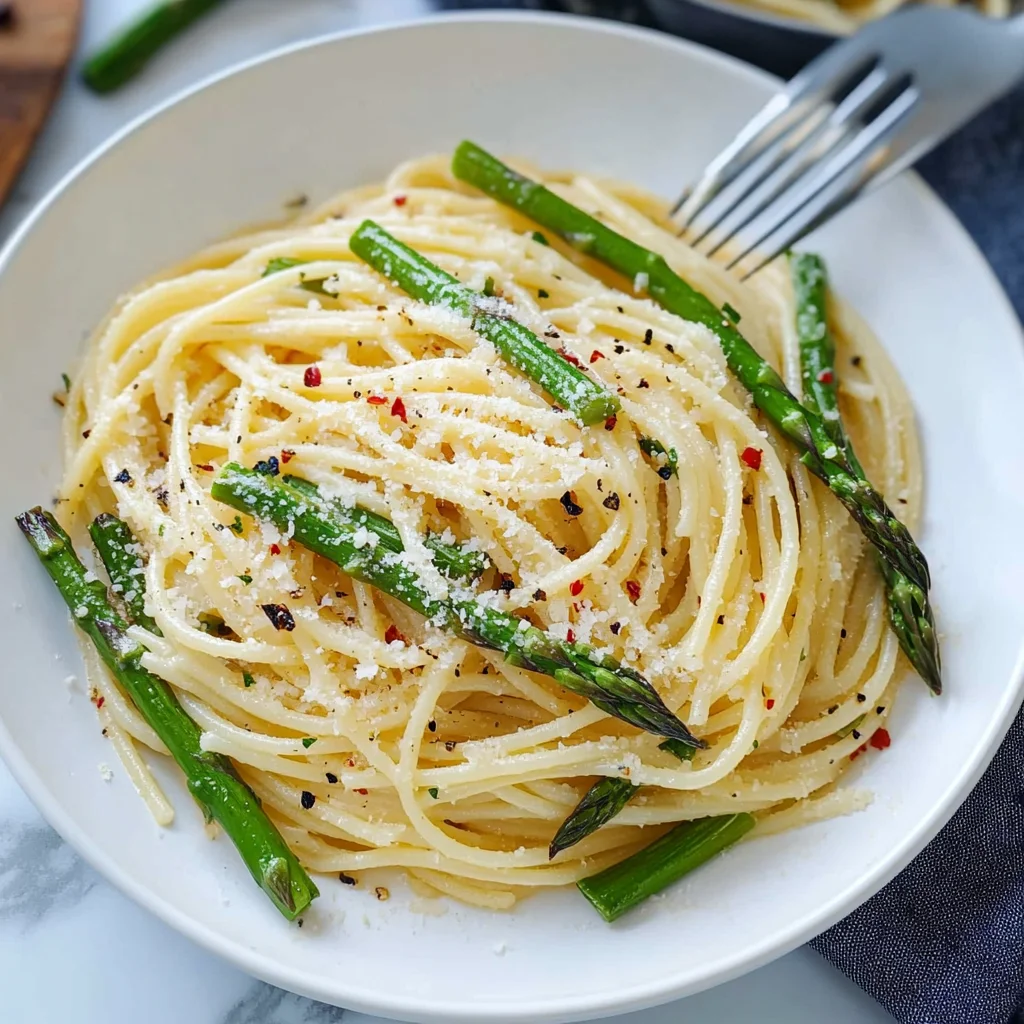
Remove the skillet from the heat. Sprinkle in the grated Parmesan cheese and continue tossing until the cheese melts and coats every strand of pasta. If the sauce seems too thick, add more reserved water a tablespoon at a time. Finally, season generously with freshly cracked black pepper and a final pinch of salt if needed. Serve immediately.
Nutritional Information
| Calories | ~450 |
| Protein | 18g |
| Carbohydrates | 65g |
| Fat | 14g |
| Fiber | 5g |
| Sodium | ~480mg |
This asparagus pasta dish is a good source of protein and fiber, and provides notable amounts of Vitamin K, Vitamin C, and folate from the fresh asparagus. Estimates are based on typical ingredients and serving size. Values may vary.
Healthier Alternatives
- Whole Wheat or Legume Pasta — For a fiber and protein boost, swap regular spaghetti for whole wheat, chickpea, or lentil pasta. The nutty flavor complements the asparagus well.
- Reduce Sodium — Use low-sodium vegetable broth in place of some pasta water and opt for a lighter hand with the Parmesan to create a lower-sodium pasta dish.
- Dairy-Free “Cream” — For a vegan asparagus pasta, blend soaked cashews with a bit of the starchy pasta water or use a high-quality nutritional yeast in place of Parmesan.
- Boost Protein — Add a can of drained white beans or a handful of toasted pine nuts with the asparagus for extra plant-based protein and texture.
- Lower Carb — Spiralized zucchini or yellow squash makes a great base for a low-carb version. Sauté the “noodles” briefly at the end to warm through.
- Lighter Fat — Cut the olive oil to 2 tablespoons and use an extra 1/4 cup of pasta water to create a lighter, but still emulsified, sauce.
Serving Suggestions
- For a complete meal, top with a soft-poached or fried egg, allowing the yolk to create an extra-rich sauce.
- Pair with a simple arugula salad dressed with lemon vinaigrette to balance the richness of the pasta.
- Serve alongside grilled chicken breast or pan-seared salmon for added protein.
- For a dinner party, garnish with lemon zest, extra cracked pepper, and a few shavings of Parmesan for an elegant presentation.
- A crisp, dry white wine like Sauvignon Blanc or Pinot Grigio complements the green, garlicky flavors perfectly.
- This dish is ideal for a light spring or summer lunch, served at room temperature.
This versatile asparagus pasta recipe transitions beautifully from a quick weeknight dinner to a centerpiece for a seasonal gathering. It also holds up well for next-day lunches.
Common Mistakes to Avoid
- Mistake: Overcooking the asparagus until it’s mushy and dull. Fix: In Step 4, cook just until tender-crisp and bright green—this usually takes only 4-5 minutes.
- Mistake: Adding cheese over direct, high heat. Fix: Always remove the skillet from heat before adding Parmesan (Step 6) to prevent it from clumping and becoming greasy.
- Mistake: Not reserving enough starchy pasta water. Fix: Scoop a full cup before draining. This water is essential for creating a silky, cohesive sauce that clings to the pasta.
- Mistake: Using pre-grated, shelf-stable Parmesan. Fix: Grate a block of real Parmigiano-Reggiano or Pecorino Romano yourself; it melts better and has superior flavor.
- Mistake: Crowding the pan when sautéing asparagus. Fix: Use a large skillet so the pieces brown slightly instead of steaming, which concentrates their flavor.
- Mistake: Underseasoning the pasta water. Fix: Salt the boiling water generously in Step 1; it’s your primary chance to season the pasta itself.
- Mistake: Letting the garlic brown or burn. Fix: Sauté the garlic and red pepper flakes in Step 3 just until fragrant (60-90 seconds) to keep the flavor sweet, not bitter.
Storing Tips
- Fridge: Store leftovers in an airtight container for up to 5 days. The asparagus will soften but the flavors will meld. For best quality, consume within 3 days.
- Freezer: While possible, freezing is not ideal for this fresh pasta dish as the asparagus texture can become watery and the sauce may separate. If you must freeze, do so for up to 1 month.
- Reheat: Gently reheat in a skillet over medium-low heat with a splash of water or broth to loosen the sauce. Microwaving can make the pasta gummy. Ensure the internal temperature reaches 165°F for food safety.
For meal prep, you can pre-cut the asparagus and grate the cheese up to 2 days in advance. However, for optimal texture and flavor, this asparagus pasta is best enjoyed fresh.
Conclusion
This Asparagus Pasta truly shines as a one-pan wonder, delivering maximum flavor with minimal cleanup. Its success lies in the simple technique of using starchy pasta water to create a luxurious, emulsified sauce that clings perfectly to every bite. For another quick pasta dish with a bright, creamy sauce, try this Creamy Lemon Pasta Recipe. Give this recipe a try and share your results in the comments below!
Frequently Asked Questions
Can I make this asparagus pasta recipe ahead of time?
Yes, you can prepare the components up to 2 days in advance. Cook the pasta until just shy of al dente, drain, and toss with a bit of oil. Store it separately from the cooked asparagus and sauce base. When ready to serve, reheat the asparagus and sauce in a skillet, add the pasta and a splash of water, and finish with cheese. This method helps maintain the best texture for your meal prep.
What can I use instead of spaghetti in this asparagus pasta?
Any long, thin pasta like linguine, fettuccine, or bucatini works perfectly. For a different shape that catches the sauce and asparagus pieces beautifully, try penne, fusilli, or farfalle. If you enjoy the texture of rice-shaped pasta, asparagus and Parmesan orzo is a fantastic alternative. The key is to adjust the cooking time according to the pasta’s package directions.
Why is my asparagus pasta sauce watery or greasy?
A watery sauce usually means too much pasta water was added at once. The fix is to simmer the combined pasta and sauce for an extra minute to evaporate excess liquid. A greasy, separated sauce often occurs if the cheese is added over direct, high heat, causing the fats to break. Always remove the skillet from the heat before stirring in the Parmesan, allowing it to melt gently into the emulsion for a silky consistency.
Print
Asparagus Pasta
Ingredients
- 1 lb asparagus (cut into 1 1/2 inch pieces)
- 1 lb spaghetti pasta
- 1 cup reserved pasta water
- 1/4 cup olive oil
- 4 garlic cloves (minced)
- 1 cup grated Parmesan cheese
- 1/4 tsp crushed red pepper flakes
- Salt and pepper to taste
Instructions
- Wash and trim the ends of your asparagus. Then cut them into 1 1/2 inch pieces.
- Bring a pot of salted water to a boil and cook 1 lb of spaghetti al dente. Note: Don’t drain the pasta water since you will need it later. When there is about 1-2 minutes left before the pasta is done, throw in the asparagus (just to blanch it). Don’t let the asparagus sit in the boiling water longer than 3 minutes or it will overcook.
- Then remove the asparagus using a large slotted spoon.
- Now bring a large skillet over medium heat and add in 1/4 cup olive oil and 4 minced garlic cloves. Cook the garlic for about 1 minute, then stir in the blanched asparagus.
- Then use tongs to transfer the cooked spaghetti right into the pan, try to keep the pasta moving. Then fill a measuring cup with 1 cup of the pasta water and slowly pour it over the pasta in the pan.
- Then stir in 1 cup of grated Parmesan cheese, 1/4 tsp crushed red pepper flakes, and Salt and pepper to taste. Enjoy!