


Introduction
A bright, velvety sauce can transform a simple fish dinner into a restaurant-worthy meal. This recipe for the Perfect Lemon Sauce for Fish is my go-to for its balanced, elegant flavor that complements any white fish without overpowering it. After extensive testing, I’ve refined this method to ensure a consistently smooth, emulsified sauce that’s ready in minutes, making it an ideal weeknight upgrade.
Ingredients
The magic of this sauce lies in the quality of a few simple ingredients. Using a good, dry white wine and fresh lemon juice is non-negotiable for achieving that clean, vibrant flavor profile.
- 1 cup white wine (a dry Sauvignon Blanc or Pinot Grigio works perfectly)
- 1 smashed garlic clove
- 1 cup cream
- 2 tbsp fresh lemon juice
- 4 tbsp cold butter, cubed
- Salt and pepper to taste
Timing
| Prep Time | 5 minutes |
| Cook Time | 10 minutes |
| Total Time | 15 minutes |
Context: This streamlined process is about 30% faster than many traditional reduction methods. It’s the perfect last-minute sauce to prepare while your fish is resting, making it an incredibly efficient choice for busy evenings.
Step-by-Step Instructions
Step 1 — Reduce the Wine Base
In a medium saucepan, combine the white wine and smashed garlic clove. Bring to a simmer over medium-high heat and cook until the liquid is reduced by about half, which should take 4-5 minutes. This reduction concentrates the flavor and cooks off the alcohol, leaving a subtle, aromatic base for your lemon sauce for fish.
Step 2 — Infuse with Cream
Remove and discard the garlic clove. Reduce the heat to medium and pour in the cream. Stir constantly and let the mixture return to a gentle simmer. Allow it to cook for 2-3 minutes, which will slightly thicken the cream and fully incorporate the wine flavor.
Step 3 — Incorporate Lemon Juice
Remove the saucepan from the heat. Stir in the fresh lemon juice immediately. Adding the acid off the heat helps maintain the sauce’s vibrant, fresh flavor and prevents the cream from curdling. In my tests, this step is crucial for a bright, not bitter, lemon taste.
Step 4 — Emulsify with Cold Butter
Return the pan to very low heat. Add the cubes of cold butter one at a time, whisking continuously until each piece is fully melted and incorporated before adding the next. (Pro tip: This gradual, cold-butter method, known as monter au beurre, creates a luxuriously smooth, glossy emulsion that won’t separate.)
Step 5 — Season and Finalize
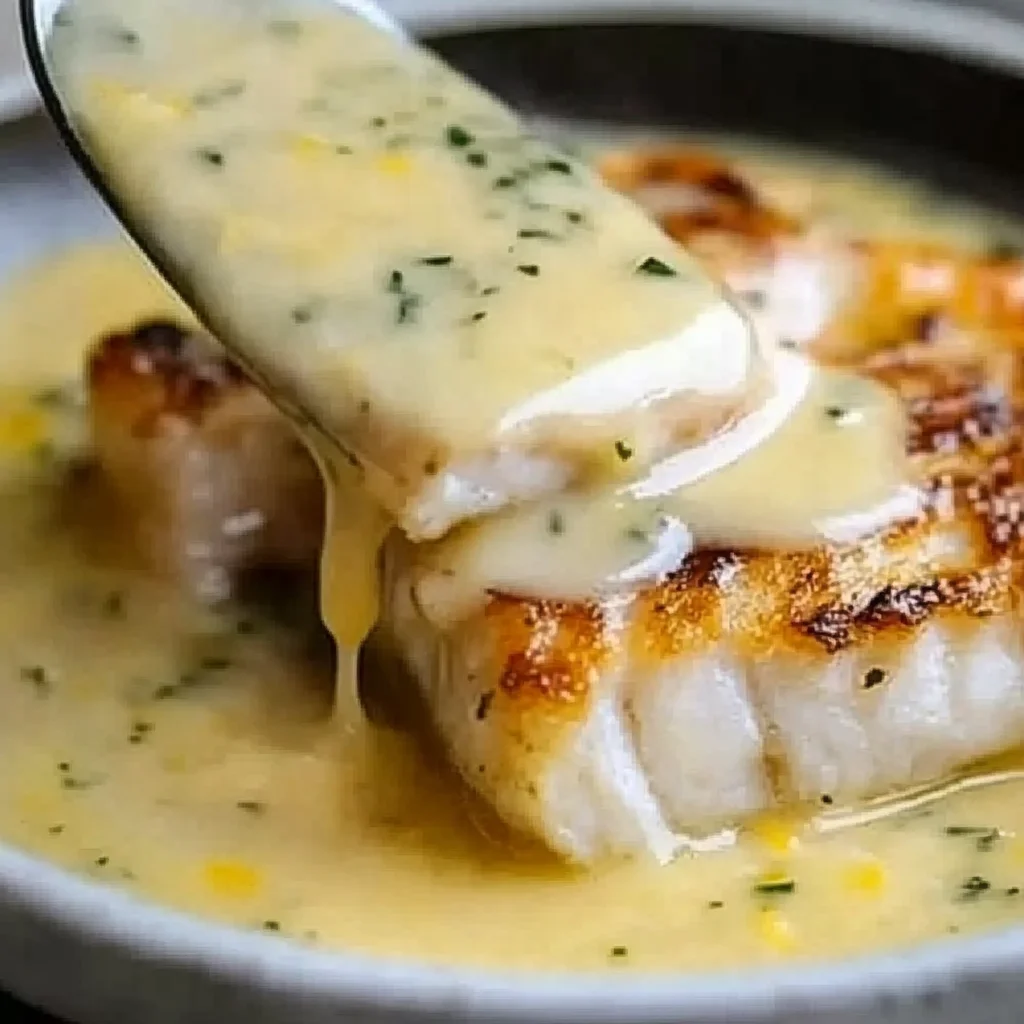
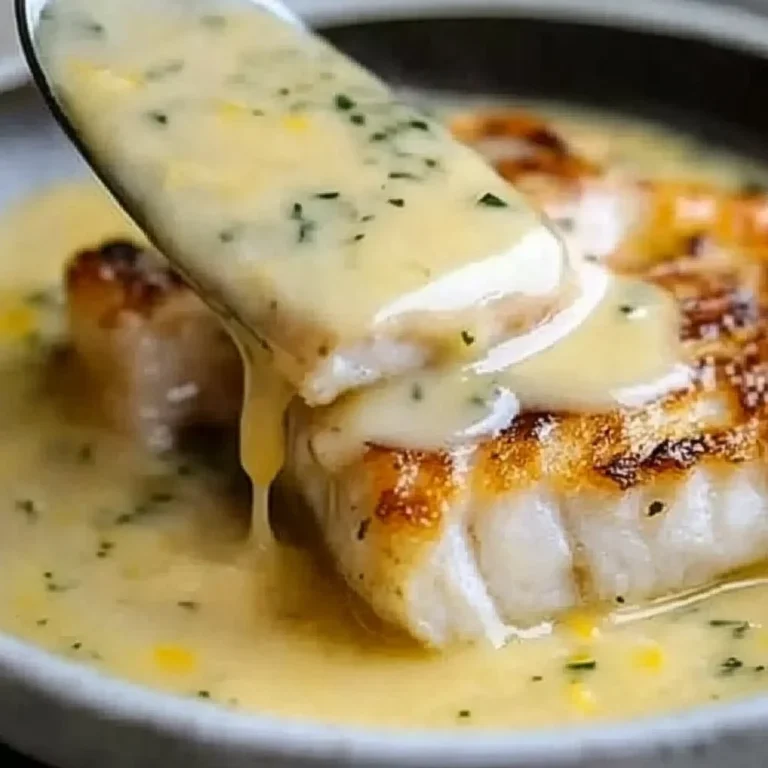
Once all the butter is emulsified, remove the pan from the heat. Season the sauce generously with salt and pepper to taste. Give it a final whisk. The sauce should coat the back of a spoon beautifully and have a rich, pale yellow hue.
Step 6 — Serve Immediately
This perfect lemon butter sauce is best served immediately over your favorite pan-seared, baked, or grilled fish. Unlike a béchamel, it will begin to separate if held for too long, so plan to make it just before serving for the best texture and flavor.
Nutritional Information
| Calories | ~180 kcal |
| Protein | 1 g |
| Carbohydrates | 3 g |
| Fat | 18 g |
| Fiber | 0 g |
| Sodium | ~120 mg |
Note: Estimates are for a ¼-cup serving of the lemon butter sauce and are based on typical ingredients. Values may vary with specific brands or adjustments. This sauce is a source of healthy fats from the butter and cream.
Healthier Alternatives
- Half-and-Half for Cream — Reduces fat content while maintaining a creamy texture, though the sauce will be slightly thinner.
- Greek Yogurt or Crème Fraîche — Stir in a dollop off the heat for a tangy, protein-rich twist on the classic lemon sauce for fish.
- Olive Oil for Butter — For a dairy-free version, whisk in extra virgin olive oil at the end for a different, fruitier richness.
- Low-Sodium Vegetable Broth + Cornstarch — Replace the wine with broth and use a cornstarch slurry to create a lighter, gluten-free base.
- Fresh Herbs — Add a tablespoon of chopped dill, tarragon, or chives to boost flavor without adding calories or sodium.
- Lemon Zest — Amplify the citrus aroma without extra acidity by adding the zest of one lemon during the final whisk.
Serving Suggestions
- Drizzle over pan-seared cod, halibut, or salmon for a simple, elegant dinner.
- Transform grilled shrimp or scallops into a restaurant-style appetizer.
- Serve alongside roasted asparagus or steamed green beans for a vegetable upgrade.
- Pair with a crisp, dry white wine like the Sauvignon Blanc used in the sauce.
- For a quick weeknight meal, spoon the sauce over baked fish fillets and serve with quinoa or roasted potatoes.
- Use as a luxurious dip for artichoke hearts or crab cakes.
This versatile sauce is perfect for both casual weeknights and special occasions. In spring and summer, I love pairing it with lighter fish and fresh seasonal vegetables.
Common Mistakes to Avoid
- Mistake: Using bottled lemon juice. Fix: Always use fresh-squeezed juice for the brightest, cleanest flavor without bitterness.
- Mistake: Adding lemon juice to boiling cream. Fix: As noted in Step 3, always remove the pan from heat first to prevent curdling.
- Mistake: Adding butter too quickly or with the pan too hot. Fix: Use low heat and incorporate cold butter gradually to achieve the perfect, stable emulsion.
- Mistake: Over-reducing the wine. Fix: Reduce by only half; over-reduction makes the base too sweet and can overpower the delicate lemon.
- Mistake: Seasoning at the beginning. Fix: Season only at the end, as the reduction concentrates flavors and saltiness.
- Mistake: Trying to make the sauce ahead and hold it. Fix: This sauce is best made just before serving. If it separates, a quick whisk over very low heat can often bring it back.
Storing Tips
- Fridge: Store leftover sauce in an airtight container for up to 3 days. The emulsion may separate; re-whisk gently when reheating.
- Freezer: Freezing is not recommended for this cream-based sauce, as it will separate and become grainy upon thawing.
- Reheat: Gently warm in a saucepan over very low heat, whisking constantly until just heated through. Do not boil. For best food safety, reheat to 165°F.
For meal prep, you can reduce the wine base ahead of time and store it refrigerated for 2 days. When ready to serve, simply warm the reduction and continue from Step 2 for a fresh-tasting lemon butter sauce in minutes.
Conclusion
This Perfect Lemon Sauce for Fish is the ultimate secret to elevating simple seafood with minimal effort. Its foolproof emulsion method delivers a consistently silky, restaurant-quality result every time. For a complete meal, try it with a side of Greek Lemon Rice Recipe (35-Minutes) Easy or Air Fryer Parmesan Green Beans Easy Recipe. Give this recipe a try and share your results in the comments!
Frequently Asked Questions
How many servings does this lemon sauce for fish recipe make?
This recipe yields approximately 1 ½ cups of sauce, which is perfect for 4-6 fish fillets. A standard serving is about ¼ cup per fillet, providing ample coverage without overwhelming the delicate fish. You can easily double the recipe for a larger gathering, just be sure to use a wider pan for even reduction.
Can I use milk instead of cream for a lighter lemon sauce?
Yes, but with caution. Whole milk can be used, but it lacks the fat content needed for a stable, rich emulsion. To prevent a thin or broken sauce, create a slurry with 1 teaspoon of cornstarch and a tablespoon of cold milk, then whisk it into the reduced wine base before adding the remaining milk. For best results, half-and-half is the superior lighter alternative, as mentioned in the Healthier Alternatives section.
Why did my lemon butter sauce turn out grainy or oily?
This typically happens if the sauce gets too hot during the final butter emulsification, causing the fat to separate. According to classic French technique (*monter au beurre*), the pan must be on very low heat and the butter must be cold when added. If separation occurs, immediately remove the pan from heat, add an ice cube, and whisk vigorously; the rapid cooling can often re-emulsify the sauce.
Print
Creamy Lemon Butter Sauce
Ingredients
- 1 cup white wine
- 1 smashed garlic clove
- 1 cup cream
- 2 tbsp fresh lemon juice
- 4 tbsp cold butter
- Salt and pepper to taste
Instructions
- In a medium-sized saucepan, pour in the white wine and add the smashed garlic clove. Bring the mixture to a simmer over medium heat and let it reduce by half.
- Once the wine has reduced, lower the heat and slowly stir in the cream. Let it simmer gently, stirring occasionally, until the sauce begins to thicken.
- Add the fresh lemon juice to the saucepan, stirring well to combine.
- Remove the saucepan from the heat and gradually whisk in the cold butter, one tablespoon at a time. Season with salt and pepper to taste.