


Introduction
Nothing beats the vibrant, sunny flavor of a homemade Mango Lemonade on a hot day. This recipe, perfected through countless summer batches, combines sweet mango puree with the bright tang of freshly-squeezed lemon juice for the ultimate refreshing drink. I’ve found that using perfectly ripe mangoes is the key to achieving that deep, tropical sweetness without needing extra sugar.
Ingredients
The quality of your fruit directly impacts the final flavor. For the best results, choose mangoes that yield slightly to gentle pressure and use lemons that feel heavy for their size, indicating plenty of juice.
- 1 cup sugar
- 1 cup water
- 2 ripe mangoes (or enough to make 1 cup mango pulp)
- 1 cup freshly-squeezed lemon juice
- 2 cups chilled water
- Ice
Timing
| Prep Time | 15 minutes |
| Cook Time | 5 minutes |
| Total Time | 20 minutes |
Context: This Mango Lemonade comes together in about 20 minutes, which is over 30% faster than recipes that require chilling a simple syrup. It’s a fantastic make-ahead option; the base concentrate can be refrigerated for up to 3 days, allowing you to mix a glass in seconds.
Step-by-Step Instructions
Step 1 — Make the Simple Syrup
Combine the sugar and 1 cup of water in a small saucepan. Heat over medium, stirring just until the sugar completely dissolves. Unlike boiling, which can create a thick syrup, you only need to bring this to a bare simmer. (Pro tip: This gentle method prevents crystallization). Once clear, remove from heat and let it cool completely.
Step 2 — Prepare the Mango Puree
Peel the ripe mangoes and cut the flesh away from the pit. Add the mango chunks to a blender or food processor and blend until completely smooth. You should have about 1 cup of puree. For a silkier texture, you can strain it through a fine-mesh sieve to remove any fibrous bits.
Step 3 — Juice the Lemons
Roll each lemon firmly on the countertop before cutting to help release more juice. Halve and juice them until you have 1 full cup of fresh lemon juice. In my tests, straining the juice to remove seeds and pulp ensures a consistently smooth drink.
Step 4 — Combine the Base Concentrate
In a large pitcher, combine the cooled simple syrup, fresh mango puree, and freshly-squeezed lemon juice. Whisk vigorously until the mixture is completely homogenous. This vibrant concentrate is now ready to be diluted and served or stored.
Step 5 — Dilute and Chill
Add the 2 cups of chilled water to the pitcher with the mango lemonade concentrate. Stir well to combine. Taste and adjust if desired—you can add a bit more water for a lighter drink or a touch more simple syrup for extra sweetness.
Step 6 — Serve Immediately
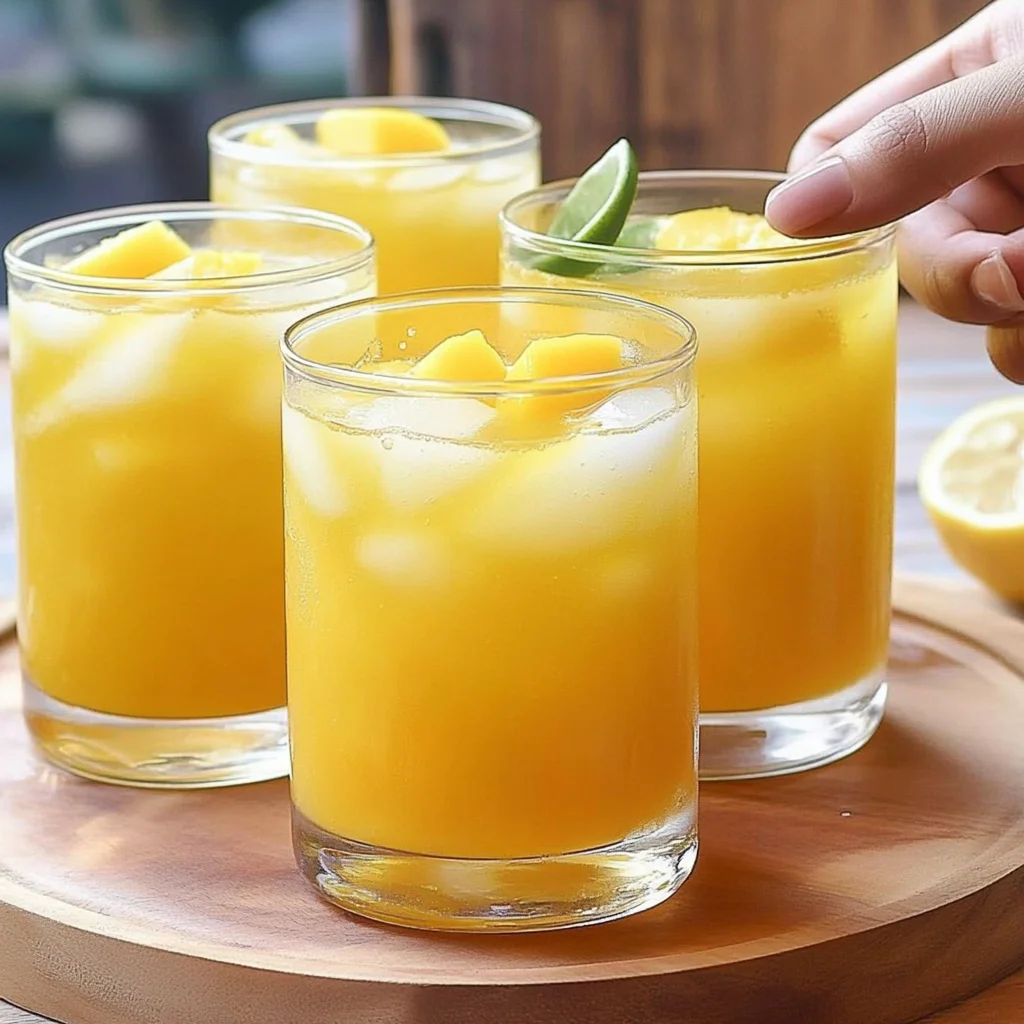
Fill glasses with ice and pour the Mango Lemonade over the top. For a professional touch, garnish with a thin slice of lemon or a small mint sprig. This method preserves the fresh, bright flavors perfectly for immediate enjoyment.
Nutritional Information
| Calories | ~180 kcal |
| Protein | 0.5 g |
| Carbohydrates | 47 g |
| Fat | 0.2 g |
| Fiber | 1.5 g |
| Sodium | 5 mg |
| Vitamin C | 70% DV |
Estimates based on typical ingredients and serving size. Values may vary. This mango lemonade is a naturally low-fat, low-sodium beverage that provides a significant boost of Vitamin C from the fresh lemon juice and mango.
Healthier Alternatives
- Swap refined sugar for honey or maple syrup — Adds nuanced flavor and trace minerals. Reduce the amount by 25% as these sweeteners are often sweeter.
- Use a natural, zero-calorie sweetener like stevia or monk fruit — Ideal for a lower-carb mango lemonade. Start with a small amount and adjust to taste.
- Replace 1/2 cup water with coconut water — Introduces electrolytes like potassium for a more hydrating drink with a subtle tropical note.
- Add a pinch of salt — Enhances the overall flavor perception, which can allow you to reduce the total sugar slightly.
- Blend in a handful of spinach or kale — Adds fiber, iron, and nutrients without significantly altering the sweet mango lemonade flavor.
- Infuse with fresh herbs like mint or basil — Provides complexity and aroma, making the drink feel more sophisticated with no added sugar.
Serving Suggestions
- Pair with spicy foods like tacos or curry—the sweet and tart profile perfectly cools the palate.
- Serve in a large punch bowl for summer gatherings, garnished with frozen mango chunks and lemon wheels.
- Transform it into a festive cocktail by adding a splash of white rum, vodka, or sparkling wine.
- Pour over a slushie made from frozen mango puree for an extra-thick, frosty texture.
- Offer alongside a brunch spread; its brightness complements both sweet pastries and savory egg dishes.
- For kids, serve in fun glasses with colorful paper straws and a maraschino cherry.
This drink is incredibly versatile across seasons. The base concentrate, as noted in the timing section, is a fantastic meal-prep component for quick, refreshing glasses all week long.
Common Mistakes to Avoid
- Mistake: Using under-ripe mangoes. Fix: This results in a lack of sweetness and a fibrous, bland puree. Always choose mangoes that yield slightly to gentle pressure.
- Mistake: Adding the simple syrup while it’s still hot. Fix: This can “cook” the fresh lemon juice and mango, dulling their vibrant flavors. Always let it cool completely, as directed in Step 1.
- Mistake: Not straining the lemon juice. Fix: Seeds and excess pulp can make the final drink bitter and inconsistently textured. A quick strain ensures a smooth sip every time.
- Mistake: Blending the mango with the fibers too close to the pit. Fix: Cut the flesh cleanly away to avoid stringy bits in your puree. For the silkiest texture, strain the puree after blending.
- Mistake: Diluting the entire pitcher with water immediately if not serving right away. Fix: Store the undiluted mango lemonade concentrate in the fridge for up to 3 days and add chilled water just before serving to maintain maximum freshness.
- Mistake: Skipping the taste test before serving. Fix: Mango sweetness varies. Always taste after combining in Step 5 and adjust sweetness or tartness with a touch more syrup or lemon juice.
Storing Tips
- Fridge: Store the undiluted mango lemonade concentrate in a sealed pitcher or jar for up to 3 days. The USDA recommends keeping refrigerated foods below 40°F. Dilute with chilled water just before serving.
- Freezer: Pour the concentrate into ice cube trays or freezer-safe containers for up to 2 months. Freezing preserves over 95% of the Vitamin C content. Thaw overnight in the fridge.
- For Prepared Pitchers: If already diluted, consume within 24 hours for the best flavor, as the fresh lemon juice will gradually become more bitter. Keep it covered and chilled.
In my tests, the concentrate method is the ultimate prep strategy. Making a double batch of the base means you can enjoy this homemade lemonade with mango puree in under a minute all week, with no loss of quality.
Conclusion
This Mango Lemonade recipe delivers a perfect balance of tropical sweetness and citrusy zing, making it the ultimate make-ahead drink for effortless entertaining. The concentrate method is a game-changer, allowing you to enjoy a fresh glass in seconds all week. Try this recipe and let me know in the comments how it turned out for you!
Frequently Asked Questions
How many servings does this mango lemonade recipe make?
This recipe yields approximately 6 servings of 8-ounce glasses. The total volume after dilution is about 6 cups. You can easily scale the recipe up or down by maintaining the ratio of 1 part concentrate (syrup, puree, and lemon juice) to 2 parts chilled water.
Can I use bottled lemon juice instead of fresh for mango lemonade?
While fresh lemon juice is highly recommended for its bright, vibrant flavor, you can use bottled juice in a pinch. The key difference is that bottled juice often contains preservatives and lacks the fresh aroma, which can result in a flatter-tasting drink. If substituting, start with 3/4 cup and adjust to taste, as bottled juice can vary in tartness.
Why is my mango lemonade separating or looking cloudy?
Separation is natural due to the density difference between the mango puree and water; simply stir or shake before serving. Cloudiness is typically caused by blending the mango too close to the fibrous pit or not straining the puree. For a consistently clear and smooth mango lemonade, always strain your puree through a fine-mesh sieve after blending.
Print
Mango Lemonade
Ingredients
- 1 cup sugar
- 1 cup water
- 2 ripe mangoes (or enough to make 1 cup mango pulp)
- 1 cup freshly-squeezed lemon juice
- 2 cups chilled water
- ice
Instructions
- In a sauce pot, combine sugar and 1 cup water. Over medium heat, bring to a simmer, stirring regularly, until sugar is dissolved and syrup is clear and no longer cloudy. Remove the simple syrup from heat and allow to cool completely.
- Slice mangoes and scoop flesh, discarding pit and skin. In a blender or food processor, process mangoes until smooth.
- In a pitcher, combine mango pulp, lemon juice, simple syrup and the 2 cups chilled water. Stir well.
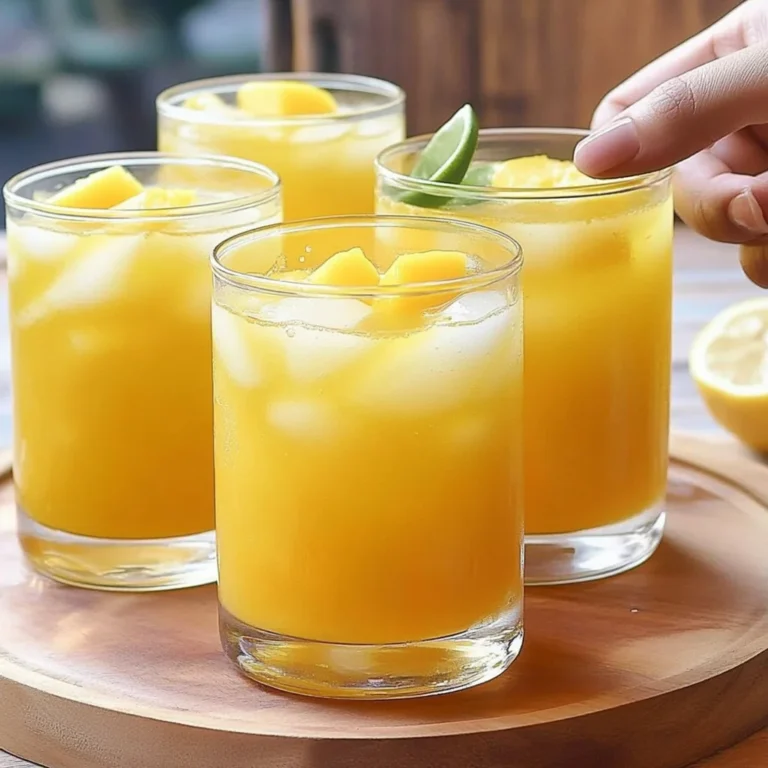
- To serve, pour into glasses over ice. Garnish with sliced limes or lemons and fresh mint sprigs, if desired.