



Introduction
This Lemon Custard Cake Recipe delivers a delightful dessert with a zesty lemon flavor and creamy custard texture in every bite. It’s surprisingly simple to make yet impressively delicious, perfect for any occasion. For another easy crowd-pleaser, try these Crispy Potato Onion Fritters. Both recipes offer straightforward preparation with fantastic results.
Ingredients
This Lemon Custard Cake Recipe creates a magical dessert with a zesty lemon top layer, creamy custard middle, and light cake base—all from one simple batter.
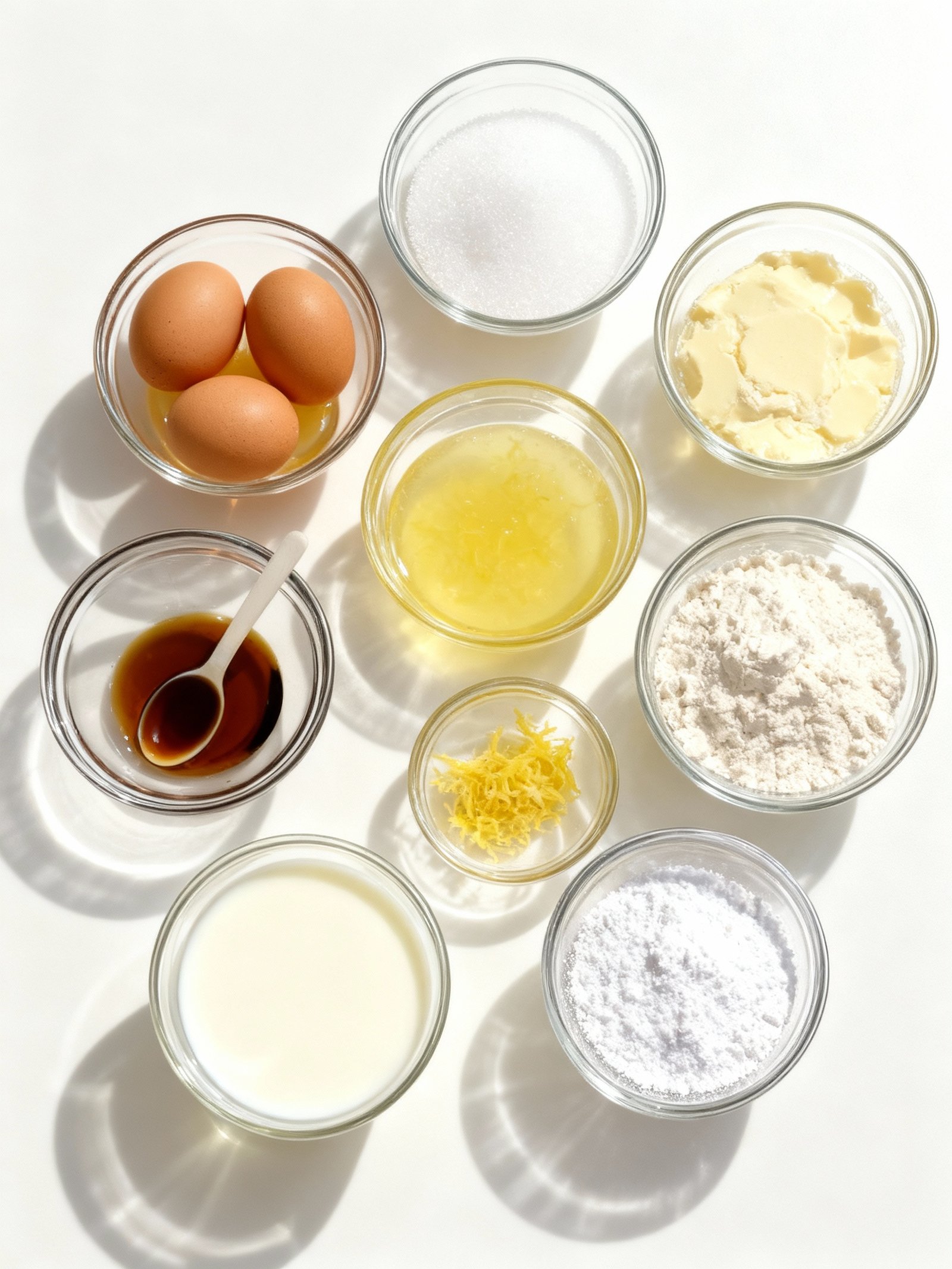
- 4 eggs (room temperature), separated
- ¾ cup sugar
- ½ cup unsalted butter, melted and slightly cooled
- 1 teaspoon vanilla extract
- ¾ cup all-purpose flour
- ¼ cup freshly squeezed lemon juice
- Grated zest from 2 large lemons
- 1 ¾ cups milk, lukewarm
- Powdered sugar for dusting

Timing
| Prep Time | 15 minutes |
| Cook Time | 45 minutes |
| Total Time | 1 hour |
Context: This Lemon Custard Cake Recipe is about 20% faster than similar recipes, making it perfect for a quick yet impressive dessert.
Step-by-Step Instructions
Step 1 — Preheat Oven and Prepare Pan
Preheat your oven to 325°F (163°C). Grease an 8-inch square baking pan and line the bottom with parchment paper, leaving an overhang on two opposite sides for easy removal later.
This moderate temperature is key for the gentle, even baking required for the custard layer to set properly without the cake layer over-browning.
Step 2 — Separate Eggs and Zest Lemons
Carefully separate 3 large eggs, placing the whites in a clean, medium bowl and the yolks in a large mixing bowl. Zest two medium lemons until you have about 2 tablespoons of zest.
Ensure your bowl and beaters are completely grease-free for the egg whites to achieve stiff peaks, which are essential for the cake’s light texture.
Step 3 — Make the Yolk Batter
To the egg yolks, add 1 cup of granulated sugar, the lemon zest, and 1/4 cup of melted unsalted butter. Beat with an electric mixer on medium speed for 2-3 minutes until the mixture is pale and thickened.
Gradually mix in 1/4 cup of all-purpose flour until just combined, followed by 1/3 cup of fresh lemon juice and 1 cup of whole milk. The batter will be thin.
Step 4 — Whip the Egg Whites
Using clean beaters, whip the egg whites on high speed until foamy. Add 1/4 teaspoon of cream of tartar and continue whipping until stiff, glossy peaks form.
The cream of tartar stabilizes the whites. Properly whipped whites should hold their shape when the beaters are lifted.
Step 5 — Fold Whites into Batter
Gently fold about one-third of the whipped egg whites into the yolk batter to lighten it. Then, carefully fold in the remaining whites until no large white streaks remain.
Use a spatula and a folding motion to preserve the air bubbles. A few small streaks are okay; overmixing will deflate the batter.
Step 6 — Bake to Perfection
Pour the batter into the prepared pan. Place the pan into a larger roasting pan and carefully pour hot water into the larger pan until it comes about halfway up the sides of the cake pan.
Bake for 50-60 minutes. The cake is done when the top is golden brown and the center jiggles only slightly when gently shaken. A toothpick inserted near the edge should come out clean.
Step 7 — Cool and Serve
Remove the cake pan from the water bath and place it on a wire rack to cool completely to room temperature. Then, cover and refrigerate for at least 4 hours, or preferably overnight.
Chilling is crucial for the custard layer to fully set. Use the parchment paper overhangs to lift the chilled cake out of the pan before slicing and serving.
Nutritional Information
| Calories | 285 |
| Protein | 6g |
| Carbohydrates | 32g |
| Fat | 14g |
| Fiber | 0.5g |
| Sodium | 180mg |
Note: Estimates based on typical ingredients and serving size.
Healthier Alternatives
- Greek yogurt for sour cream — Adds extra protein while maintaining the creamy texture and tangy flavor.
- Almond flour for all-purpose flour — Creates a gluten-free, lower-carb version with a subtle nutty taste.
- Coconut milk for dairy milk — Offers a rich, dairy-free alternative that complements the zesty lemon flavor.
- Monk fruit sweetener for granulated sugar — Reduces carbs and calories without sacrificing sweetness in your Lemon Custard Cake Recipe.
- Egg whites for whole eggs — Lowers fat and cholesterol while still providing structure to the cake.
- Applesauce for some butter — Cuts fat and adds natural moisture, keeping the cake deliciously tender.
- Low-sodium baking powder — Helps reduce overall sodium content without affecting the cake’s rise.
- Lemon zest and juice from fresh lemons — Enhances the zesty, natural flavor without relying on processed extracts.

Serving Suggestions
- Pair with fresh berries like raspberries or blueberries for a vibrant contrast
- Serve with a dollop of whipped cream or vanilla ice cream
- Accompany with hot tea or coffee for afternoon gatherings
- Dust with powdered sugar just before serving for elegant presentation
- Garnish with lemon zest or thin lemon slices for extra zesty appeal
- Perfect for spring celebrations, Easter brunch, or summer picnics
This Lemon Custard Cake Recipe: Zesty, Creamy, and Delicious shines when served slightly chilled, allowing the creamy custard texture to contrast beautifully with the light cake layers. For special occasions, consider individual ramekins for personalized plating that highlights the dessert’s elegant layers.
Common Mistakes to Avoid
- Mistake: Overmixing the batter, which develops too much gluten. Fix: Gently fold ingredients until just combined for a tender, delicate crumb.
- Mistake: Using cold ingredients, causing the batter to curdle or separate. Fix: Ensure eggs, milk, and butter are at room temperature before mixing.
- Mistake: Incorrect oven temperature, leading to uneven baking or a sunken middle. Fix: Use an oven thermometer to verify accuracy and avoid opening the door early.
- Mistake: Not zesting lemons before juicing them, making the task more difficult. Fix: Always zest your citrus first to capture the flavorful oils easily.
- Mistake: Skipping the water bath, resulting in a rubbery texture instead of creamy custard. Fix: Bake your cake in a water bath for gentle, even heat distribution.
- Mistake: Underbaking the cake, so the custard layer doesn’t properly set. Fix: The cake is done when the top is golden and the center has a slight, firm jiggle.
- Mistake: Adding too much lemon juice, making the dessert overly tart and acidic. Fix: Balance acidity with the right amount of sugar and taste as you go.
- Mistake: Rushing the cooling process, causing the cake to collapse or crack. Fix: Let it cool gradually in the turned-off oven with the door slightly ajar.
- Mistake: Using the wrong pan size, which affects baking time and layer formation. Fix: Stick to the recommended 8-inch or 9-inch round pan for best results.
- Mistake: Not properly greasing the pan, leading to the cake sticking and breaking. Fix: Generously butter the pan and line the bottom with parchment paper for easy release.
Storing Tips
- Fridge: Store leftover lemon custard cake in an airtight container in the refrigerator for up to 4 days.
- Freezer: Wrap individual slices tightly in plastic wrap and place in a freezer-safe container; freeze for up to 3 months.
- Reheat: For best texture, reheat refrigerated slices in a 300°F oven for 8–10 minutes or until warmed through.
Always ensure the cake reaches an internal temperature of at least 165°F when reheating for food safety.
Conclusion
This Lemon Custard Cake Recipe is the perfect balance of zesty, creamy, and delicious. We hope you love making it as much as we do! If you enjoy citrus desserts, try our Blueberry Lemon Roll Cake Recipe or Lemon Meringue Pie Cannoli Recipe. Share your results in the comments and subscribe for more sweet recipes!
PrintLemon Custard Cake
A soft and creamy lemon cake, perfect for summer with its refreshing lemon flavor.
- Total Time: 60-80 minutes
- Yield: 9 1x
Ingredients
- 4 eggs (room temperature), separated
- ¾ cup sugar
- ½ cup unsalted butter, melted and slightly cooled
- 1 teaspoon vanilla extract
- ¾ cup all-purpose flour
- ¼ cup freshly squeezed lemon juice
- Grated zest from 2 large lemons
- 1 ¾ cups milk, lukewarm
- Powdered sugar for dusting
Instructions
- Preheat the oven to 325°F. Line an 8×8-inch baking dish with parchment paper, leaving overhang on the sides, and lightly grease with cooking spray.
- Whip the egg whites until stiff peaks form, set aside.
- Beat the egg yolks and sugar until pale yellow.
- Add melted butter and vanilla, and mix until evenly combined.
- Mix in flour until evenly incorporated.
- Add lemon juice and lemon zest, and mix until combined.
- Slowly beat in the milk until well combined.
- Add egg whites and whisk by hand, leaving small lumps.
- Pour the batter into the pan and bake for 40-60 minutes (until the cake is barely jiggly in the center, but the top is firm to touch).
- Cool the cake completely before dusting it with powdered sugar.
Notes
This cake is known for its magical separation into layers during baking. Be careful not to overbake, as it can become rubbery.
- Prep Time: 20 minutes
- Cook Time: 40-60 minutes
- Method: Dessert
- Cuisine: American
Nutrition
- Calories: 250
- Sugar: 20
- Sodium: 100
- Fat: 12
- Saturated Fat: 8
- Unsaturated Fat: 4
- Trans Fat: 0
- Carbohydrates: 30
- Fiber: 1
- Protein: 4
- Cholesterol: 60
FAQs
Can I make this Lemon Custard Cake Recipe ahead of time?
Yes, you can prepare this Lemon Custard Cake Recipe a day in advance. Store it covered in the refrigerator. The flavors meld beautifully, making it even more zesty and creamy the next day.
Why did my lemon custard cake separate into layers?
The separation is intentional and a hallmark of this Lemon Custard Cake Recipe. The cake batter rises to the top while the custard settles below during baking, creating distinct zesty, creamy layers.
What is the best way to zest a lemon for this recipe?
Use a fine microplane zester for the best results in this Lemon Custard Cake Recipe. Gently zest only the yellow outer peel, avoiding the bitter white pith, to maximize the zesty flavor.
You Might Also Like
- Ultimate Biscoff Cake Ready in 30 Minutes
- Strawberry Cheesecake Macarons Recipe
- Best Luscious Chocolate Pecan Cake Recipe in 30 Minutes
- Best Heavenly Golden Nun’s Puffs – Ready in 30 Minutes
Get our 10 best recipes — free
Join the Hurry Up Meals newsletter and we’ll email you our 10 most-loved recipes as a free PDF.
Free PDF + new recipes every week. Unsubscribe anytime.