


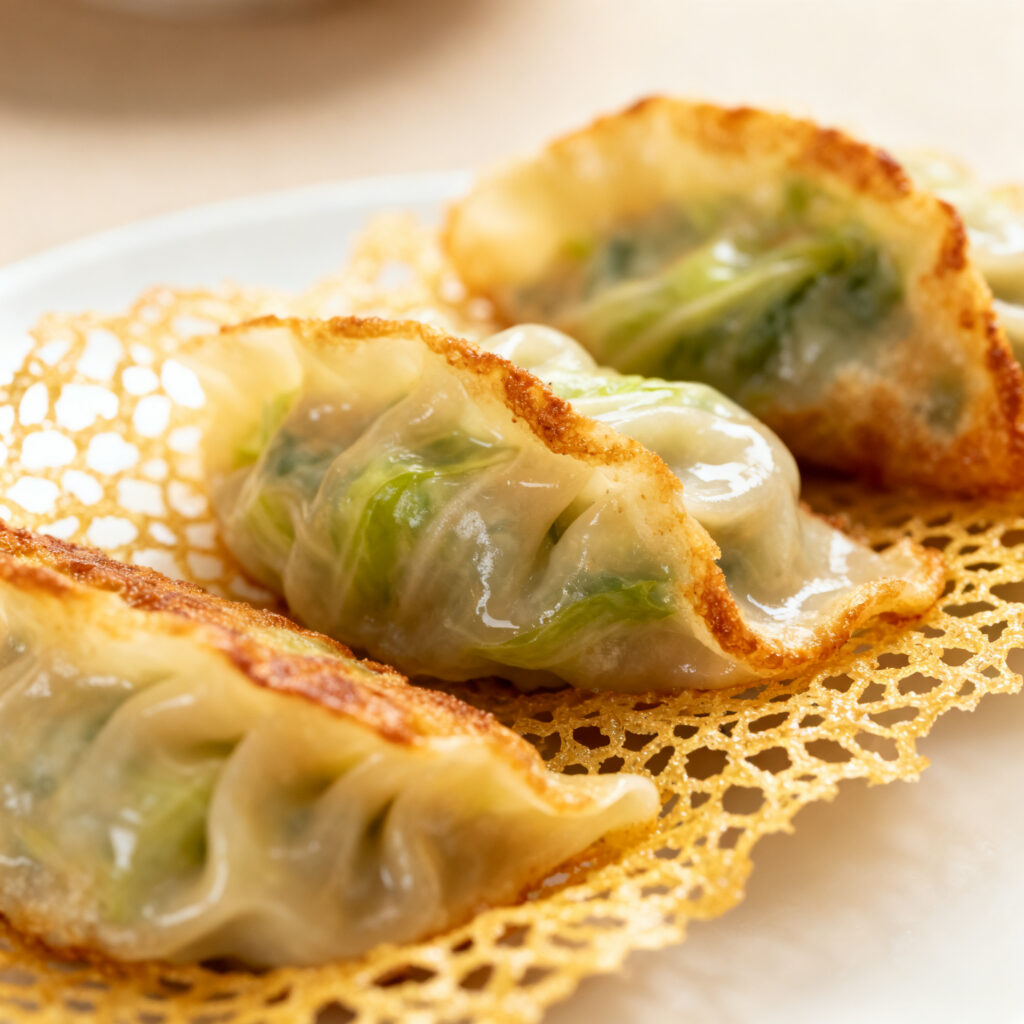
These cabbage dumplings solve the one thing that ruins most potstickers: watery, bland filling. By salting the cabbage first and then using that drained-off liquid to build a lacy, shatter-crisp skirt around the dumplings, you get juicy filling and restaurant-level crunch in one move. No wasted ingredients, no soggy bottoms.
Simple, everyday ingredients and clear, step-by-step instructions — every recipe made in Dorothy’s kitchen before it reaches yours. Jump to the full recipe card below.
PrintCrispy Cabbage Dumplings (Potstickers) – Easy Appetizer Everyone Loves
Juicy cabbage-pork dumplings pan-fried into one golden, lacy, shatter-crisp sheet.
- Total Time: 45 minutes
- Yield: 4 (about 30 dumplings) 1x
Ingredients
- 1 small napa cabbage (about 1 lb), finely shredded
- 1 tsp salt, for draining the cabbage
- 1/2 lb ground pork (or finely chopped shiitake for vegetarian)
- 3 scallions, finely chopped
- 2 tsp grated fresh ginger
- 2 cloves garlic, minced
- 1 tbsp soy sauce
- 1 tsp toasted sesame oil
- 1 tbsp Shaoxing wine (or dry sherry)
- 1/4 tsp white pepper
- 1 tbsp cornstarch
- 30–32 round dumpling or gyoza wrappers
- 2 tbsp neutral oil, for frying
- 1 tbsp all-purpose flour, for the crispy skirt slurry
- 3/4 cup liquid (reserved cabbage liquid plus water to fill)
Instructions
- Toss shredded cabbage with 1 tsp salt and let sit 15 minutes. Squeeze hard in a clean towel, reserving the drained liquid — you should get about 1/4 cup.
- Mix the squeezed cabbage with ground pork, scallions, ginger, garlic, soy sauce, sesame oil, Shaoxing wine, white pepper, and cornstarch until sticky and well combined.
- Spoon about 1 tablespoon of filling into each wrapper, wet the edges, and pleat closed into a tight half-moon.
- Heat oil in a nonstick skillet over medium-high. Arrange dumplings flat-side down in a spiral, leaving small gaps between them.
- Sear undisturbed 2 minutes, until the bottoms are golden.
- Whisk the flour with the reserved cabbage liquid plus enough water to make 3/4 cup total. Pour into the pan around the dumplings.
- Cover immediately and steam 5–6 minutes, until most of the liquid is absorbed.
- Uncover and continue cooking 2–3 minutes, without moving the pan, until the liquid fully evaporates and you hear a steady crackle — this is the lace skirt forming.
- Loosen the edges with a spatula and slide the whole crisped sheet onto a plate, crust-side up. Serve with a dipping sauce of soy, rice vinegar, and chili oil.
Notes
Don’t skip squeezing the cabbage dry — this is what keeps the filling from turning watery. Save every bit of that squeezed-out liquid for the slurry; it’s seasoned already, so taste your final dipping sauce before adding extra salt. Freeze uncooked, pleated dumplings solid on a tray, then bag them; cook straight from frozen, adding 2–3 extra minutes to the covered steaming step. Don’t lift the lid early — the skirt needs to fully dry out before it crisps.
- Prep Time: 30 minutes
- Cook Time: 15 minutes
- Method: Pan-fried (potsticker)
- Cuisine: Chinese-inspired
Most cabbage dumpling recipes skip the one step that actually matters: dealing with cabbage’s water content before it becomes a problem. Cabbage is over 90% water, and if you chop it straight into your filling, that water leaks out during cooking and turns your dumplings into steamed sacks of mush with a wrapper that never crisps. The fix is simple — salt the shredded cabbage, let it sit, then wring it out hard in a clean towel. What most people do next is dump that liquid down the drain. Don’t. That cabbage water is seasoned, slightly sweet, and full of flavor, and it’s exactly what you want whisking into your crispy-skirt slurry instead of plain water.
The lace skirt — the thin, golden, net-like crust that connects a whole panful of dumplings into one crackly sheet — is a technique borrowed from Japanese hanetsuki gyoza and Chinese pot-sticker houses, and it’s genuinely easier than it looks. A thin cornstarch-and-flour slurry gets poured into the hot pan after searing, then the pan is covered to steam the tops while the liquid underneath reduces and fries into lace. Using the reserved cabbage liquid in that slurry instead of water does double duty: it seasons the crust itself, so even the crispy skirt tastes like something instead of just being texture.
The most common mistake here is impatience — pulling the lid too early. The slurry needs to go from bubbling liquid to fully evaporated and audibly sizzling before you uncover the pan; if there’s still visible moisture, the skirt will be soft instead of crisp. The second mistake is overcrowding: give dumplings a little breathing room so the slurry can actually pool and web between them rather than just pooling under one dense clump. For filling, ground pork is classic, but finely chopped shiitake plus an extra egg white makes an excellent vegetarian swap, and ground chicken thigh works well if you want something leaner without drying out.
These freeze beautifully uncooked — pleat, freeze solid on a tray, then bag them and cook straight from frozen, adding a couple extra minutes to the steam step. That makes this less of a one-off appetizer and more of a standing freezer staple you pull out whenever you need something impressive with almost no notice.
Frequently Asked Questions
Why do my cabbage dumplings turn out soggy?
It's almost always unsalted cabbage. Cabbage releases a lot of water as it cooks, so salting it and squeezing it dry before mixing it into the filling is essential — skip that step and the filling waterlogs both itself and the wrapper.
Can I make cabbage dumplings ahead of time?
Yes. Pleat the dumplings, freeze them solid in a single layer on a tray, then transfer to a bag. Cook straight from frozen using the same sear-then-slurry method, just add 2–3 extra minutes to the covered steaming step.
Can I make these vegetarian?
Swap the ground pork for finely chopped shiitake mushrooms plus an extra egg white to help bind the filling. The cabbage-liquid slurry trick works exactly the same way for the crispy skirt.
What's the best dipping sauce for cabbage dumplings?
A simple mix of soy sauce, rice vinegar, and a spoonful of chili oil is classic. A few drops of sesame oil and a pinch of sugar round it out if you want something slightly richer.
Get our 10 best recipes — free
Join the Hurry Up Meals newsletter and we’ll email you our 10 most-loved recipes as a free PDF.
Free PDF + new recipes every week. Unsubscribe anytime.