


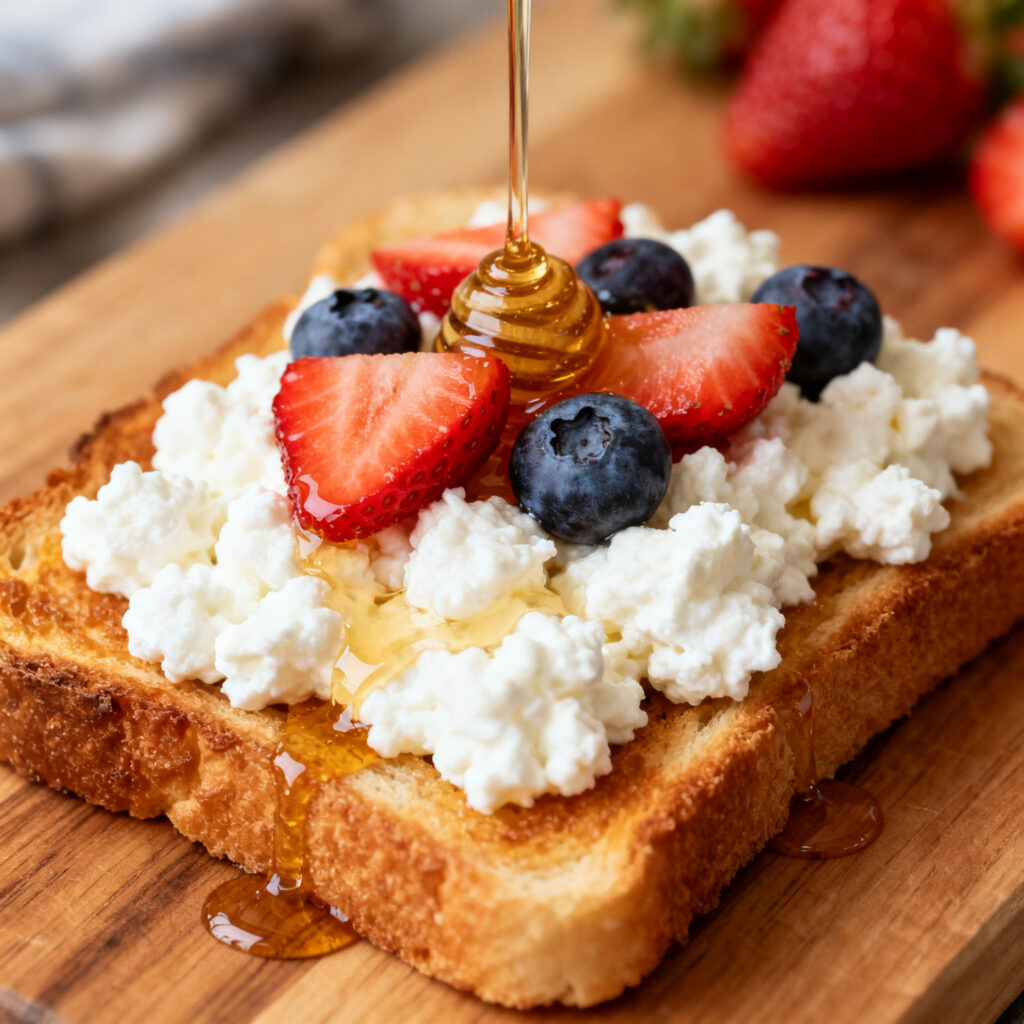
Most cottage cheese toast recipes just dump curds on bread and call it a trend — but that watery, lumpy texture is exactly why half the internet thinks they hate it. This version salts and drains the curds first, whips them into something closer to whipped ricotta, then runs the whole toast under the broiler until the top blisters and browns. Same protein payoff, completely different (better) mouthfeel.
Simple, everyday ingredients and clear, step-by-step instructions — every recipe made in Dorothy’s kitchen before it reaches yours. Jump to the full recipe card below.
PrintCottage Cheese Toast (Whipped and Broiled, Not Lumpy)
Salted, drained, and whipped cottage cheese piled onto garlic toast and broiled until blistered — a smoother, higher-protein take on the viral breakfast trend.
- Total Time: 20 minutes
- Yield: 4 toasts 1x
Ingredients
- 1 1/2 cups full-fat small-curd cottage cheese (4%)
- 1/2 teaspoon fine sea salt, plus more to taste
- 1 teaspoon lemon zest
- 4 thick slices sourdough or crusty country bread
- 1 garlic clove, halved
- 1 tablespoon olive oil, plus more for drizzling
- Cracked black pepper, to taste
- Flaky salt, for finishing
- Optional: chili crisp, honey, or fresh chives/dill, for topping
Instructions
- Place the cottage cheese in a bowl, stir in the salt, and let it sit for 10-15 minutes — the salt will draw out excess liquid.
- Tip the cottage cheese into a fine mesh sieve set over a bowl. Let it drain for 5-10 minutes, pressing gently once or twice with a spoon. Reserve the drained whey for another use.
- Transfer the drained curds to a food processor with the lemon zest. Blend for 60-90 seconds, scraping down the sides, until completely smooth and lightened in texture, like whipped ricotta.
- Toast the bread until golden and crisp. While still warm, rub one side of each slice with the cut garlic clove and drizzle lightly with olive oil.
- Preheat the broiler. Spread a thick layer of the whipped cottage cheese onto each toast, all the way to the edges.
- Set the toasts on a baking sheet and broil 2-3 minutes, watching closely, until the top is blistered and browned in spots.
- Finish with cracked black pepper, flaky salt, and your choice of chili crisp, honey, or fresh herbs. Serve immediately.
Notes
Don’t skip salting and draining — it’s the difference between a wet, grainy spread and a genuinely smooth one. Use full-fat, small-curd cottage cheese; low-fat versions split and weep under the broiler instead of browning. No food processor? A stick blender in a tall, narrow cup works, just takes a bit longer to fully smooth out. Whipped cottage cheese keeps well covered in the fridge for up to 4 days and doubles as a fast dip or bagel spread.
- Prep Time: 15 minutes
- Cook Time: 5 minutes
- Method: Broiled
- Cuisine: American
Here’s the problem nobody talks about: cottage cheese is roughly 80% water by weight, and if you spread it straight onto toast, that water migrates into the bread within minutes. You end up with soggy crusts and a spread that slides off in wet clumps. The fix is borrowed from labneh-making — salt the curds, let them sit, drain off the excess whey, then blitz. Salt draws liquid out through osmosis, and a quick rest in a fine mesh sieve gets rid of it before it ever touches your bread. What’s left behind whips into something genuinely smooth, almost like a savory whipped ricotta, in under two minutes.
The second move — broiling instead of just toasting — is where this recipe earns its keep. A raw cold dollop of cottage cheese on warm toast is fine, but two to three minutes under the broiler blisters the surface, deepens the flavor, and gives you a textural contrast between the crisp, browned top and the cool, creamy interior underneath. It’s the same instinct behind a baked feta dip or a brûléed cheesecake top, just scaled down to breakfast. Full-fat, small-curd cottage cheese (4%) holds up far better here than low-fat versions, which tend to split and weep under direct heat instead of browning cleanly.
The most common mistake is skipping the drain step because it feels unnecessary — it isn’t. Even five extra minutes of draining measurably changes the final texture from grainy-wet to genuinely spreadable. If you don’t own a food processor, a stick blender in a tall cup works, though it takes a little longer to fully smooth out the curds. Reserve the drained-off whey; it’s mild, slightly tangy, and works well whisked into scrambled eggs or blended into a smoothie instead of going down the drain.
This base takes savory or sweet without any real change to method. Go savory with garlic-rubbed sourdough, cracked pepper, flaky salt, and a drizzle of chili crisp or good olive oil. Go sweet by skipping the garlic and pepper and finishing with honey, cinnamon, and sliced fruit instead. Either direction, the whipped-and-broiled base is what actually makes the trend worth repeating.
Frequently Asked Questions
Is cottage cheese toast actually high in protein?
Yes. A 1/2 cup serving of full-fat cottage cheese has around 12-14 grams of protein, so a single slice of cottage cheese toast made this way delivers roughly 10-12 grams before you even count the bread.
Why is my cottage cheese toast watery?
Cottage cheese is mostly water, and it seeps into bread fast if you skip pretreatment. Salting the curds and draining them in a sieve for 10 minutes before whipping removes most of that excess liquid.
Can I make the whipped cottage cheese ahead of time?
Yes, whip a batch up to 4 days ahead and store it covered in the fridge. Spread it cold onto toast and broil straight from the refrigerator, no need to bring it to room temperature first.
Do I have to broil it?
No, you can eat it straight from the whip if you're short on time, but broiling for a couple of minutes blisters the top and adds a savory depth that a cold spread doesn't have.
What's the best bread for cottage cheese toast?
A sturdy, open-crumb bread like sourdough or a country loaf holds up best under the broiler and against the moisture of the topping. Soft sandwich bread tends to go soggy too quickly.
Get our 10 best recipes — free
Join the Hurry Up Meals newsletter and we’ll email you our 10 most-loved recipes as a free PDF.
Free PDF + new recipes every week. Unsubscribe anytime.