


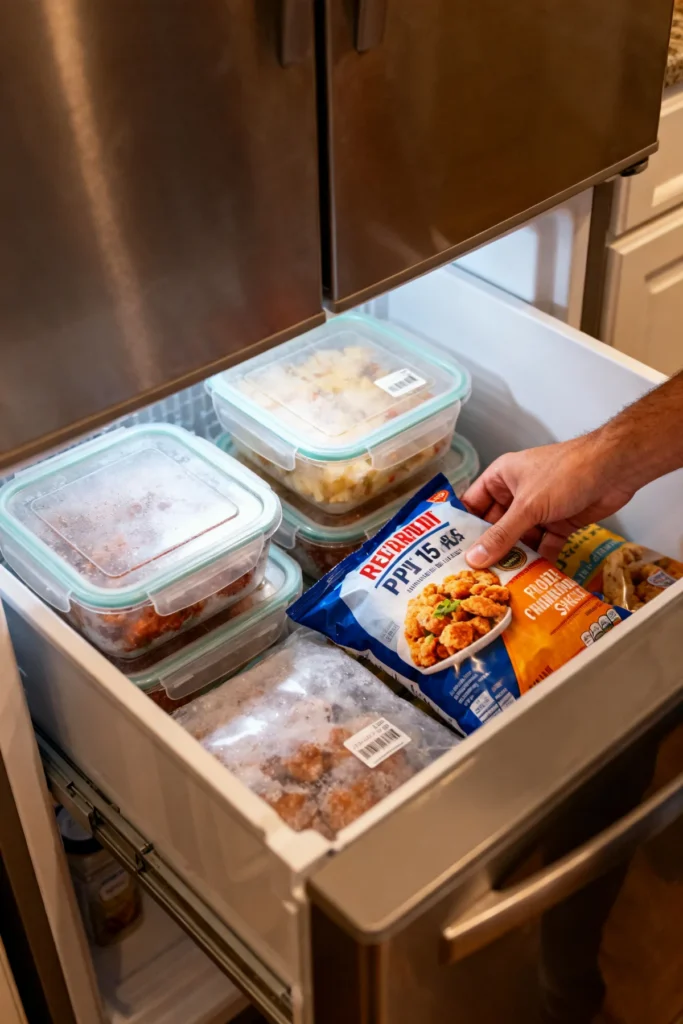
If you have a vacuum-packed bag of bami rolls or bitterballen sitting in your chest freezer right now, go check it before you prep anything else this week. USDA’s Food Safety and Inspection Service posted a public health alert on Nov. 6, 2026, and it is exactly the kind of thing that gets buried under a dozen other grocery emails.
I keep a running shelf in my own freezer for “grab and heat” snacks on the nights meal prep falls apart, so this one caught my eye immediately. Frozen appetizers are an easy blind spot: they sit in the back for months and the label rarely gets a second look once you know you like the product.
What’s actually going on
According to FSIS, the products in question are frozen, not-ready-to-eat meat and poultry snacks made by Betterballen Foods LLC, an establishment based in Greer, South Carolina. The problem isn’t bacteria, it’s the label itself: the products contain sesame, which wasn’t declared, and the beef item is made with a Worcestershire sauce that contains anchovy (fish), also undeclared. Both are on the FDA’s list of major food allergens, so this matters a lot if anyone in your house has a sesame or fish allergy.
The affected items were produced on Oct. 15, Oct. 16, and Oct. 27, 2026, and sold three ways:
- Clear vacuum-packed 6-piece “Bami Rolls,” best-by October 2027, lot codes BR-2026-01 and BR-2026-02
- Clear vacuum-packed 10-piece “Saté Kroketten,” best-by October 2027, lot code SK-1026-01
- Clear vacuum-packed 12-piece “Bitterballen,” best-by October 2027, lot code BB-1026-01
Look for establishment number “EST. M3177” or “EST. P3177” printed inside the USDA inspection mark on the package. FSIS says the snacks were sold nationwide through online orders from Lowlands House, plus possibly in person at a festival and farmers market in Greer, South Carolina. The alert lists Georgia, South Carolina, and nationwide as affected distribution.
Technically, this is a public health alert rather than a formal recall, since FSIS says the products are no longer available for purchase through normal channels. That distinction matters for the paperwork, but not for your freezer. If you bought these in October, there’s a real chance a bag is still sitting behind the frozen peas. As of the alert, FSIS had not received any confirmed reports of allergic reactions tied to these products.
What to do if you have these in your freezer
Don’t eat them, even if no one in the house has a known sesame or fish allergy, since reactions can show up the first time someone is exposed. FSIS’s guidance is simple: throw the package away (double-bagging it so it doesn’t get eaten by mistake) or take it back to where you bought it. If you or anyone in your home has eaten these and had an allergic reaction, symptoms to watch for include hives, swelling, tightness in the throat, or trouble breathing, and that’s a call-your-doctor-now, not a wait-and-see.
How I’m handling freezer meal prep this week
This is my semi-regular reminder to myself that “freezer food” doesn’t mean “set it and forget it” food. Every few months I do a quick sweep: pull everything out, check dates, and toss anything I can’t identify by lot number anymore. It takes ten minutes and it’s a lot less annoying than discovering a recall after the fact.
If you’re restocking your freezer shelf this week, I’d lean toward something you make and label yourself, like a batch of my meal prep teriyaki chicken bowls. You control exactly what’s in it, down to the sauce, and it reheats just as fast as a store-bought snack.
Sources
- USDA FSIS: Public Health Alert for Meat and Poultry Products Due to Misbranding and Undeclared Allergens (Nov. 6, 2026)
- Food Safety News: USDA issues warning about Betterballen beef and chicken products because of undeclared allergens
Get our 10 best recipes - free
Join the Hurry Up Meals newsletter and we’ll email you our 10 most-loved recipes as a free PDF.
Free PDF + new recipes every week. Unsubscribe anytime.