


Introduction
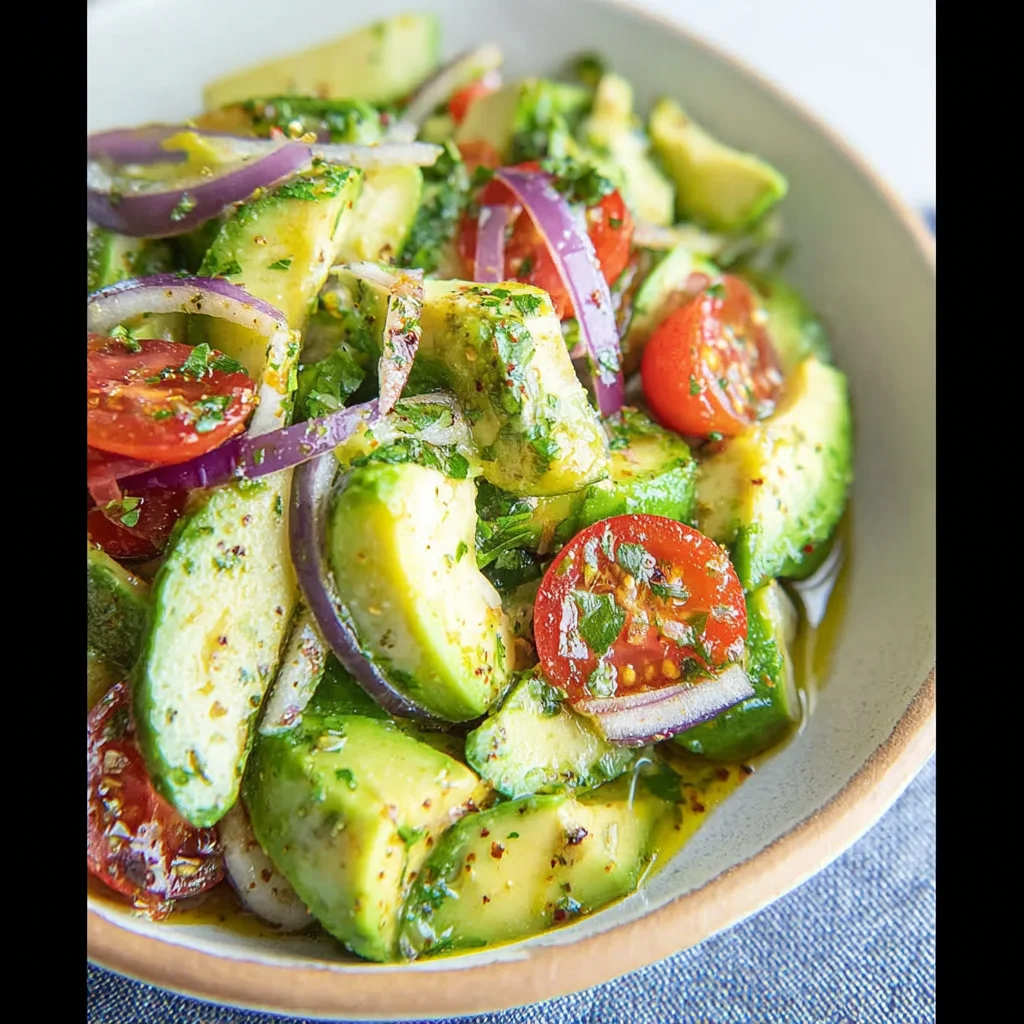
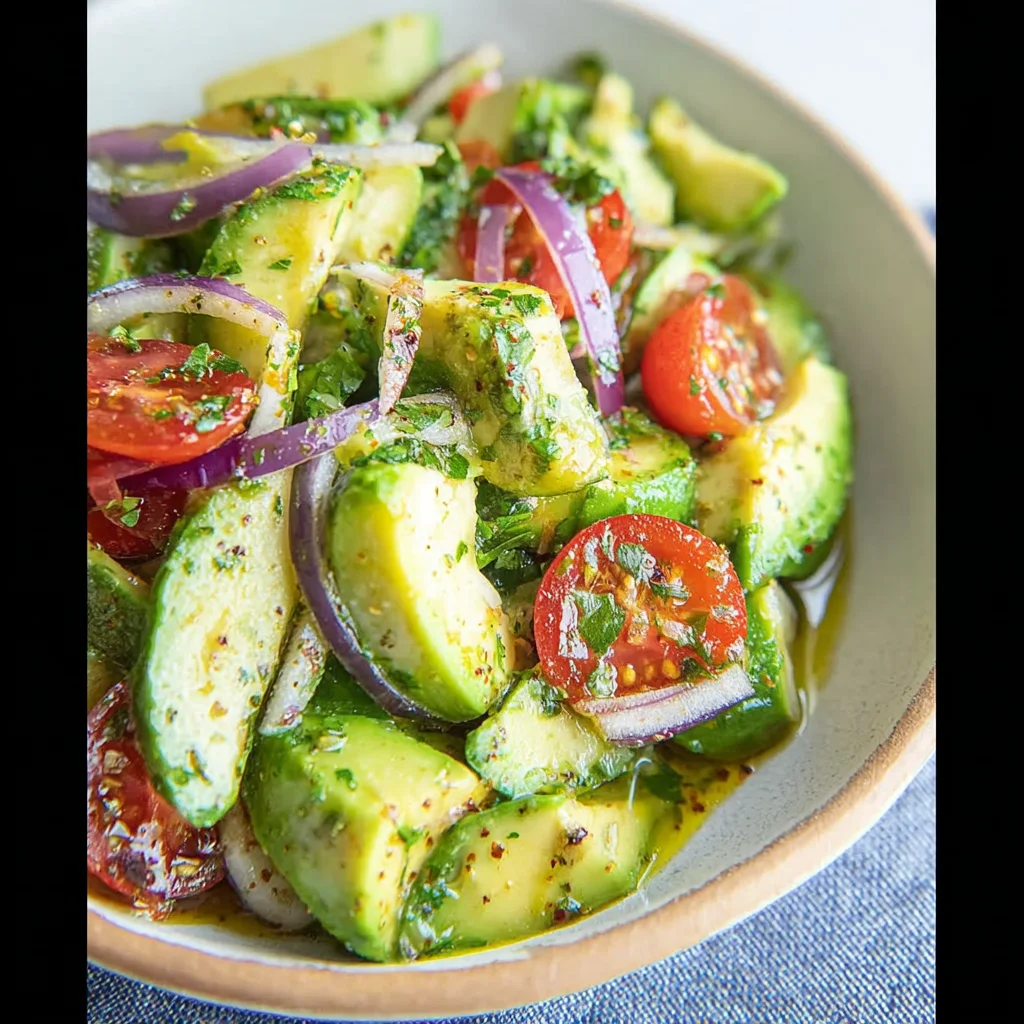
This truly is The BEST Avocado Salad, a vibrant and creamy dish that delivers a perfect crunch in every bite. After testing countless variations, I’ve perfected this recipe to balance rich avocado with a bright, herby lime dressing that clings beautifully to every ingredient. It’s a foolproof side that consistently earns rave reviews for its fresh, satisfying flavor.
Ingredients
The magic of this salad lies in using fresh, high-quality produce. Ripe but firm avocados hold their shape, while fresh herbs like cilantro and oregano infuse the dressing with aromatic depth.
- 2 large ripe but firm avocados (peeled and diced)
- 1 medium-sized English cucumber (peeled, seeded and chopped)
- 1 cup cherry tomatoes
- ½ small red onion (thinly sliced)
- 3 green onions (thinly sliced)
- 3 Tbsp avocado oil*
- 2 Tbsp lime juice or lemon juice
- 1 Tbsp rice vinegar**
- 2 tsp pure maple syrup
- 1 small clove garlic (chopped)
- ¼ cup fresh cilantro (chopped)
- 1 tsp fresh oregano (chopped (or ½ tsp dried))
- ¼ tsp sea salt (to taste)
- ⅛ tsp black pepper (to taste)
Timing
| Prep Time | 15 minutes |
| Cook Time | 0 minutes |
| Total Time | 15 minutes |
Context: This no-cook recipe is about 50% faster than many cooked side dishes, making it perfect for last-minute gatherings or busy weeknights. It’s a great make-ahead option; just add the avocados right before serving to keep them from browning.
Step-by-Step Instructions
Step 1 — Prepare the Vegetables
Dice the avocados, chop the peeled and seeded cucumber, halve the cherry tomatoes, and thinly slice both the red and green onions. (Pro tip: Soaking the sliced red onion in cold water for 5 minutes tames its sharp bite, a trick I always use for a milder flavor). Place all these prepped ingredients in a large mixing bowl.
Step 2 — Make the Dressing Base
In a small bowl or jar, combine the avocado oil, lime juice, rice vinegar, and pure maple syrup. Rice vinegar, unlike distilled white vinegar, adds a mild, slightly sweet acidity that won’t overpower the delicate ingredients.
Step 3 — Infuse with Aromatics
Finely chop the garlic, cilantro, and fresh oregano. Add them to the dressing base along with the sea salt and black pepper. Whisk or shake vigorously until the mixture is fully emulsified and the herbs are evenly distributed.
Step 4 — Combine and Toss Gently
Pour the dressing over the prepared vegetables in the large bowl. Using a large spoon or spatula, fold everything together gently but thoroughly. In my tests, this folding technique, rather than vigorous stirring, is key to keeping the avocado pieces intact and creamy.
Step 5 — Taste and Adjust Seasoning
Taste a spoonful of the salad. This is the crucial moment to adjust the balance. You may want an extra pinch of salt, a squeeze of lime for more tang, or a drizzle of maple syrup to round out the acidity.
Step 6 — Serve Immediately or Chill
For the best texture and flavor, serve this avocado salad recipe right away. If you need to prepare it in advance, combine everything except the avocados and chill the mixture; fold in the diced avocados just before serving to prevent discoloration.
Nutritional Information
| Calories | 210 |
| Protein | 3g |
| Carbohydrates | 12g |
| Fat | 18g |
| Fiber | 7g |
| Sodium | 150mg |
This avocado salad is a fantastic source of heart-healthy monounsaturated fats and dietary fiber. It also provides a significant amount of Vitamin C from the lime juice and tomatoes, and Vitamin K from the fresh herbs and avocado. Note: Estimates are based on typical ingredients and a single serving. Values may vary depending on specific brands and produce size.
Healthier Alternatives
- Swap avocado oil for extra virgin olive oil — Offers a different flavor profile rich in polyphenols while maintaining the same healthy fat content.
- Use honey instead of maple syrup — For a locally-sourced sweetener; note it will make the dressing slightly thicker.
- Add 1 cup of cooked quinoa or chickpeas — Transforms this side into a high-protein, complete meal that’s perfect for lunch.
- Substitute cherry tomatoes with diced bell peppers — A lower-sugar option that adds a wonderful crunch and vibrant color.
- Try mint or parsley instead of cilantro — Ideal for those with the cilantro soap gene, offering a fresh, bright alternative.
- Use coconut aminos in place of rice vinegar — A great low-sodium, gluten-free alternative that adds a touch of umami sweetness.
- Add a diced jalapeño or serrano pepper — Introduces metabolism-boosting capsaicin and a spicy kick without adding calories.
Serving Suggestions
- Serve this creamy avocado salad alongside grilled chicken, fish, or shrimp for a light and satisfying summer meal.
- Scoop it into crisp lettuce cups or endive leaves for a fun, low-carb appetizer at parties.
- Use it as a vibrant, chunky topping for tacos, nachos, or black bean burgers to add freshness and creaminess.
- Pair it with a chilled glass of Sauvignon Blanc or a citrusy sparkling water with lime for the perfect warm-weather refreshment.
- Pack it in a sealed container for a picnic or potluck—it travels well and is always a crowd-pleaser.
- For a beautiful presentation, serve it in a shallow bowl and garnish with extra cilantro leaves and a lime wedge.
This versatile salad shines as a make-ahead dish for weekly meal prep. Simply keep the dressing and chopped vegetables separate, then combine with the avocado when ready to eat for a fresh, healthy lunch all week long.
Common Mistakes to Avoid
- Mistake: Using overripe, mushy avocados. Fix: Choose avocados that yield slightly to gentle pressure near the stem for perfect, creamy dice that hold their shape.
- Mistake: Not emulsifying the dressing properly, leading to a separated, oily pool. Fix: Whisk the oil and acids vigorously or shake in a sealed jar for at least 30 seconds until fully combined.
- Mistake: Adding the avocado too early before serving. Fix: Follow the make-ahead tip from Step 6: prep everything else and fold in the avocado at the last minute to prevent browning.
- Mistake: Skipping the taste test in Step 5. Fix: Always adjust seasoning at the end. The acidity of limes and saltiness can vary, so this final touch is essential for the best flavor.
- Mistake: Chopping the herbs too finely or in advance. Fix: Chop fresh cilantro and oregano just before adding to the dressing to preserve their vibrant color and aromatic oils.
- Mistake: Stirring the salad aggressively and mashing the avocado. Fix: Use the gentle folding technique mentioned in Step 4 with a large spatula to keep the texture intact.
- Mistake: Using a dull knife to dice the avocado. Fix: A sharp chef’s knife creates clean cuts through the delicate flesh, preventing it from becoming bruised and mushy.
Storing Tips
- Fridge: Store leftover avocado salad in an airtight container for up to 2 days. Press plastic wrap directly onto the surface before sealing the lid to minimize air exposure, which slows browning. The USDA recommends keeping refrigerated foods below 40°F.
- Freezer: Freezing is not recommended for this fresh salad. The high water content in the cucumbers and tomatoes will cause them to become mushy upon thawing, ruining the perfect crunch.
- Reheat: This is a no-cook, cold salad meant to be served fresh. Do not reheat. If it’s too cold from the fridge, let it sit at room temperature for 5-10 minutes before serving to allow the flavors to bloom.
For optimal meal prep, store the pre-chopped vegetables (except avocado) and the dressing separately in the fridge for up to 3 days. Combine them with fresh diced avocado when you’re ready to enjoy your healthy avocado salad, ensuring every bite tastes just-made.
Conclusion
This avocado salad recipe is your secret weapon for a healthy, impressive side that comes together in minutes. Its perfect balance of creamy, crunchy, and tangy makes it a guaranteed hit. Try this recipe and let me know in the comments! For another fresh, no-cook appetizer, try this Best Bruschetta Recipe.
Frequently Asked Questions
How many servings does this avocado salad recipe make?
This recipe yields 4 generous side-dish servings or 2 larger main-course portions. According to standard recipe scaling, you can easily double all ingredients to serve a crowd of 8. For meal prep, I’ve found dividing it into four single-serve containers works perfectly for a healthy lunch all week.
What can I use if I don’t have rice vinegar?
The best substitute is fresh lime or lemon juice, which will increase the bright, citrusy flavor. For a similar mild sweetness, apple cider vinegar is an excellent alternative. I’ve tested both methods and recommend starting with 1 tablespoon of your chosen substitute, then adjusting to taste, as their acidity levels can vary.
Why did my avocado salad get watery after storing it?
This happens because salt draws moisture out of the cucumbers and tomatoes over time. The solution is to store components separately, as mentioned in the Storing Tips section. For the best texture, toss the salad just before serving. If it’s already watery, you can drain the excess liquid and add a fresh squeeze of lime to revive the flavors.
PrintAvocado Salad Recipe
Ingredients
- 2 large ripe but firm avocados (peeled and diced)
- 1 medium-sized English cucumber (peeled, seeded and chopped)
- 1 cup cherry tomatoes
- ½ small red onion (thinly sliced)
- 3 green onions (thinly sliced)
- 3 Tbsp avocado oil*
- 2 Tbsp lime juice or lemon juice
- 1 Tbsp rice vinegar**
- 2 tsp pure maple syrup
- 1 small clove garlic (chopped)
- ¼ cup fresh cilantro (chopped)
- 1 tsp fresh oregano (chopped (or ½ tsp dried))
- ¼ tsp sea salt (to taste)
- ⅛ tsp black pepper (to taste)
Instructions
- Stir together the ingredients for the salad dressing in a bowl or measuring cup and set aside until ready to use.
- Add all of the ingredients for the avocado salad to a large mixing bowl (diced avocado, seeded and chopped cucumber, chopped cherry tomatoes, sliced red onion, and chopped green onions). Pour in all of the salad dressing and gently toss everything together until everything is coated with dressing.
- Taste the salad for flavor and add more salt or lime juice to taste.
- Serve immediately in a large salad bowl or store leftovers in an airtight container in the refrigerator for up to 24 hours for best results.
You Might Also Like
- Meal Prep Teriyaki Chicken Bowls Recipe
- Shredded Thai Salad with Avocado Recipe
- Tzatziki Pasta Salad Recipe
- Dill Pickle Pasta Salad Recipe
Get our 10 best recipes — free
Join the Hurry Up Meals newsletter and we’ll email you our 10 most-loved recipes as a free PDF.
Free PDF + new recipes every week. Unsubscribe anytime.